Digital Design vs Graphic Design: What’s the Difference?
The terms digital design and graphic design are frequently used interchangeably, and the confusion is understandable. Both involve creating visual work. Both use many of the same principles. Both require software proficiency and creative problem-solving. But while the two disciplines share deep roots, they are not the same thing — and the distinction has real implications for the tools you learn, the deliverables you produce, and the career you build.
Graphic design is the broader discipline. It encompasses all visual communication design, whether the output lives on a screen, on paper, on a wall, on a product, or in physical space. Digital design is a subset of graphic design that focuses specifically on screen-based work — user interfaces, websites, mobile apps, motion graphics, interactive media, and other outputs that exist on digital displays. All digital design is graphic design, but not all graphic design is digital.
That said, the reality in 2026 is that most graphic design work IS digital. The overlap between these disciplines has grown so large that for many practitioners, the distinction barely exists in their daily work. This article clarifies what each term means, where they differ, where they converge, and how the distinction affects your career.
What Is Graphic Design?
Graphic design is the practice of combining text, images, color, and space to communicate messages visually. It is one of the oldest applied creative disciplines, with roots stretching back to early printing, advertising, and typography. The field encompasses an enormous range of specializations and output formats.
The Scope of Graphic Design
The types of graphic design include brand identity (logos, style guides, brand systems), publication design (books, magazines, newspapers), packaging design, environmental graphics (signage, wayfinding, exhibition design), advertising and marketing collateral, editorial design, and — increasingly — digital and interactive design. Graphic design is defined not by its medium but by its purpose: organizing visual information to communicate effectively.
This breadth means that a graphic designer might work on print materials one day and digital assets the next. A brand identity project, for example, typically involves both a logo that will appear on printed business cards and the same logo optimized for a website favicon. The designer is working across media, unified by the same design principles — hierarchy, contrast, alignment, repetition, and proximity.
Graphic Design’s Print Heritage
Historically, graphic design was heavily associated with print production. Understanding paper stocks, printing processes (offset lithography, screen printing, letterpress, digital printing), ink systems (CMYK, Pantone spot colors), prepress preparation, bleeds, trim marks, and binding methods was core professional knowledge. This print expertise remains important — packaging, book publishing, and physical marketing materials have not disappeared — but it represents a shrinking proportion of the average graphic designer’s workload.
What Is Digital Design?
Digital design refers to the creation of visual and interactive experiences for screens. It emerged as a distinct specialization as the internet, smartphones, and applications became central to how people access information, purchase products, and interact with services. Digital design is fundamentally concerned with how things look and function on displays of varying sizes and capabilities.
The Scope of Digital Design
Digital design encompasses several specializations. Web design involves creating the visual layout and interface of websites. UI (user interface) design focuses on designing the interactive elements users engage with — buttons, forms, navigation, menus, and other controls. UX design, while closely related, focuses more on the overall experience and information architecture, though in practice the roles often overlap. Motion design creates animated content for screens — transitions, micro-interactions, loading animations, and video content. Social media design produces platform-specific visual content. Email design creates HTML communications. Interactive design builds experiences that respond to user input in real time.
What Makes Digital Design Distinct
Several characteristics distinguish digital design from the broader graphic design discipline. First, digital design must account for interactivity. Print design is static — the viewer sees a fixed composition. Digital interfaces respond to user actions. Buttons change state when hovered or clicked. Menus expand and collapse. Pages scroll. Forms validate input. Designing for interaction requires thinking not just about how something looks, but about how it behaves across every possible user action.
Second, digital design must handle variable display conditions. A printed poster is always the same size on the same paper. A website might be viewed on a 5-inch phone, a 13-inch laptop, or a 32-inch desktop monitor, in portrait or landscape orientation, in light mode or dark mode, at default or enlarged text settings. Designing for this variability is a core challenge that print designers never face.
Third, digital design involves systems and states. A single button in a digital interface has multiple states — default, hover, active, focused, disabled, loading. A form field has empty, filled, error, and success states. A navigation menu has collapsed and expanded states. Digital designers must design each of these variations and ensure they work together coherently, creating work that functions as an interconnected system rather than a series of individual compositions.
Key Differences Between Digital Design and Graphic Design
Medium and Output
The most straightforward difference is the output medium. Graphic design produces work for any medium — print, digital, environmental, product surfaces. Digital design produces work exclusively for screens. This means digital designers need deep knowledge of screen-specific considerations: pixel density, color rendering on LCD and OLED displays, responsive behavior, touch target sizes, and accessibility standards for digital content. Graphic designers who work in print need complementary knowledge of physical production: paper characteristics, ink behavior, finishing techniques, and production tolerances.
Static vs. Dynamic
Traditional graphic design outputs are static. A magazine cover, a business card, a billboard — once produced, the design does not change or respond to the viewer. Digital design outputs are dynamic. They animate, respond to input, load content asynchronously, change layout based on viewport size, and adapt to user preferences like dark mode or increased font sizes. This dynamism fundamentally changes the design process, requiring designers to think in terms of flows and states rather than fixed compositions.
Collaboration and Handoff
Print-focused graphic designers typically hand off production-ready files (PDFs, packaged InDesign files, press-ready artwork) to printers and production managers. Digital designers hand off specifications, prototypes, and asset files to developers who implement the designs in code. This developer handoff is a distinct skill — digital designers must communicate dimensions, spacing, color values, animation timing, responsive behavior, and interaction logic in a format developers can work from. Tools like Figma have made this handoff process smoother, but it remains a core competency that print designers do not need.
Iteration Speed
Print design involves a longer production cycle. Once a brochure goes to press, changes are expensive and time-consuming. This creates pressure to get the design right before production. Digital design allows for rapid iteration. A website can be updated in minutes. An A/B test can determine which of two design variations performs better with real users. This iterative, data-informed approach is central to digital design culture and largely absent from print-oriented graphic design.
User Research and Testing
Digital design has a stronger connection to user research and usability testing. Because digital products are interactive and their usage can be tracked and measured, digital designers often participate in user research, usability testing, and data analysis to validate and refine their design decisions. Print design relies more on creative judgment, market research, and focus groups — valuable but less immediate feedback mechanisms.
Tools and Deliverables
The toolsets for each discipline have diverged significantly, even though some overlap remains.
Graphic Design Tools
Graphic designers, particularly those working in print, rely heavily on Adobe Creative Suite. InDesign is the standard for multi-page publication layout. Illustrator handles vector graphics, logos, and illustrations. Photoshop manages image editing and photo manipulation. For production, designers work with PDF specifications, color profiles (CMYK, Pantone), and prepress standards. Deliverables include print-ready PDFs, packaged files with linked assets and fonts, and production specifications detailing paper stock, finishes, and binding.
Digital Design Tools
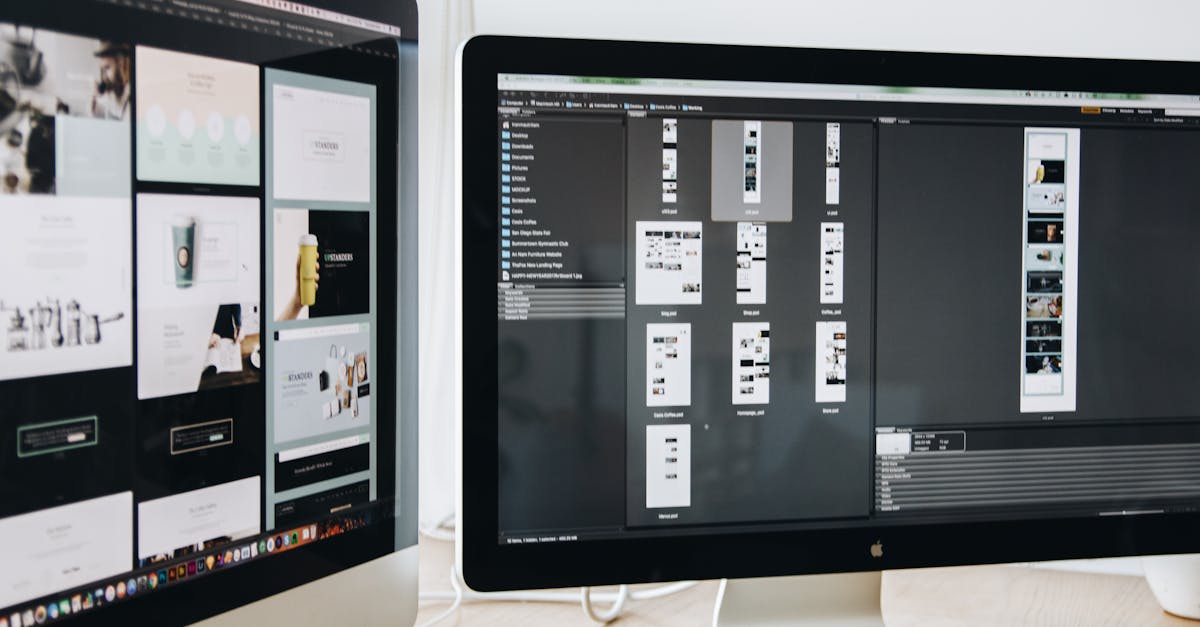
Digital designers have largely migrated to tools purpose-built for screen-based work. Figma has become the dominant platform for UI/UX design, offering real-time collaboration, prototyping, component libraries, and developer handoff in a single browser-based tool. Adobe XD, Sketch, and Framer serve similar purposes. For motion design, After Effects and Principle create animations. For web design implementation, some designers work directly in code or use tools like Webflow that generate production code from visual design.
Digital design deliverables include interactive prototypes, component libraries, design tokens (standardized color, spacing, and typography values), responsive layout specifications, asset exports optimized for web (SVG, WebP, compressed PNG), and detailed annotation documents that describe behavior, states, and interactions that static mockups cannot fully convey.
The Overlapping Toolset
Several tools serve both disciplines. Adobe Illustrator creates vector graphics used in both print and digital contexts. Photoshop edits images for any medium. Canva has emerged as a popular tool for simpler design tasks across both print and digital formats. And Figma, while primarily a digital design tool, is increasingly used for presentation design and other outputs that blur the line between print and digital.
Career Paths: Digital Designer vs Graphic Designer
The Graphic Design Career
A graphic designer’s career can follow many paths depending on specialization. In branding agencies, the progression typically moves from junior designer to designer to senior designer to art director to creative director. In publishing, designers may advance from production artist to book designer to art director. In-house roles at corporations, nonprofits, and institutions offer graphic design positions that span both print and digital needs, often requiring versatility across media.
Graphic design careers tend to be strongest in industries where physical materials remain important: publishing, packaging, luxury goods, architecture and construction, food and beverage, and events. The role title “graphic designer” remains widely used and understood across industries.
The Digital Design Career
Digital design careers are concentrated in the technology sector, though every industry with a significant digital presence — which is nearly all of them — needs digital designers. Common role titles include UI designer, UX designer, product designer, web designer, interaction designer, and visual designer. The technology industry’s career progression typically runs from junior designer to mid-level designer to senior designer to staff/principal designer to design manager or head of design.
Digital design roles generally command higher salaries than traditional graphic design roles, particularly in the technology sector, where product designers at major companies earn compensation comparable to senior engineers. The demand for digital design skills continues to grow as more of the economy moves online and companies invest in digital product quality.
The Converging Reality
In practice, the boundary between these career paths is increasingly blurry. Most job postings for “graphic designer” include digital deliverables like social media graphics, email templates, and website assets. Most “digital designer” roles benefit from strong graphic design fundamentals — typography, composition, color theory — that originated in print design. The most versatile and employable designers can work across both domains, adapting their skills to whatever medium the project requires.
For students and early-career designers, this convergence means that building strong foundational graphic design skills while developing digital-specific competencies (prototyping, responsive design, design systems, accessibility standards) creates the broadest career opportunity set. The foundations of graphic design principles transfer directly into digital work, while digital-specific skills can be layered on top.
The Modern Reality: Most Graphic Design Is Digital
It is worth stating clearly: in 2026, the vast majority of graphic design work is consumed on screens. Social media content, websites, digital advertising, app interfaces, email marketing, digital publications, streaming service graphics, and presentation design collectively dwarf the volume of printed materials being designed. A graphic designer entering the field today who cannot design for screens will struggle to find work, while a graphic designer who can only design for screens will find ample opportunity.
This reality has not made print design irrelevant — packaging design is thriving, book publishing continues, physical brand touchpoints matter more as digital experiences become saturated. But it has made digital competency a baseline expectation for anyone calling themselves a graphic designer, not a specialization. The question is not whether you will design for screens, but how much of your work will also include print.
Frequently Asked Questions
Is digital design harder than graphic design?
Neither is inherently harder, but they present different challenges. Digital design requires managing more variables — interactivity, responsive behavior, multiple states, accessibility, and developer handoff add layers of complexity that static print design does not have. Print design requires precision in production — color accuracy, material knowledge, and prepress preparation demand expertise that digital designers can ignore. The difficulty depends on the complexity of the specific project, not the medium itself.
Should I learn graphic design before specializing in digital design?
Yes, building a foundation in graphic design principles before specializing in digital design is strongly recommended. Typography, composition, color theory, hierarchy, and layout are the building blocks of all visual design. These principles were refined over centuries of print design and apply directly to screen-based work. A digital designer who understands these fundamentals will produce better work than one who only knows the tools and patterns specific to UI/UX design. Start broad, then specialize.
Can a graphic designer transition to digital design?
Absolutely, and many do. The foundational skills — visual hierarchy, typography, color, composition — transfer directly. The transition requires learning digital-specific skills: responsive design principles, interactive prototyping, design systems, accessibility standards, and tools like Figma. Understanding the basics of HTML and CSS, while not strictly required, also helps significantly. Most graphic designers find that their existing skills provide a strong advantage in digital design, and the transition is more about adding new knowledge than starting over.
What is the difference between a digital designer and a web designer?
Web design is a specialization within digital design, focused specifically on designing websites. Digital design is the broader category that includes web design along with app design, UI design, motion design for screens, social media design, email design, and interactive media. A web designer is a type of digital designer, but a digital designer is not necessarily a web designer — they might specialize in mobile app interfaces, dashboard design, or motion graphics instead. For a deeper look at web-specific work, see our guide to what web design involves.
The digital design vs graphic design distinction is becoming less about two separate disciplines and more about a spectrum of skills within a single creative profession. Whether you identify as a graphic designer, a digital designer, or simply a designer, the most important thing is building strong visual fundamentals and developing the technical skills that match the work you want to do. The labels matter less than the ability to create effective, beautiful, functional visual communication — on whatever surface it appears.