Procreate vs Illustrator: Which Is Better for Digital Art?
The Procreate vs Illustrator debate comes down to a fundamental choice: do you want natural, hand-drawn digital art or precise, infinitely scalable vector graphics? Procreate is an iPad-exclusive raster drawing app beloved by illustrators and hobbyists, while Adobe Illustrator is the industry-standard graphic design software for vector work. Both are powerful creative tools, but they serve very different purposes. This guide breaks down the key differences so you can decide whether Procreate or Illustrator is the right fit for your workflow.
What Is Procreate?
Procreate is a raster-based digital illustration app designed exclusively for iPad. Since its launch in 2011, it has become one of the most popular drawing apps in the world thanks to its intuitive interface, stunning brush engine, and remarkably low price point.
Key Features of Procreate
Procreate’s brush library is its standout feature. The app ships with over 200 handcrafted brushes that mimic real-world media including pencils, inks, watercolours, oils, and charcoal. You can also import or build custom brushes with granular controls over shape, grain, dynamics, and rendering.
The app supports high-resolution canvases with up to 132 layers depending on canvas size and device capability. Its animation assist feature lets you create simple frame-by-frame animations, and the time-lapse recording captures every brushstroke for shareable process videos.
Other notable features include clipping masks, blend modes, perspective and symmetry guides, reference layers, colour palettes, and QuickShape for snapping freehand strokes into geometric shapes. Procreate also supports Apple Pencil pressure and tilt sensitivity for a natural drawing experience.
Procreate Pricing
One of Procreate’s biggest advantages is its pricing model. The app costs a one-time fee of approximately $13 USD with no subscription, no in-app purchases, and free updates. Procreate Dreams, the animation-focused companion app, is a separate purchase at around $20.
What Is Illustrator?
Adobe Illustrator is a professional vector graphics editor that has been the industry standard for logo design, typography, print graphics, and technical illustration since 1987. It is available on both desktop (macOS and Windows) and iPad.
Key Features of Illustrator
Illustrator works with vector paths rather than pixels. This means every shape, line, and text element is defined by mathematical coordinates that can be scaled to any size without losing quality. That makes it the go-to tool for logo design, icon creation, signage, packaging, and any project that demands resolution independence.
The Pen tool and Curvature tool allow precise path construction, while the Shape Builder and Pathfinder panels make it easy to combine, subtract, and manipulate shapes. Illustrator also offers a robust type engine with access to thousands of Adobe Fonts, advanced typographic controls, and type-on-a-path capabilities.
The app integrates tightly with the broader Adobe Creative Cloud ecosystem. You can move assets seamlessly between Illustrator, Photoshop, InDesign, and After Effects. Illustrator also supports plugins, scripts, and third-party extensions that expand its functionality.
Illustrator Pricing
Illustrator requires an Adobe Creative Cloud subscription. The single-app plan costs around $23 per month billed annually, or you can access the full Creative Cloud suite for approximately $60 per month. There is no one-time purchase option.
Illustrator on iPad vs Procreate
Since Adobe released Illustrator for iPad, the comparison with Procreate has become more direct. Both apps run on the same hardware and support Apple Pencil. However, Illustrator on iPad is a vector tool with a touch-optimised interface, while Procreate remains a raster painting app. Illustrator on iPad lacks some desktop features but gains portability. For artists choosing a single iPad creative app, the decision still comes down to whether your work is primarily illustrative and painterly or primarily vector-based and production-oriented.
Raster vs Vector: The Core Difference
The most important distinction between Procreate and Illustrator is the underlying technology. Procreate is a raster application, and Illustrator is a vector application. Understanding this difference is essential to choosing the right tool.
Raster graphics are composed of a fixed grid of pixels. Each pixel holds colour information, and together they form the image. This makes raster ideal for detailed, painterly, and photographic work because you have per-pixel control. The downside is that raster images have a fixed resolution. Enlarging them beyond their native size causes visible pixelation and quality loss.
Vector graphics are defined by mathematical equations describing points, lines, curves, and fills. Because these descriptions are resolution-independent, vector artwork can be scaled from a postage stamp to a billboard without any degradation. This makes vector ideal for logos, icons, packaging, and any design that needs to appear at multiple sizes.
Neither approach is inherently better. They excel at different things, and professional creatives often use both in their workflows.
Key Differences Between Procreate and Illustrator
Drawing Experience
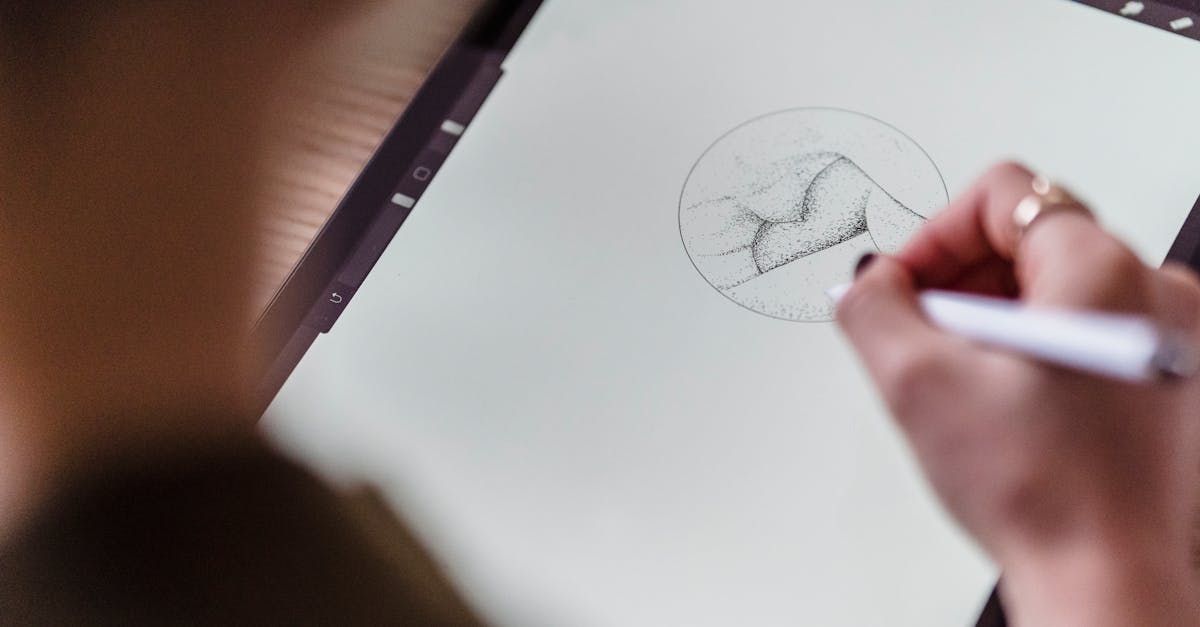
Procreate delivers the most natural digital drawing experience available. The combination of Apple Pencil sensitivity and Procreate’s brush engine makes it feel remarkably close to drawing on paper. Strokes respond to pressure, tilt, and speed, producing organic lines with natural variation.
Illustrator’s drawing experience is more technical. The Pen tool requires you to place anchor points and adjust control handles to define curves. While the iPad version of Illustrator supports Apple Pencil, the drawing feel is less fluid than Procreate. Illustrator’s strength is precision rather than organic expression.
Platform Availability
Procreate is iPad-only. There is no macOS, Windows, or Android version. This limits Procreate to artists who own a compatible iPad and Apple Pencil.
Illustrator runs on macOS, Windows, and iPad. The desktop version remains the most feature-complete, but the iPad app has steadily improved and now covers most essential tasks. This cross-platform availability makes Illustrator more accessible to users on different hardware.
Learning Curve
Procreate is widely praised for its gentle learning curve. The interface is minimal, gesture-based, and designed to stay out of your way. Most beginners can start drawing productively within minutes, and the deeper features reveal themselves gradually.
Illustrator has a steeper learning curve. Concepts like anchor points, Bezier curves, path operations, and the distinction between fills and strokes take time to internalise. The desktop interface is dense with panels and menus. However, once mastered, Illustrator offers unmatched control over graphic design output.
Output and File Formats
Procreate exports to PSD, PDF, PNG, JPG, TIFF, and its native .procreate format. It can also export animated GIFs, PNGs, and MP4 videos. However, since Procreate works in raster, the output is always pixel-based and resolution-dependent.
Illustrator exports to AI, EPS, SVG, PDF, PNG, JPG, and many other formats. Because its native output is vector, you can export at any resolution or scale without quality loss. Illustrator’s SVG export is particularly valuable for web and app icon workflows.
Colour and Print
Procreate supports RGB colour space and has limited CMYK support through colour profile assignment at export. For professional print work requiring precise colour management, this can be a limitation.
Illustrator supports both RGB and CMYK colour modes natively. You can set your document colour mode at creation, work with Pantone swatches, and prepare files that are press-ready. For print design, Illustrator is the far more capable option.
Collaboration and Ecosystem
Procreate is a standalone app with no built-in cloud collaboration or asset management system. You can share files manually, but there is no team-oriented workflow.
Illustrator benefits from Creative Cloud Libraries, shared assets, cloud documents, and integration with other Adobe apps. For teams working across multiple design disciplines, this ecosystem is a significant advantage.
Brush and Texture Capabilities
Procreate’s brush engine is purpose-built for natural media simulation and is widely considered the best in any tablet drawing app. Each brush can respond to Apple Pencil pressure, tilt, and speed in highly configurable ways. The Procreate community has produced thousands of free and commercial brush packs covering everything from oil paint impasto to halftone shading to realistic graphite. For artists who rely on rich, textured mark-making, Procreate is unmatched.
Illustrator’s brushes serve a different purpose. Calligraphic, scatter, art, and pattern brushes apply decorative effects along vector paths. They are useful for stylised strokes and decorative borders but do not simulate physical media the way Procreate’s raster brushes do. Illustrator’s strength is precision, not painterly expression.
Community and Learning Resources
Both apps have large, active communities. Procreate tutorials are abundant on YouTube and social media, with a strong focus on illustration technique and creative process. Illustrator has decades of educational content including professional certification paths, university curricula, and comprehensive courses on platforms like LinkedIn Learning and Skillshare. For graphic design principles and professional production workflows, Illustrator’s educational ecosystem is deeper.
When to Use Procreate
Procreate is the better choice when your work is illustration-focused and benefits from a natural, hand-drawn aesthetic. Choose Procreate for:
- Digital painting and illustration — character art, concept art, portraits, landscapes, and editorial illustration
- Sketching and ideation — quick visual brainstorming and rough concepts
- Comic and manga art — inking, colouring, and sequential art panels
- Lettering and hand-drawn type — brush lettering, decorative type, and calligraphy
- Texture and pattern creation — organic, hand-painted textures for use in other apps
- Social media art — one-off illustrations for posts and stories at known dimensions
If you are a hobbyist, a fine artist working digitally, or an illustrator who values the feel of traditional media, Procreate is hard to beat at its price point.
When to Use Illustrator
Illustrator is the better choice when your work demands scalability, precision, and integration with professional print and production workflows. Choose Illustrator for:
- Logo design — scalable marks that work from favicons to building signage
- Brand identity systems — comprehensive brand identity packages including stationery, guidelines, and assets
- Print design — business cards, brochures, posters, and packaging with CMYK colour
- Icon and UI assets — crisp, resolution-independent icons and interface elements
- Technical illustration — diagrams, maps, infographics, and architectural drawings
- Typography-heavy design — layouts that rely on precise type control and typographic refinement
If you are a professional graphic designer, a design agency, or a brand team, Illustrator’s vector capabilities and ecosystem integration make it essential.
Can You Use Both Together?
Many artists and designers use Procreate and Illustrator together. A common workflow is to sketch or illustrate in Procreate, taking advantage of its natural brushes and drawing feel, then import the artwork into Illustrator for vectorisation, layout, or production prep.
Illustrator’s Image Trace feature can convert Procreate raster art into editable vector paths. While auto-tracing rarely produces perfect results, it provides a useful starting point that you can refine with Illustrator’s path editing tools.
Another approach is to use Procreate for the artistic elements of a project — hand-drawn illustrations, textures, or lettering — and Illustrator for the structural elements like logos, type, and layout. Combining both tools lets you bring organic warmth and mechanical precision to the same project.
FAQ
Is Procreate as good as Illustrator?
Procreate and Illustrator excel at different things. Procreate is superior for freehand digital illustration, painting, and sketching with natural media brushes. Illustrator is superior for vector graphics, logo design, print production, and precision layout. Neither is universally better — the right choice depends on what you are creating.
Can Procreate create vector graphics?
No. Procreate is a raster application that works with pixels. It cannot create or edit true vector paths. If you need vector output, you would need to export your Procreate artwork and trace it in a vector application like Illustrator or one of the available alternative design tools.
Is Procreate worth it if I already have Illustrator?
Yes, for many creatives. Procreate’s natural drawing experience is significantly more fluid than Illustrator’s, even on the iPad version. If you do any freehand illustration, sketching, or concept work, Procreate at $13 is an excellent complement to your Illustrator subscription. The two tools serve different parts of the creative process.
Which is better for beginners?
Procreate is generally easier for beginners. Its interface is intuitive, the learning curve is gentle, and the one-time cost removes the pressure of a monthly subscription. Illustrator’s vector concepts and dense interface take more time to learn. However, if your goal is to become a professional graphic designer, learning Illustrator early is a worthwhile investment since it is the industry standard.