Logo vs Icon: What’s the Difference?
The logo vs icon debate comes up frequently in design discussions, and for good reason — the two share visual territory but serve fundamentally different purposes. A logo is a unique visual mark that identifies a specific brand or company. An icon is a simplified symbol that represents a concept, action, or object — typically used in user interfaces and signage. Understanding the difference between logo and icon is essential for designers, brand managers, and anyone commissioning visual work.
To complicate matters, the rise of mobile apps has blurred the boundary. App icons are icons that function as logos, and many brands now incorporate icon-like simplicity into their logo design. Let us untangle these overlapping concepts and clarify when and how each is used.
What Is a Logo?
A logo is a distinctive visual mark designed to represent a specific company, organization, product, or individual. It is a cornerstone of logo design, and its primary purpose is identification — allowing people to instantly recognize and associate the mark with a particular brand.
Logos come in several forms. Wordmarks like Google and Coca-Cola use styled typography as the primary element. Lettermarks like IBM and HBO abbreviate a longer name into initials. Brandmarks like Apple’s apple and Twitter’s bird use a symbol alone. Combination marks pair a symbol with text, and emblems enclose text within a symbol. Each of these types of logos serves a different strategic purpose, but all share a common trait: they are unique to one entity.
Key characteristics of logos:
- Unique — designed to be one-of-a-kind and distinguishable from all others
- Proprietary — owned by a brand, often trademarked and legally protected
- Identity-driven — communicates brand personality, values, and positioning
- Consistent — used in the same form across all brand touchpoints
- Memorable — designed for instant recognition and recall
A logo carries meaning that builds over time. The Nike swoosh was not inherently meaningful when it was designed — it acquired its associations through decades of marketing and cultural presence. Logos are vessels for brand equity.
What Is an Icon?
An icon is a simplified pictorial representation of a concept, object, or action. Icons are designed for universal comprehension rather than brand identification. The magnifying glass that means “search,” the gear that means “settings,” the house that means “home” — these are icons, and they work precisely because they are generic and widely understood.
Icons are fundamental to user interface design, wayfinding systems, and information design. They transcend language barriers and compress complex ideas into small, scannable visual forms. A well-designed icon communicates its meaning instantly without requiring a label.
Key characteristics of icons:
- Universal — designed to be understood across cultures and contexts
- Generic — not owned by any single brand (with some exceptions)
- Functional — communicates a specific action, object, or concept
- Scalable — must work at very small sizes, often as small as 16 by 16 pixels
- Part of a system — typically designed as a consistent set with shared style rules
Icons have a long history that predates digital design. Pictograms on ancient cave walls, religious symbols, road signs, and bathroom signage all follow the same principle — using simplified imagery to convey meaning quickly and across language barriers.
Key Differences
The core distinction between icon vs logo comes down to purpose. A logo asks “Who is this?” An icon asks “What does this mean?” or “What does this do?”
Purpose. Logos identify a specific entity. Icons communicate universal concepts. A logo answers the question of ownership and origin; an icon answers the question of function and meaning.
Uniqueness. Logos must be unique — that is their entire value. Two companies with identical logos would cause confusion and likely legal action. Icons, by contrast, benefit from familiarity. The more a magnifying glass looks like every other magnifying glass, the more effective it is as a search icon.
Ownership. Logos are proprietary assets, often registered as trademarks. Icons are typically shared conventions. Icon libraries like Material Design, Font Awesome, and Feather Icons distribute thousands of icons for widespread use. No one owns the concept of a house icon meaning “home.”
Context dependency. A logo carries its meaning everywhere — on a business card, a billboard, a product label, or a website. An icon’s meaning often depends on context. An envelope icon means “email” in a digital interface but might mean “postal mail” in a different setting.
Emotional weight. Logos are designed to evoke specific feelings and associations aligned with a brand’s identity. Icons are designed for clarity and efficiency — their emotional impact is minimal by design. You do not feel brand loyalty toward a hamburger menu icon.
Where They Overlap
Despite their differences, logos and icons share significant common ground, and several modern applications blur the line between them.
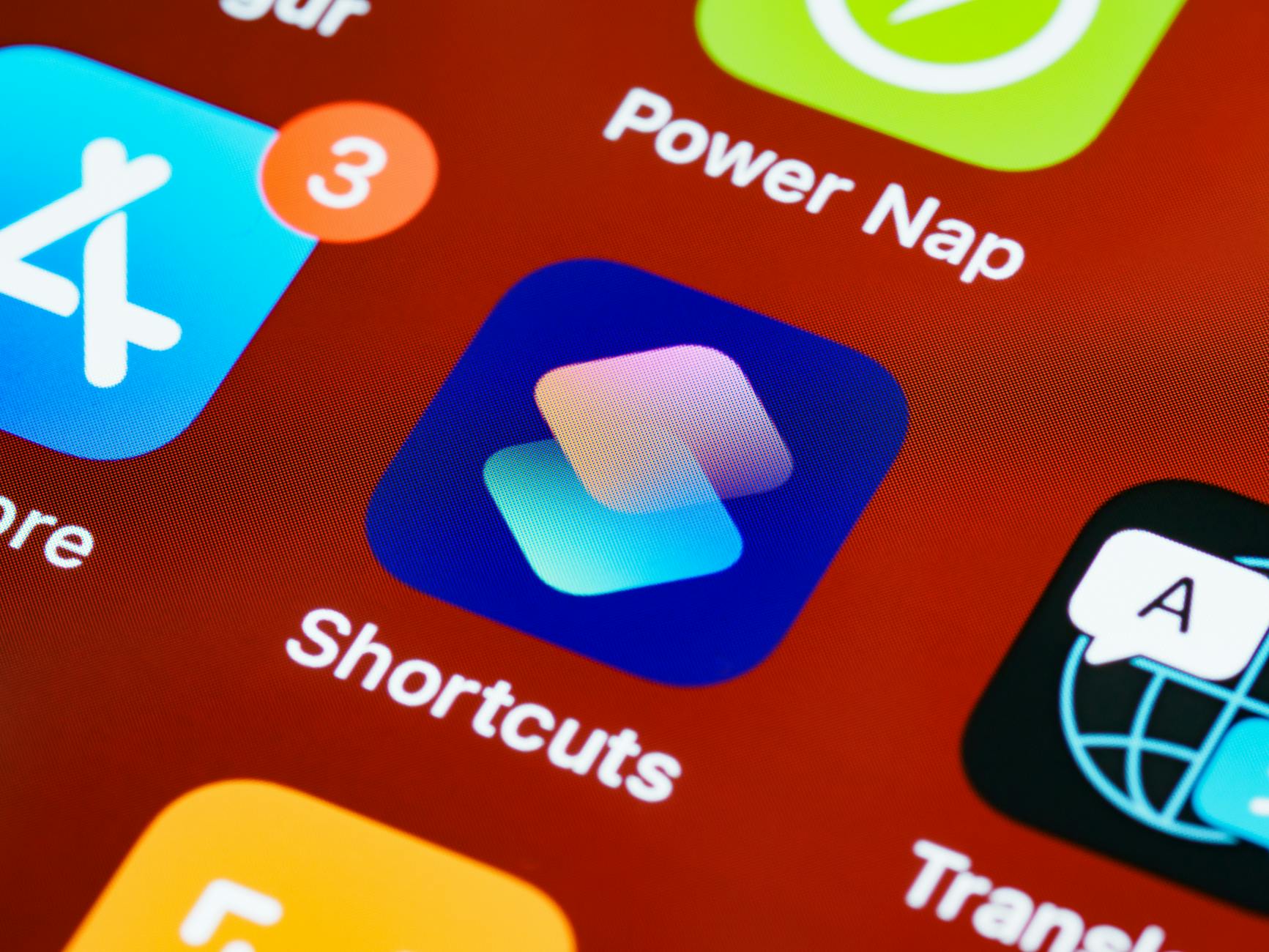
App icons are the most prominent example. When you see the Instagram icon on your phone’s home screen, is it a logo or an icon? Functionally, it is an icon — it represents the action of opening the app. But it is also a brand identifier, uniquely associated with Instagram and protected by trademark. App icons must work within the constraints of icon design (small size, simple form, grid conformity) while performing the job of a logo (brand identification).
Favicons present a similar challenge. The tiny 16 by 16 pixel image in a browser tab must identify a brand at an extremely small scale. Many companies create simplified versions of their logos specifically for favicon use, essentially creating an icon from their logo.
Logo icons or brandmarks are the symbol component of a combination logo used independently. Apple’s apple, Target’s bullseye, and Shell’s shell are all logo icons — unique branded symbols that function with icon-like simplicity. Brands earn the right to use their symbol alone only after building sufficient recognition through the full logo.
Social media icons live in both worlds as well. The Facebook “f,” the YouTube play button, and the LinkedIn “in” are proprietary brand marks displayed in standardized icon formats across millions of websites.
Design Considerations
Whether you are designing a logo or an icon, certain principles apply to both — simplicity, scalability, and clarity. But the design process and priorities differ significantly.
When designing a logo, the emphasis is on distinctiveness and brand expression. You research the competitive landscape, define brand attributes, explore multiple creative directions, and refine toward a mark that is ownable and meaningful. The design process is strategic, often taking weeks or months.
When designing icons, the emphasis is on recognition and consistency. You work within established conventions, prioritize legibility at small sizes, and ensure that every icon in a set shares the same visual language — stroke weight, corner radius, grid alignment, and optical balance. Icon design is systematic, with each piece fitting into a larger family.
For app icons and favicons that must serve both purposes, the challenge is finding the intersection: enough brand personality to be recognizable, enough simplicity to function at small scales and within platform guidelines. This often means reducing a full logo to its most essential visual element — a single letterform, a key shape, or a signature color.
FAQ
Can a logo be used as an icon?
Some logos are simple enough to function as icons, especially brandmarks and lettermarks. Apple’s apple, Nike’s swoosh, and McDonald’s golden arches all work at icon scale. However, complex logos — especially wordmarks, combination marks, and emblems — lose legibility when reduced to icon size. If your logo does not work as a small symbol, consider creating a simplified logo icon specifically for icon-scale applications like favicons and app icons.
Should I design my logo to also work as an icon?
In today’s digital-first landscape, designing with icon scalability in mind is wise. Even if your primary logo includes a wordmark, having a symbol component that works independently at small sizes gives you flexibility across digital platforms. Many brands design a full logo system that includes a primary logo, a simplified logo icon, and a favicon, ensuring brand recognition at every scale.
What is the difference between an icon and a symbol?
The terms are closely related but not identical. A symbol is any visual representation that carries meaning — it is the broader category. An icon is a specific type of symbol: one that pictorially represents its subject through visual resemblance or strong convention. All icons are symbols, but not all symbols are icons. A red octagon symbolizing “stop” is a symbol but not technically an icon in the design sense. The “search” magnifying glass is both a symbol and an icon.
Do I need to trademark my app icon?
If your app icon serves as a brand identifier — which most do — trademarking it is advisable, especially as your brand grows. Trademark protection prevents competitors from using a confusingly similar icon and gives you legal recourse if they do. Consult with an intellectual property attorney to determine the right level of protection for your specific situation and market.