Pet Logo Design: Tips and Examples
A great pet logo does two jobs at once: it signals that you love animals and that you are genuinely good at your work. Get the balance wrong and you look either too corporate to care or too cute to trust. This guide covers the logo styles that work for pet businesses, the typefaces and colors that carry warmth, and how to dodge the paw-print clichés that make most pet logos blur together.
If you are building a brand from scratch, start with the bigger picture in our complete guide to pet brand design, then come back here for the mark itself.
The main pet logo styles
Most successful pet logos fall into one of a few families. Pick the one that matches your service and audience rather than chasing whatever looks trendy.
- Wordmark. The business name in a distinctive, friendly typeface, no icon. Clean, modern, and scales beautifully on tags and screens. Best when your name is short and memorable.
- Combination mark. A symbol plus the name. The most flexible option because you can use the icon alone on small items like collars and app icons.
- Mascot logo. An illustrated animal character. High recognition and great on packaging and signage; see our mascot logo design guide to keep it modern rather than dated.
- Emblem. Name and icon locked inside a badge or crest. Reads as established and premium, popular for grooming studios and boutique brands.
Avoiding the paw-print trap
Paw prints, bones, and generic dog silhouettes are the three most overused symbols in the category. They are not forbidden, but a stock-looking paw next to a name is the design equivalent of saying nothing. If you want to use familiar pet motifs, make them specific.
- Integrate, do not decorate. Build a paw or ear shape into a letterform instead of parking an icon beside the text.
- Get specific to your animal or breed. A folded-ear cat or a particular dog profile is more ownable than a generic silhouette.
- Draw it custom. A hand-drawn or bespoke mark instantly separates you from competitors using the same icon pack.
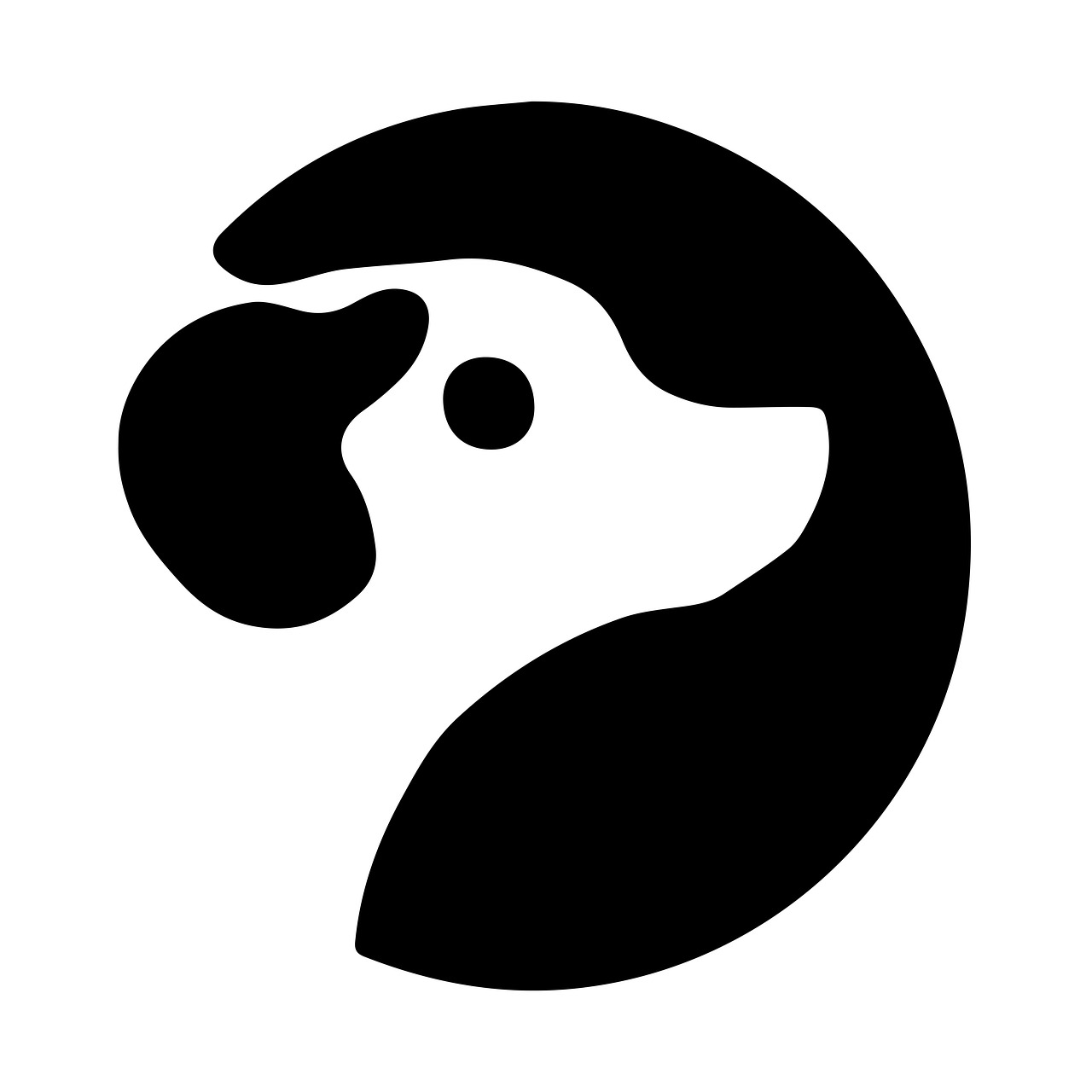
- Try negative space. A clever hidden animal shape inside a letter or container reads as clever and premium.
Typography for pet logos
The typeface does most of the emotional work in a wordmark. Rounded letterforms read as soft and friendly; sharper geometric sans serifs read as modern and efficient. Match the warmth to your service.
- Quicksand (free, Google Fonts) — rounded geometric sans, instantly approachable; a reliable starting point for walking, daycare, and grooming logos.
- Nunito (free, Google Fonts) — rounded and versatile across weights, so the same family carries from logo to website.
- Baloo 2 (free, Google Fonts) — chunky and playful for a confident, friendly logotype; use sparingly elsewhere.
- Pangram or a custom-lettered wordmark — when you want something no competitor can copy, hand-lettering or light customization of an existing face makes a wordmark truly yours.
Whatever you choose, customize the spacing and a few letterforms so the logo is not just a font typed out. Small tweaks to the kerning and one signature letter make a wordmark feel designed.
Color choices for pet logos
Keep the logo to one or two colors. A logo has to work in a single color for embroidery, stamps, and tags, so design it in black first and add color second.
| Color direction | Reads as | Common use |
|---|---|---|
| Warm orange / coral | Friendly, energetic | Daycare, walking, treats |
| Sage / forest green | Natural, calm, premium | Holistic care, food |
| Teal / blue-green | Clean, trustworthy | Veterinary, wellness |
| Warm brown / cream | Cozy, handcrafted | Boutique, bakery treats |
Make it work at every size
A pet logo lives in tough places: embroidered on a polo, etched on a metal tag, shrunk to an app icon, printed on a tiny treat bag. Detail that looks great on a website banner often turns to mud at those sizes.
- Build a responsive set. A full logo, a compact version, and a standalone icon for tiny placements.
- Test in one color. If it survives solid black, it will survive embroidery and engraving.
- Check it at 32 pixels. If you cannot tell what it is, simplify the mark.
Tools and file formats
Design the logo as vector art in Adobe Illustrator (or a comparable vector tool) so it scales without quality loss. Use Photoshop only for mockups and raster textures, never for the master artwork. Deliver a kit that includes vector files (SVG and EPS), high-resolution PNGs with transparency, and a one-color version. Print applications like signage and packaging need that vector master to look sharp at any size.
Walk the mark through a structured logo design process rather than jumping to final art, and you will end up with a stronger, more defensible result.
Where the pet logo goes next
The logo is one piece of the system. Once it is locked, apply it consistently across signage, vehicles, and products. For local retail and storefront use, see pet shop branding. For solo mobile services, our dog walking logo design guide covers marks built specifically for a van, a phone, and a business card.
Examples of strong pet logo approaches
You do not need to copy specific brands to learn from the patterns that work. Across the best pet logos, a few approaches show up again and again because they solve the warmth-plus-credibility problem cleanly.
- The friendly wordmark with one custom letter. A clean rounded name where a single letter hides a paw, ear, or tail. It reads instantly as a name yet has a memorable detail competitors cannot copy.
- The simple silhouette. A single, well-drawn animal profile in one color. It scales perfectly to a tag or app icon and feels confident rather than busy.
- The negative-space mark. A dog or cat shape revealed inside a letter or container. It reads as clever and premium and rewards a second look.
- The minimal mascot. A reduced, geometric animal character with just enough personality, kept simple so it survives small sizes and embroidery.
The thread connecting all four is restraint. The strongest pet logos say one clear thing well rather than stacking a paw, a bone, a heart, and a swoosh into a single crowded mark.
How to brief a designer (or yourself)
Whether you hire out or do it yourself, write a short brief before drawing. Note your three brand adjectives, your audience, the services you offer now and might add later, and the smallest place the logo must work (usually a phone icon or a tag). A focused brief is the difference between a mark that fits your business and a generic one that could belong to anyone.
Frequently Asked Questions
What makes a good pet logo?
A good pet logo feels warm and approachable while still looking professional, works in a single color, and stays legible at tiny sizes like tags and app icons. It avoids generic clichés by using specific, custom-drawn shapes or a distinctive wordmark instead of a stock paw print.
Should my pet logo include an animal?
Not necessarily. A clean wordmark or a clever negative-space mark can be more memorable than an obvious animal silhouette. If you do include an animal, make it specific to your breed or species and draw it custom so it is not interchangeable with competitors using the same icon set.
What font is best for a pet logo?
Rounded, humanist typefaces read as friendly and suit most pet brands. Quicksand and Nunito are strong free options, and Baloo 2 works for a playful logotype. Customize the spacing and one signature letter so the logo feels designed rather than simply typed.
How many colors should a pet logo use?
Limit it to one or two colors. Design the logo in black first so it works for embroidery, engraving, and stamps, then add color afterward. A simple palette keeps the mark flexible across signage, packaging, tags, and digital use without reproduction problems.
What file formats do I need for a pet logo?
Get vector files (SVG and EPS) as the master, plus high-resolution transparent PNGs and a one-color version. Vector art scales without losing quality, which matters for signage, vehicle wraps, and packaging. Keep the layered source file in case you need future edits.