Billboard Design Principles That Work
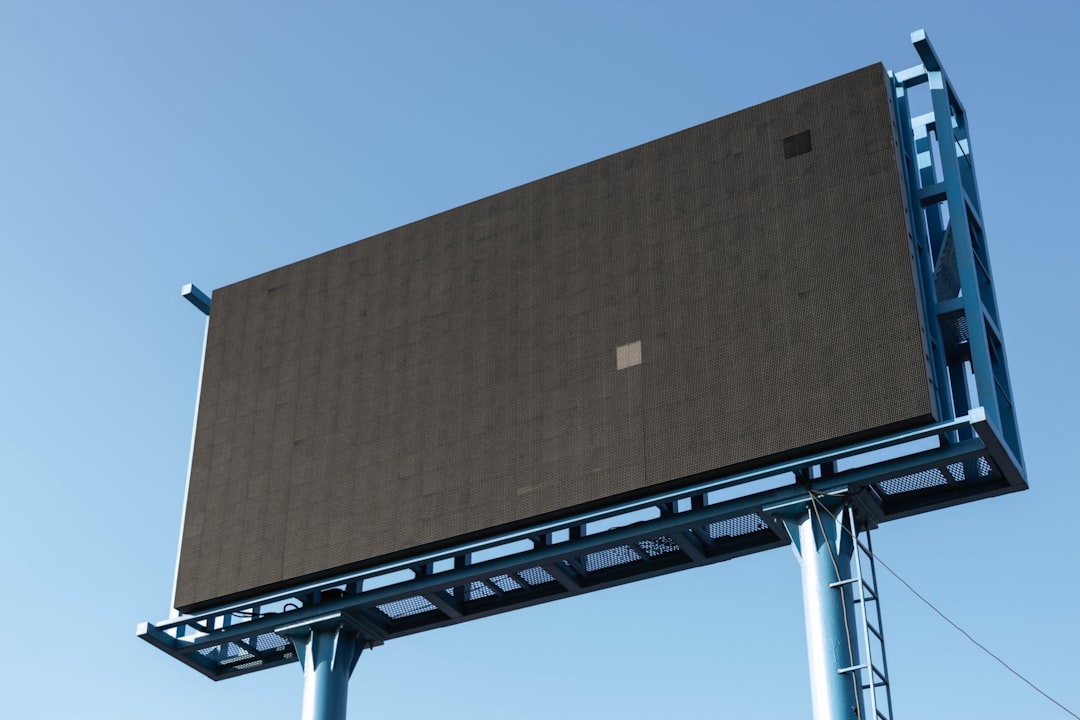
A billboard is read by people moving at 60 miles per hour, glancing for a few seconds at a time. That single constraint shapes every other decision. Proven billboard design principles strip the message down to one idea that lands instantly from hundreds of feet away. Billboards fail when they try to say too much, use small type, or bury the point in clutter. They succeed when a passing driver grasps the whole message in a single glance and remembers it down the road.
The key principles of billboard design
The seven principles below are all about doing more with less, because distance and speed punish complexity.
| Principle | Why it matters |
|---|---|
| Keep it to six words | A glance can absorb only a few words at highway speed. |
| Make type enormous | Large letters stay legible from hundreds of feet away. |
| Use one focal image | A single visual reads instantly; multiple images compete. |
| Push contrast to the max | High contrast keeps the message readable in glare and motion. |
| Design for five seconds | The whole idea must land in one brief glance. |
| Keep logo and CTA minimal | One small brand mark and a single action avoid clutter. |
| Test at distance | Viewing a thumbnail simulates the real reading conditions. |
1. Keep it to six words or less — one idea only
The single most repeated rule of outdoor advertising is to limit copy to about six words. A driver passing at speed simply can’t read more, and every extra word lowers the odds any of it registers. Decide the one thing the billboard must say, then ruthlessly cut everything else. If you’re debating which of two messages to include, you almost certainly have one too many.
2. Make type enormous — scale for the highway
Billboard type must be readable from hundreds of feet, which means letters far larger than any print piece. As a rough guide, lettering needs roughly an inch of height for every ten feet of viewing distance, so highway boards use letters several feet tall. Choose a bold, clean typeface and avoid thin or condensed styles that collapse at distance. Picking weights that stay readable when scaled this large is one of the most consequential choices on the entire board.
3. Use one focal image — a single visual anchor
One strong, simple image does more than several small ones. Pick a single hero visual, a product, a face, or a bold graphic, and let it dominate the board. Multiple images force the eye to choose and slow comprehension past the few seconds you have. The best billboard images are instantly recognizable as silhouettes, readable even before the brain processes the detail.
4. Push contrast to the max — beat glare and motion
A billboard competes with sunlight, glare, and a moving viewpoint, so weak contrast disappears. Use strongly contrasting colors between text and background, dark on light or light on dark, and avoid subtle tonal combinations that blur at distance. Sound color theory helps you choose pairings that stay punchy outdoors, where ambient light is far harsher than a screen or a printed proof.
5. Design for five seconds — the glance test
Assume your audience sees the board for roughly five to seven seconds, often less. Everything has to resolve in that window: the message, the image, and the brand. A useful discipline is to view your design at a small size for a couple of seconds, then look away and ask what you remember. If the core idea didn’t survive, the board is too complex for its real conditions.
6. Keep the logo and call to action minimal
Branding matters, but the logo should be present, not dominant; a modest, well-placed mark is enough for recognition. Likewise, include at most one simple call to action, such as a short URL or a single instruction, and only if it genuinely fits within the glance. Strong visual hierarchy keeps the message first, the image supporting it, and the brand and CTA quietly in their place.
7. Test at distance — simulate real conditions
Designers view billboards up close on big monitors, which hides every legibility problem. Always evaluate the design as it will actually be seen: shrink it to a small thumbnail, step back from the screen, or print a miniature and view it across the room. If you can read the message and identify the brand in a couple of seconds at that scale, it will work on the road.
Common billboard design mistakes to avoid
- Cramming in long copy, multiple messages, or paragraphs of text.
- Using type that’s too small or too thin to read at highway speed.
- Cluttering the board with several images instead of one focal visual.
- Relying on low-contrast color pairs that wash out in sunlight and glare.
Frequently Asked Questions
What are the most important billboard design principles?
The essentials are limiting copy to about six words, using enormous bold type, choosing a single focal image, and maximizing contrast so the board reads in a five-second glance. Keep the logo and call to action minimal, and always test the design at a small size to simulate real viewing distance.
How many words should a billboard have?
Aim for six words or less. Drivers passing at speed can only absorb a few words in the brief moment a billboard is in view, and every extra word reduces recall. Settle on one clear message, cut anything that competes with it, and let the image carry as much meaning as it can.
How big should billboard text be?
As a rough guideline, lettering needs about one inch of height for every ten feet of viewing distance, so highway billboards use letters several feet tall. Use a bold, clean typeface and avoid thin or condensed styles. The exact size depends on the board’s dimensions and how far away traffic passes.
What colors work best on a billboard?
Use high-contrast combinations, such as dark text on a light background or light text on a dark one, so the message stays legible in glare and motion. Avoid subtle, low-contrast pairings that blur at distance. Bold, saturated colors generally hold up far better outdoors than muted tones.
How do I make a billboard readable from a distance?
Combine huge bold type, one simple focal image, maximum contrast, and a message of six words or less. Then test by viewing the design as a small thumbnail to mimic real distance and speed. For more on hierarchy and clarity, see our overview of core design principles.