Offset vs Digital Printing: Which Should You Choose?
Choosing between offset vs digital printing is one of the most consequential decisions in any print project. The method you select affects cost, quality, turnaround time, and even design possibilities. Offset printing uses metal plates to transfer ink onto paper through a series of rollers — it excels at high-volume runs with consistent color quality. Digital printing sends files directly to the press without plates — it excels at short runs, quick turnaround, and variable data. Understanding the trade-offs between offset printing vs digital printing helps you make the right call for your budget, timeline, and quality requirements.
Both technologies have evolved dramatically in recent years. Modern digital presses produce quality that rivals offset in many applications, while offset has become more efficient and competitive at lower quantities. The old rules of thumb still apply in general, but the lines between the two are blurring. Here is what you need to know.
What Is Offset Printing?
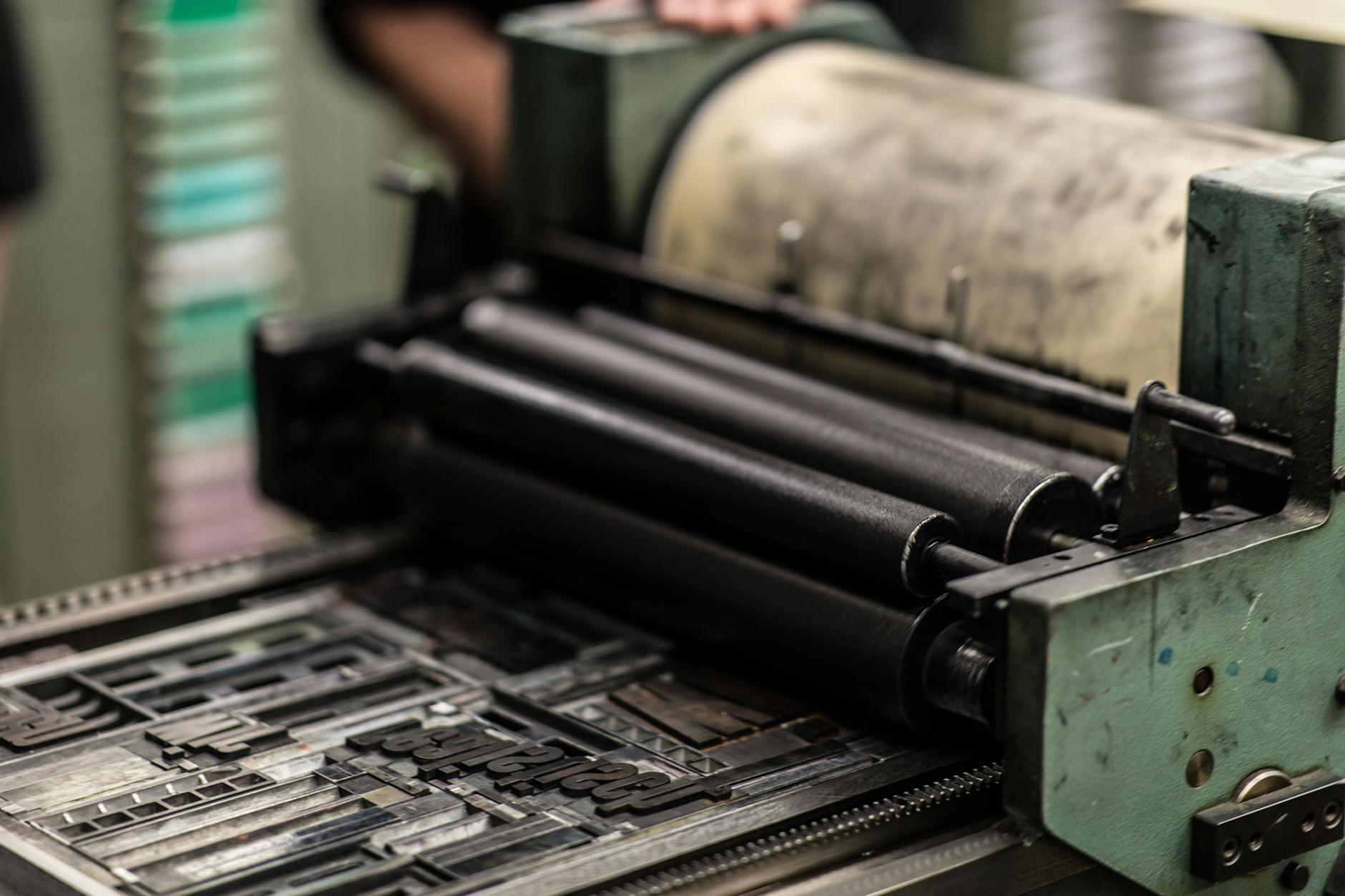
Offset printing — also called offset lithography — is the traditional commercial printing process that has been the industry standard for over a century. The name comes from the fact that ink is not applied directly to the paper. Instead, it is transferred (offset) from a metal plate to a rubber blanket and then to the printing surface.
The process works as follows: a design is separated into its component colors — typically CMYK (cyan, magenta, yellow, and black). A metal plate is created for each color. During printing, each plate is inked, the ink transfers to a rubber blanket cylinder, and the blanket presses the image onto the paper. The four color passes combine to produce the full-color image.
For projects requiring brand-specific colors, offset printing can use Pantone spot colors — pre-mixed inks that deliver exact color matching. This makes offset the go-to choice for brand-sensitive work where color accuracy is non-negotiable.
Key characteristics of offset printing:
- Plate-based — requires creating metal plates for each color, adding setup time and cost
- High volume efficiency — per-unit cost drops significantly as quantity increases
- Superior color consistency — Pantone matching and stable ink delivery across the entire run
- Wide substrate range — prints on a vast variety of paper stocks, weights, and textures
- Longer setup — plate creation, press calibration, and color proofing require lead time
- Established quality benchmark — the standard by which print quality is measured
What Is Digital Printing?
Digital printing encompasses several technologies — inkjet, laser, and electrophotographic — that transfer digital files directly onto the printing substrate without intermediate steps like plate-making. The file on your computer goes essentially straight to the printed page.
The two primary digital printing technologies are toner-based (laser) and inkjet. Toner-based systems fuse powdered toner onto paper using heat and pressure — they are fast and produce crisp text and graphics. Inkjet systems spray microscopic droplets of liquid ink — they excel at photographic reproduction and can print on a wider range of substrates.
Key characteristics of digital printing:
- Plateless — no setup beyond loading the file, dramatically reducing preparation time and cost
- Cost-effective for short runs — no minimum quantity thresholds, economical even for a single copy
- Quick turnaround — files can go to press within hours rather than days
- Variable data capability — every printed piece can be different (personalized names, unique codes, versioned content)
- Consistent quality — the first print and the last print are identical
- Growing quality — modern digital presses approach offset quality for many applications
Digital printing has democratized print production. Small businesses, independent designers, and startups can produce professional-quality printed materials in small quantities without the financial commitment that offset requires.
Key Differences
The core differences between digital vs offset printing come down to setup, scale, speed, and flexibility.
Setup and plates. Offset requires creating physical plates — a process that takes time and incurs a fixed cost regardless of quantity. Digital eliminates this step entirely. This single difference drives most of the other trade-offs between the two methods.
Cost structure. Offset has high fixed costs (plates, press setup, color calibration) but very low per-unit costs once running. Digital has low fixed costs but a higher per-unit cost that stays relatively flat regardless of quantity. This creates a crossover point — below a certain quantity, digital is cheaper; above it, offset wins.
Turnaround time. Digital printing can often deliver finished products within hours or one to two business days. Offset typically requires several days to a week or more, accounting for plate production, press scheduling, drying time, and finishing. When time is short, digital is almost always the answer.
Color accuracy. Offset excels at precise color matching, especially with Pantone spot colors. Digital presses simulate spot colors using CMYK combinations, which is often close but not identical. For brand-critical color work — luxury packaging, corporate identity materials, fashion catalogs — offset remains the standard.
Substrate options. Offset can print on virtually any paper stock, from thin tissue to thick board, and on many specialty substrates. Digital presses have more limitations on paper weight, texture, and size, though these constraints have loosened significantly with newer equipment.
Variable data. This is where digital printing has an absolute advantage. Because there are no plates, every sheet can carry different content — personalized direct mail, sequential numbering, region-specific versions. Offset cannot do this without supplementary processes.
Cost Comparison
Understanding the cost dynamics between offset and digital printing helps you optimize your print budget.
For very small quantities — under 500 pieces for most products — digital is almost always more cost-effective. The absence of plate charges and setup costs means you pay only for the prints themselves. A run of 100 business cards or 250 brochures will nearly always be cheaper on digital.
The crossover point — where offset becomes cheaper per unit — varies by product and printer but typically falls between 500 and 2,000 copies. For a standard full-color brochure, the crossover might be around 1,000 pieces. For a simple one-color job, it might be lower. For complex multi-color work with specialty inks, offset’s advantages emerge even earlier.
At high volumes — 5,000 copies and above — offset’s per-unit cost advantage is substantial. A run of 10,000 postcards on offset might cost thirty to fifty percent less per unit than the same run on digital. At 50,000 or 100,000 copies, offset is the only practical choice both economically and in terms of press capacity.
Hidden costs to consider:
- Waste sheets — offset produces setup waste during color calibration (typically 50 to 200 sheets), which is factored into the price. Digital has virtually no waste.
- Overruns and underruns — offset printers typically deliver within ten percent of the ordered quantity. Digital delivers exact quantities.
- Storage costs — ordering large offset runs to get a better per-unit price means storing inventory. Digital’s print-on-demand capability eliminates storage needs.
- Revision costs — if you need to update content, digital lets you change the file and reprint immediately. Offset requires new plates.
Quality Comparison
Quality differences between offset and digital have narrowed dramatically, but distinctions remain.
Color fidelity. Offset produces richer, more vibrant color through wet ink that absorbs into the paper fiber. Digital toner sits on top of the paper surface, which can produce a slightly different look and feel. For most commercial applications, the difference is negligible. For high-end work — art reproductions, luxury packaging, fine photography books — offset still holds the edge.
Consistency across the run. Offset can experience slight color drift over very long runs as ink and water balance shifts. Experienced press operators manage this, but variation exists. Digital produces identical output from the first print to the last, making it more consistent on a sheet-to-sheet basis.
Fine detail. Both technologies handle fine text and detailed graphics well. Offset can achieve slightly higher effective resolution in some conditions, but modern digital presses at 1200 DPI or higher match offset for virtually all commercial work.
Special effects. Offset accommodates a wider range of special inks and finishes — metallic inks, fluorescent colors, varnishes, and raised printing. Digital options for specialty effects are expanding but still more limited.
Paper texture reproduction. Offset ink interacts with textured and uncoated papers differently than digital toner. On heavily textured stock, offset ink settles into the paper fibers naturally, preserving the tactile quality of the substrate. Some digital toner-based presses can flatten or alter the texture of specialty papers due to the heat and pressure of the fusing process. If the feel of the paper is an important part of the finished product, test digital samples carefully before committing to a full run.
When to Use Each
Choose offset printing for:
- Large print runs (typically 1,000 or more copies)
- Projects requiring exact Pantone color matching
- High-end publications — magazines, catalogs, annual reports, art books
- Specialty substrates or unusual paper stocks
- Projects using metallic inks, varnishes, or other specialty finishes
- Packaging production at scale
Choose digital printing for:
- Short print runs (under 500 to 1,000 copies)
- Time-sensitive projects that need quick turnaround
- Variable data printing — personalized mail, numbered tickets, versioned content
- Prototyping and proofing before committing to an offset run
- Print-on-demand products that avoid inventory risk
- Frequently updated materials — menus, price lists, event programs
Many projects benefit from using both. You might print a brochure digitally for an initial test run of 200, gather feedback, refine the design, and then produce the final 10,000 via offset. Or print a standardized catalog on offset and use digital to add personalized covers. Thinking of offset and digital as complementary rather than competing technologies gives you the greatest flexibility.
FAQ
Is offset printing better quality than digital?
Offset printing has traditionally been considered the quality benchmark, and it still holds advantages in color richness, Pantone accuracy, and substrate versatility. However, modern digital presses have closed the gap significantly. For most commercial applications — business cards, brochures, flyers, and standard marketing materials — the quality difference is negligible to the average viewer. The distinction becomes meaningful primarily for high-end work where exact color matching, specialty inks, or fine art reproduction are required.
What is the minimum quantity for offset printing?
There is no strict minimum, but offset becomes economically sensible only at certain quantities due to fixed plate and setup costs. Most printers recommend offset for runs of 500 or more, with the real cost advantages emerging at 1,000 to 2,000 copies and above. Below these thresholds, you are paying for expensive setup spread across too few units. Some printers offer gang runs — combining multiple small jobs on one press sheet — to make offset viable at lower quantities.
Can digital printing match Pantone colors?
Digital presses simulate Pantone colors using their CMYK (or expanded gamut) color systems. Modern digital presses come impressively close for many Pantone shades, but exact matching is not guaranteed — especially for colors outside the CMYK gamut. Some newer digital presses include additional ink channels (orange, green, violet) that expand the gamut and improve Pantone simulation. For brand-critical color accuracy, offset with actual Pantone spot inks remains the safest choice.
Is digital printing more environmentally friendly?
Digital printing is generally more environmentally friendly for short-run work because it produces less waste — no plates to manufacture and dispose of, no chemical processing, and no setup waste sheets. It also enables print-on-demand, which reduces overproduction and inventory waste. However, offset uses soy-based and vegetable-based inks that are more easily recycled, and offset plates are recyclable aluminum. At high volumes, offset’s efficiency per unit can make it the greener choice. The environmental comparison depends on the specific job parameters.