Typography vs Lettering: What’s the Difference?
Typography is the art of arranging pre-made typefaces. Lettering is the art of creating custom letterforms by hand. Both disciplines care deeply about how letters look and function, but they approach the craft from entirely different directions. A typographer selects, sizes, spaces, and arranges existing fonts to communicate effectively. A lettering artist draws, illustrates, and constructs new letterforms from scratch to serve a specific visual purpose.
The difference between typography and lettering matters because it shapes how designers think about projects, how clients set expectations, and how audiences experience the final work. Confusing the two leads to mismatched tools, approaches, and outcomes. This guide clarifies what each discipline involves, where they diverge, and how they can work together.
What Is Typography?
Typography is the practice of selecting and arranging type to make written language readable, legible, and visually appealing. It involves choosing typefaces, setting font sizes, adjusting line spacing (leading), controlling letter spacing (kerning and tracking), and organizing text into a clear hierarchy. Typography works with existing type systems — fonts that have been designed, digitized, and made available for use.
The typographer’s skill lies in making informed decisions about how type serves the content. Which typeface conveys the right tone? How large should headings be relative to body text? How much space between lines ensures comfortable reading? How does the text flow across a page or screen? These are typographic questions, and answering them well requires a thorough understanding of typographic anatomy, font pairing, and visual hierarchy.
Typography is fundamental to nearly every area of design. Books, websites, apps, advertisements, signage, packaging — all rely on typography to present text effectively. Web typography has become especially important as digital reading environments demand careful attention to responsive sizing, screen rendering, and accessible type choices.
Typography Is a System
One of typography’s defining characteristics is that it operates as a system. A typeface is a complete set of letters, numbers, and symbols designed to work together harmoniously. When a typographer sets text in a particular font, every letter automatically relates to every other letter through shared design principles — consistent stroke weights, aligned baselines, proportional spacing. The typographer’s job is to deploy this system effectively, not to redesign the individual letters.
What Is Lettering?
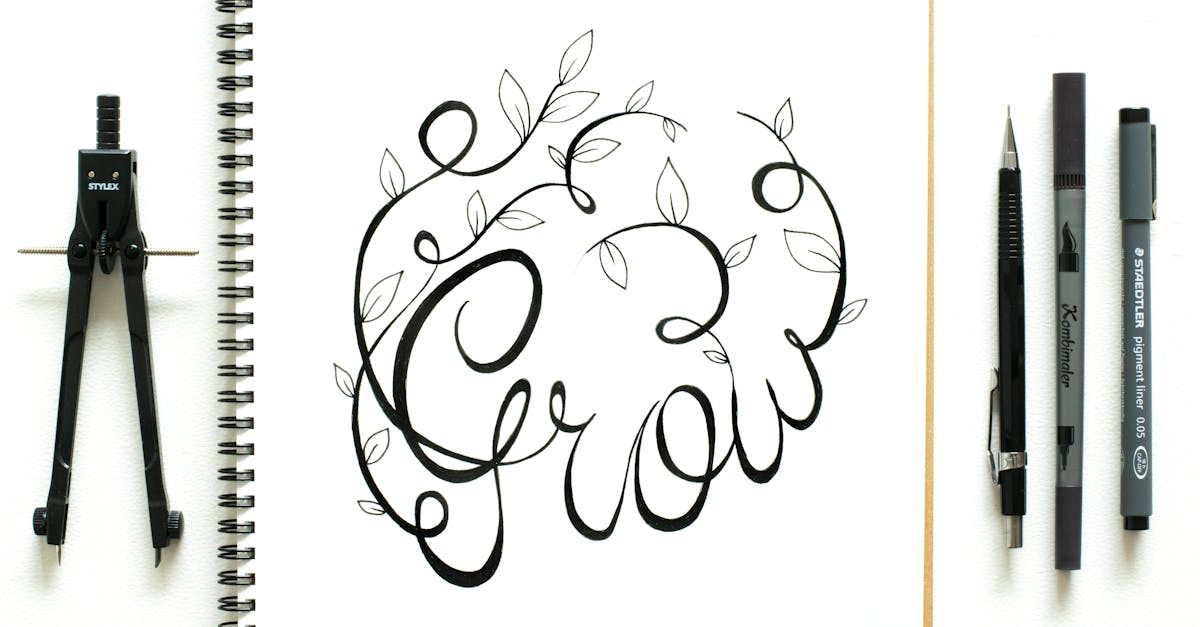
Hand lettering is the creation of custom letterforms for a specific purpose. Unlike typography, which uses pre-existing fonts, lettering produces original characters that are drawn, painted, or constructed by hand (or digitally with a stylus). Each lettering piece is unique — designed for a particular word, phrase, or composition and not intended to function as a reusable alphabet.
The lettering artist works more like an illustrator than a typesetter. The process typically begins with rough sketches, moves through refinement stages, and culminates in a final inked or digital rendering. At every stage, the artist has complete control over each letterform’s weight, style, proportion, texture, and embellishment. Letters can be ornate or minimal, geometric or organic, structured or wildly expressive.
Lettering appears in contexts where standard fonts cannot achieve the desired visual impact: logos, album covers, book titles, murals, packaging, posters, and custom apparel graphics. When a project demands letterforms that are truly one-of-a-kind — shaped to fit a specific layout, evoke a particular mood, or carry embedded meaning — lettering is the answer.
Key Differences
The fundamental distinction in the typography vs lettering comparison is selection versus creation. Typography selects from existing options and arranges them skillfully. Lettering creates new options from scratch. This core difference ripples outward into every aspect of the two disciplines.
Typography is scalable and systematic. Once type is set, it can be applied across thousands of pages or screens consistently. Lettering is bespoke and singular. Each piece is crafted for its specific context and does not automatically extend to other applications. Typography prioritizes readability and functional clarity for extended text. Lettering prioritizes visual expression and impact for short-form text like titles, headlines, and display pieces.
The tools are different too. Typographers work with font libraries, layout software like Adobe InDesign, and CSS properties for digital text. Lettering artists work with pencils, pens, brushes, ink, and digital drawing tools like Procreate or Illustrator’s pen tool. A typographer needs deep knowledge of typeface classification, spacing metrics, and compositional systems. A letterer needs strong drawing skills, understanding of letterform structure, and a keen eye for visual balance.
Common Confusion
The confusion between lettering vs typography often arises because both deal with letters. People see a beautifully lettered sign and call it “great typography,” or they see a well-typeset page and describe the fonts as “lettering.” The terms are not interchangeable. If the letterforms were selected from a font menu, it is typography. If the letterforms were drawn or constructed by hand, it is lettering.
When to Use Each
Typography is the right choice for any project involving extended text that must be readable, consistent, and scalable. Body copy in books, articles, and websites. Interface text in apps and software. Signage systems that span multiple locations. Marketing materials that need to be produced efficiently at scale. Typography handles all of these because it leverages the systematic consistency of designed typefaces.
Lettering is the right choice when a project requires a unique visual identity that no existing font can provide. A brand wordmark that needs to feel distinctive and ownable. A book cover where the title treatment is the primary visual element. A mural that must interact with a specific physical space. A product label where the letterforms carry as much personality as the product itself. Lettering is custom work for custom needs.
Understanding the serif vs sans serif distinction and broader typeface classification helps typographers make strategic selections. Understanding letterform anatomy and construction principles — informed by knowledge of both calligraphic tradition and type design — helps letterers create convincing, beautiful work.
Can They Work Together?
Absolutely. Typography and lettering are not competing disciplines — they are complementary tools in a designer’s repertoire. Many of the most effective design projects combine both.
A book cover might feature a hand-lettered title paired with typeset author name and subtitle. A brand identity might include a custom-lettered logotype supported by a carefully selected typeface family for all other text applications. A poster might use lettering for the headline and typography for supporting information. A packaging design might combine a lettered product name with typeset ingredient lists and descriptions.
The key is recognizing what each discipline does best and deploying it accordingly. Lettering brings personality, uniqueness, and visual impact. Typography brings readability, consistency, and systematic efficiency. A designer who understands both can make smarter decisions about when to reach for a font menu and when to reach for a pencil.
For those interested in the intersection of these fields, studying graphic design principles provides a framework for combining custom and systematic elements into cohesive visual communication. And understanding the broader landscape of graphic design helps contextualize how typography and lettering each serve the larger discipline.
Frequently Asked Questions
Is lettering just a fancy word for typography?
No. Lettering and typography are distinct disciplines. Typography is the arrangement of pre-designed typefaces. Lettering is the creation of original letterforms by hand or digitally. While both involve letters, the processes, tools, and applications are fundamentally different. Using the terms interchangeably obscures meaningful distinctions that affect how design projects are approached and executed.
Can a lettering piece become a font?
Yes. Type designers sometimes begin with hand-lettered explorations and then develop those letterforms into complete, functional typefaces. However, turning lettering into a font is a substantial process that involves creating a full character set, establishing consistent metrics, generating digital font files, and extensive testing. Lettering on its own is artwork for a specific purpose; a font is a systematic tool for general use.
Do graphic designers need to know how to do lettering?
It is not a strict requirement, but lettering skills are a significant asset. Many design projects benefit from custom letterforms, and the ability to create them in-house adds value. Even designers who do not specialize in lettering benefit from understanding letterform construction, as this knowledge deepens their typographic judgment and appreciation of type design.
Is digital lettering still considered hand lettering?
This is a topic of ongoing debate in the design community. Many artists consider lettering drawn on a tablet with a stylus to be hand lettering because the drawing process — sketching, refining, constructing forms — is the same as on paper. Others reserve “hand lettering” strictly for work done with physical materials. The consensus leans toward the process being the defining factor: if letters are individually drawn rather than typed, it qualifies as lettering regardless of whether the medium is paper or screen.