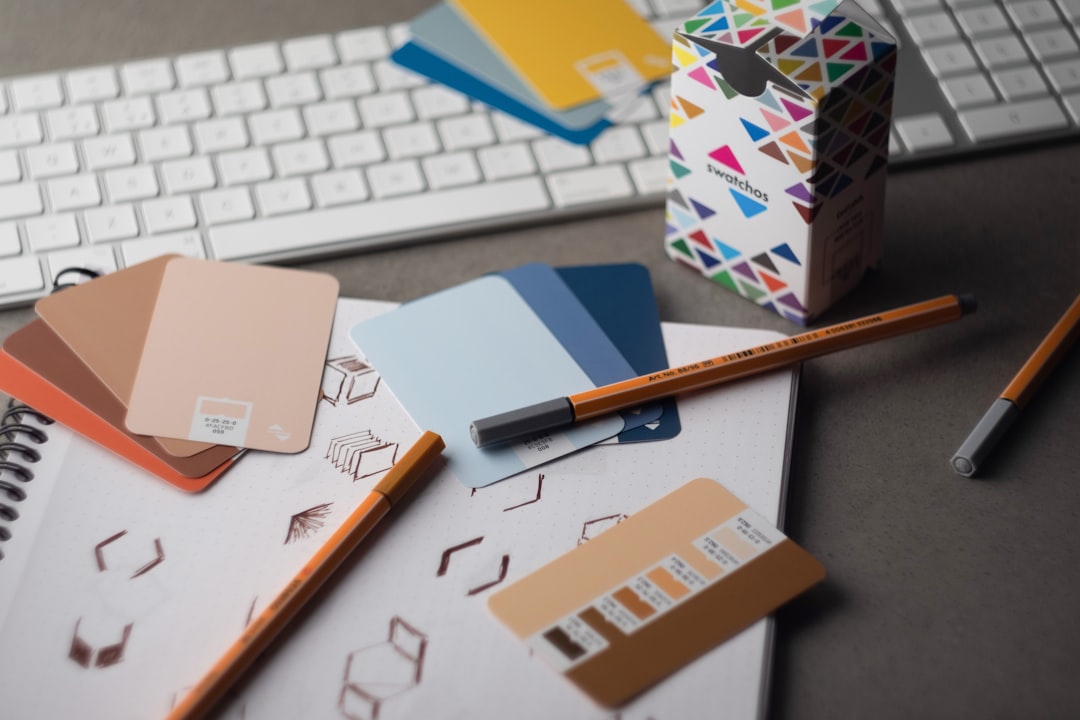
Emphasis in Design: Drawing the Eye
Emphasis in design is the principle that answers one question for the viewer: where do I look first? Every effective composition has a clear focal point — a single element that wins the eye before everything else. Get this right and your message lands in under a second; get it wrong and the viewer’s gaze wanders, hunting for a point of entry that isn’t there.
Emphasis is one of the core principles of design, and it sits at the top of the hierarchy of decisions. Before you fuss over color or spacing, decide what the hero is. This article covers how to create emphasis, why isolation is so powerful, and the discipline that keeps a focal point from drowning.
What emphasis (and dominance) actually means
Emphasis and dominance are often used interchangeably, with a useful nuance: emphasis is the act of making something stand out, and dominance is the result — the element that ends up commanding the composition. A dominant element is the loudest voice in the room. Subordinate elements support it, and that ranking is what gives a layout direction.
Crucially, emphasis is relative. Nothing is emphatic on its own; it becomes emphatic by differing from its surroundings. A red dot is only striking because everything around it isn’t red. This is why emphasis and contrast in design are so tightly linked — emphasis is contrast applied with intent toward a single hero.
Techniques for creating emphasis
There are several reliable levers. The strongest designs usually combine two or three of them on the hero and deny them to everything else.
- Size and scale. Bigger reads as more important. An oversized headline or a large hero image claims attention by sheer mass.
- Color. A single saturated accent in a muted palette pulls the eye instantly. This is why call-to-action buttons are often the one bright element on a page.
- Contrast in value. A dark element on a light field — or the reverse — separates cleanly from its background.
- Weight. Bold type or a heavier line stands forward against lighter neighbors.
- Shape and form. An element shaped differently from a uniform set breaks the pattern and draws notice — one circle among squares.
- Position. The optical center, the top-left entry point in left-to-right reading, and intersection points on a grid all carry natural weight.
- Direction. Leading lines, arrows, or the gaze of a figure in a photo point the eye toward the focal point.
Isolation: the most underused technique
The single most powerful way to create emphasis is also the most counterintuitive: isolation. Surround one element with generous empty space and it dominates, even if it is small. A lone word in the middle of a blank page outranks a cluttered headline every time, because the eye has nowhere else to settle.
Isolation works because emphasis is about difference, and an element separated from a crowd is maximally different from it. This is where emphasis meets white space in design — negative space isn’t just breathing room, it is an active tool for promotion. When you can’t make the hero bigger or brighter, give it room and let the emptiness do the lifting.
The one-hero rule
The most common emphasis mistake is having too many focal points. When everything is bold, large, and bright, nothing stands out — the page becomes a shouting match with no winner. Emphasis is a zero-sum resource: every element you promote dilutes the others.
The discipline is simple to state and hard to follow: choose one primary focal point per composition. You may have a clear second and third tier, but the hierarchy must be unmistakable. If two elements are competing for first place, the design has no answer to “where do I look?” — and the viewer will pick neither.
| Goal | Best technique | Watch out for |
|---|---|---|
| Make the headline lead | Scale + weight | Body text creeping too large |
| Drive clicks to a button | Accent color + isolation | Multiple bright accents competing |
| Highlight one product | Isolation in white space | Crowding it with supporting items |
| Direct a photo’s attention | Subject’s gaze / leading lines | Distracting background detail |
Emphasis and visual hierarchy
Emphasis is the first move in building visual hierarchy — the ranked order in which a viewer takes in content. The focal point is level one; everything else cascades below it. A typical page reads hero, then headline, then subhead, then body, then fine print, and that descent is engineered by graduating emphasis downward.
Think of it as a volume mixer. The hero is at full volume, secondary elements are turned down a notch, and supporting detail sits quietly in the background. When the levels are set well, the eye moves through the content in exactly the order you intended, without any conscious effort from the viewer.
Common emphasis mistakes
- No focal point at all. A uniform grid of equal-weight elements gives the eye nowhere to land. Promote one.
- Too many focal points. Three “heroes” cancel each other out. Pick one and subordinate the rest.
- Timid emphasis. Making the hero only slightly bigger or slightly bolder reads as a mistake, not a decision. Commit to the difference.
- Emphasizing the wrong thing. If the brightest, biggest element isn’t the most important message, the design is working against you. Match emphasis to priority.
- Forgetting isolation. Cramming the hero shoulder-to-shoulder with everything else throws away your strongest tool.
Where to place the focal point
Emphasis isn’t only about how you make something stand out — where you put it matters just as much. Certain positions on a page carry natural attention. In left-to-right reading cultures, the eye enters at the top-left and often traces a Z or F shaped path, so content placed along those routes is found first. The optical center — slightly above the true geometric center — is another position that feels naturally prominent and is where the eye tends to rest.
This is why dead-center placement, while stable, can feel static, and why off-center placement at a “third” line often reads as more dynamic. A focal point positioned at one of these intersection points gets prominence for free, before you’ve added a single size or color cue. Combine a strong position with size, color, and isolation and the hero becomes impossible to miss.
Emphasis in real-world contexts
The principle looks different across mediums, but the logic holds. On a landing page, the focal point is usually the headline or the primary call-to-action button, which is why CTAs are typically the one saturated color on the screen. In editorial layout, a large pull quote or a dominant photograph anchors the spread. In packaging, the brand name or a hero product shot leads, with ingredients and legal text deliberately subordinated.
In data visualization, emphasis means highlighting the one data point that tells the story — a single colored bar in an otherwise grey chart directs the reader to the insight instantly. Across all of these, the discipline is identical: decide the one thing that matters most, promote it hard, and quiet everything else so it can lead.
A quick workflow for setting emphasis
Start every layout by naming the one thing the viewer must notice. Make that element clearly the largest, the boldest, or the most colorful — and ideally give it room with surrounding space. Then deliberately quiet everything else: reduce its size, mute its color, pull it back. Finally, squint at the result. If one element survives the squint test as the obvious leader, your emphasis is working.
Frequently Asked Questions
What is emphasis in design?
Emphasis in design is the principle of making one element stand out as the focal point so the viewer knows where to look first. It is created through contrast in size, color, weight, shape, position, or isolation. Emphasis gives a composition direction and is the foundation of visual hierarchy.
How do you create emphasis in a design?
Create emphasis by making one element clearly different from its surroundings: larger, bolder, brighter, an unusual shape, or placed at a strong position. Isolating it with white space is especially effective. The key is committing to an obvious difference and denying that prominence to every other element.
What is the difference between emphasis and contrast?
Contrast is any difference between elements; emphasis is contrast aimed at a single hero to create a focal point. You can have contrast throughout a design, but emphasis specifically promotes one element above the rest. In short, emphasis is purposeful, targeted contrast that builds dominance.
Why does my design have no focal point?
Usually because every element carries similar visual weight, so the eye finds nothing to latch onto. Fix it by choosing one element to promote — make it bigger, bolder, or isolated — and quieting the rest. A focal point requires sacrifice; you must subordinate everything that isn’t the hero.


