Rhythm in Design Explained
Rhythm in design is the principle of repeating visual elements to set a tempo, much as a beat does in music. When shapes, colors, spaces, or lines recur in a pattern, the eye begins to move along that pattern, and the designer gains control over the pace and direction of the viewing experience. Rhythm is what turns a static arrangement into something that flows.
Rhythm is one of the core principles of design, and it is the principle most concerned with movement and time. This article covers what rhythm is, the main types, how it guides the eye, how it relates to repetition and pattern, and the mistakes that make a layout feel monotonous or chaotic.
What is rhythm in design?
Rhythm is the sense of organized movement created by repeated elements. Just as a drumbeat establishes intervals of sound and silence, visual rhythm establishes intervals of element and space. The recurrence sets up an expectation, the eye follows it, and the result is a layout with tempo — fast or slow, steady or building — rather than a flat, even field.
The key ingredients are repetition and interval. Repetition supplies the recurring element; interval is the spacing between recurrences. Change the interval and you change the tempo: tight, frequent repeats feel fast and energetic, while wide, sparse repeats feel slow and calm. Rhythm is, in essence, the art of controlling those intervals.
Why does rhythm matter?
Rhythm gives a composition pace and keeps the eye moving in a deliberate way. Without it, a layout can feel inert — the viewer takes in everything at once and then stops. With it, the eye travels along the pattern, taking in elements in sequence, which makes even a dense design feel navigable and alive.
Rhythm also creates mood. A regular, even rhythm feels stable and calm; an accelerating one feels energetic and urgent. By choosing the rhythm, you choose how the piece feels to move through, which is why rhythm is so important in posters, editorial spreads, and long scrolling pages where the experience unfolds over time.
What are the types of rhythm in design?
Designers generally name three core types, each producing a different kind of movement.
| Type | How it works | Feel |
|---|---|---|
| Regular | Identical elements at equal intervals | Steady, calm, predictable |
| Flowing | Organic, curving repetition with varied intervals | Relaxed, natural, graceful |
| Progressive | Elements change gradually with each repeat | Dynamic, building, directional |
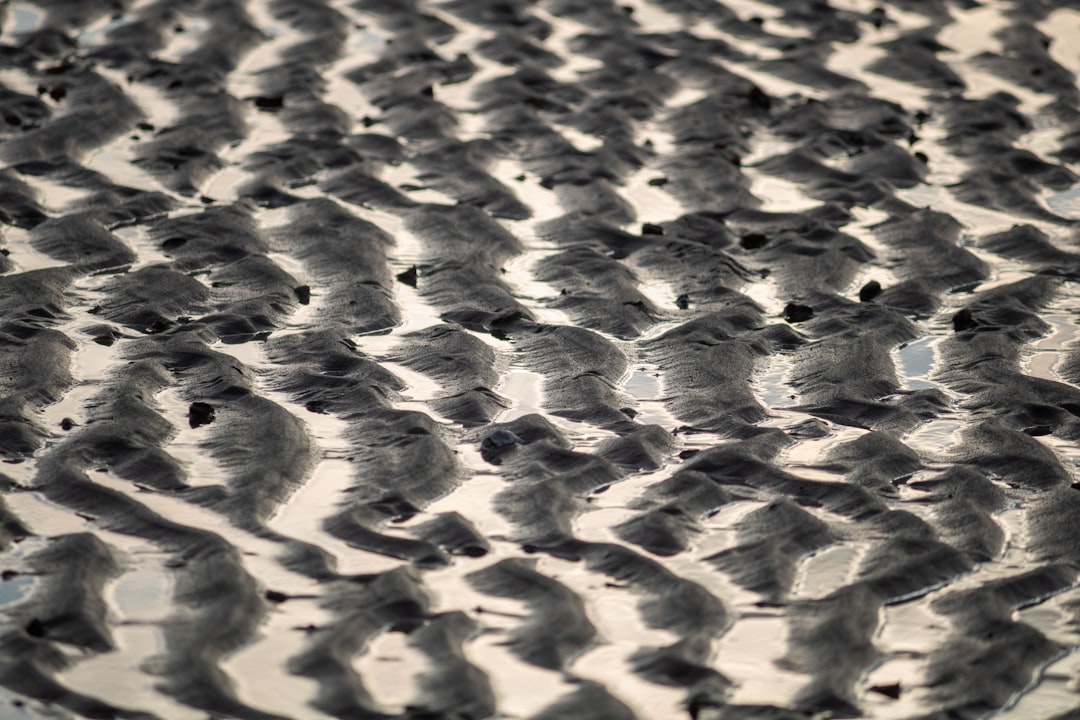
Regular rhythm repeats the same element at the same spacing — think of a row of identical columns or a calendar grid. It is stable and easy to follow but can become monotonous if used everywhere. Flowing rhythm uses organic, often curving repetition with looser intervals, like waves or windblown grass; it feels natural and unhurried. Progressive rhythm changes the element step by step — growing larger, shifting color, rotating slightly — so the repetition has direction and a sense of building toward something.
How does rhythm guide the eye?
Once the eye recognizes a pattern, it anticipates the next beat and moves to find it. This is how rhythm creates a path through a layout: each repeated element is a stepping stone, and the spacing sets the speed. A series of evenly spaced images pulls the eye smoothly across a page; a row of elements that grow progressively larger pulls it toward the largest, which often doubles as a focal point.
This makes rhythm a close partner of scale in design, since progressive rhythm is often built by changing size step by step. It also supports hierarchy: by accelerating or breaking a rhythm at a key moment, you can stop the eye exactly where the most important element sits. A break in an established pattern is itself a powerful attention cue.
How does rhythm relate to repetition and pattern?
Rhythm, repetition, and pattern are related but distinct. Repetition is simply reusing an element. Pattern is repetition arranged into a consistent, often decorative configuration. Rhythm is repetition arranged to create movement and tempo. You can have repetition without rhythm — a single repeated logo — but you cannot have rhythm without repetition.
Because repetition is also the engine of cohesion, rhythm naturally reinforces unity in design. The same recurring elements that set a tempo also tie the layout together, so a well-built rhythm makes a design feel both lively and coherent at once. Rhythm is repetition with a purpose: to move the eye and unify the whole in one gesture.
Common rhythm mistakes
- Monotony. Regular rhythm with no variation anywhere becomes dull. Introduce an accent or a break to keep interest.
- No discernible pattern. Repetition with random intervals reads as noise, not rhythm. The eye needs a recognizable beat.
- Too many competing rhythms. Several patterns at once cancel each other out. Let one rhythm lead.
- Ignoring the interval. Focusing only on the repeated element and not its spacing throws off the tempo. Space is half of rhythm.
- Breaking the rhythm by accident. An unintended gap or stray element disrupts the flow. Breaks should be deliberate.
A quick workflow for building rhythm
Pick the element you’ll repeat — a shape, an image size, a block of space — and decide on the tempo you want. For a calm, steady feel, use a regular rhythm with equal intervals; for energy or direction, use a progressive rhythm that changes the element step by step. Set the spacing as carefully as the elements themselves, since intervals control the pace. Then place a deliberate break or accent where you want the eye to stop — a moment that interrupts the established beat reads as a focal point. Finally, scan the layout and make sure one rhythm clearly leads rather than several competing for the eye.
Frequently Asked Questions
What is rhythm in design?
Rhythm in design is the repetition of visual elements to create a tempo that moves the eye through a composition, much like a beat in music. It is built from repeated elements and the intervals between them. Rhythm gives a layout pace and movement, turning a static arrangement into one that flows and feels alive.
What are the types of rhythm in design?
The three main types are regular, flowing, and progressive. Regular rhythm repeats identical elements at equal intervals for a steady, calm feel. Flowing rhythm uses organic, curving repetition that feels natural and relaxed. Progressive rhythm changes the element gradually with each repeat, creating a dynamic, building sense of direction.
What is the difference between rhythm and repetition?
Repetition is simply reusing a visual element, while rhythm is repetition arranged to create movement and tempo. You can have repetition without rhythm, such as a single repeated logo, but you cannot have rhythm without repetition. Rhythm adds purposeful spacing and progression to repetition so the eye moves along it.
How does rhythm guide the eye?
Once the eye recognizes a repeating pattern, it anticipates the next element and moves to find it, following the rhythm like stepping stones. The interval sets the speed, and a progressive rhythm pulls the eye toward the largest or most intense element. Breaking an established rhythm stops the eye, which makes it a strong focal-point cue.