Types of Typography Explained
When people ask about the types of typography, they usually mean typeface classification — the families that fonts are sorted into based on their anatomy and style. Knowing these nine categories lets you choose and pair fonts with intent rather than guesswork. Below we define each type, give examples, and explain where it works best, followed by a summary table and FAQs.
Once you know the categories, see our font pairing guide for combining them, our serif vs sans-serif comparison for the most common choice, and the typography terms glossary for the vocabulary.
1. Serif
Serif typefaces have small strokes — serifs — at the ends of their letterforms. They feel traditional, authoritative, and readable in long-form print, which is why books and newspapers favor them. Subgroups include old-style (Garamond), transitional (Times New Roman), and Didone (Bodoni). Use serifs for editorial body text, legal and academic work, and brands that want heritage or trust.
2. Sans-serif
Sans-serif typefaces drop the serifs for clean, simple strokes. They read as modern, neutral, and efficient, and their clarity at small sizes makes them the default for screens and UI. Examples include Helvetica, Inter, and Arial. Use sans-serifs for websites, apps, signage, and any brand aiming for a clean, contemporary, or minimal voice.
3. Slab serif
Slab serif typefaces have thick, block-like serifs instead of the thin tapered ones found on classic serifs. They feel bold, sturdy, and confident, working well in headlines and branding that wants impact. Examples include Rockwell, Roboto Slab, and Courier (a monospaced slab). Use slab serifs for posters, logos, and editorial display where you want presence without losing structure.
4. Script
Script typefaces imitate fluid, joined handwriting or calligraphy. They split into formal scripts (elegant, looping, for invitations and luxury branding) and casual scripts (relaxed and friendly). Examples include Great Vibes and Pacifico. Scripts add personality and emotion but are hard to read in bulk, so reserve them for headlines, logos, and short, expressive phrases — never body text.
5. Display
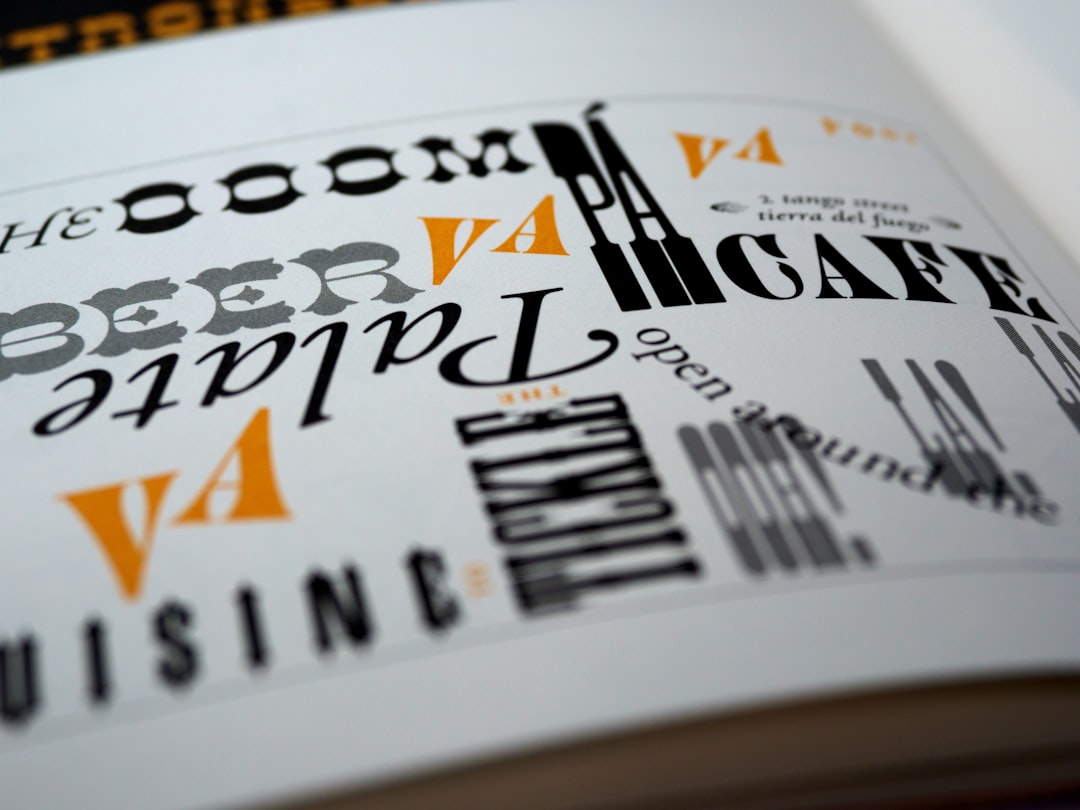
Display typefaces are designed specifically for large sizes and high impact — headlines, posters, and logos — rather than running text. They often carry strong personality, exaggerated proportions, or unusual detailing that only works big. Many distinctive branding fonts fall here. Use display type sparingly and at scale; its whole purpose is to grab attention in a headline, not to be read in paragraphs.
6. Monospace
Monospace typefaces give every character the same fixed width, so columns of text align perfectly. Born from typewriters, they are now the standard for code editors and technical interfaces because alignment aids readability of code. Examples include Courier, JetBrains Mono, and IBM Plex Mono. Use monospace for code, data tables, and a deliberately technical or retro aesthetic.
7. Blackletter
Blackletter (Gothic or Old English) typefaces feature dense, ornate, angular strokes drawn from medieval European manuscripts. The Gutenberg Bible was set in blackletter. Today it reads as historic, dramatic, or edgy and survives on diplomas, newspaper mastheads, certificates, and certain music and craft branding. It is highly decorative and almost never used for body text because legibility suffers.
8. Handwritten
Handwritten typefaces emulate natural, unjoined handwriting — print-style rather than the connected loops of formal script. They feel personal, casual, and authentic, which suits friendly brands, greeting cards, and packaging that wants a human touch. Quality varies widely, so choose handwritten fonts with consistent rhythm and avoid them for anything requiring formality or dense reading.
9. Decorative
Decorative (or novelty) typefaces are stylized fonts built for a specific theme or effect — vintage, futuristic, horror, holiday, and so on. They are the broadest, most expressive category and overlap with display type. Use decorative fonts for one-off headlines, event branding, and themed graphics where personality is the point. Their strong character makes them unsuitable for body text or long-term flexible systems.
Types of typography at a glance
| Type | Key feature | Best for |
|---|---|---|
| Serif | Strokes at letter ends | Long-form print, editorial, heritage brands |
| Sans-serif | Clean, no serifs | Screens, UI, modern brands |
| Slab serif | Thick block serifs | Headlines, posters, bold branding |
| Script | Flowing joined handwriting | Invitations, luxury, logos |
| Display | High-impact, large sizes | Headlines, posters, identity |
| Monospace | Fixed character width | Code, data, technical/retro looks |
| Blackletter | Ornate medieval strokes | Diplomas, mastheads, edgy branding |
| Handwritten | Casual unjoined hand | Personal, friendly, packaging |
| Decorative | Themed, stylized novelty | One-off headlines, themed graphics |
Classification vs the four typography roles
“Types of typography” can also mean the role a typeface plays in a layout rather than its classification. Designers talk about display type (large, attention-grabbing headlines), body type (the readable workhorse of paragraphs), and supporting roles such as captions and labels. These roles cut across the nine classifications above: a serif can be a display face or a body face depending on how it is used. When you brief or build a type system, it helps to specify both — for example, “a slab-serif display face paired with a humanist sans-serif body face” tells a designer exactly what each typeface must do.
How typeface classification helps you choose
These categories are a decision shortcut. For body text, you almost always want a serif or sans-serif chosen for readability, since those two families are engineered for sustained reading at small sizes. For headlines and identity, slab, display, script, and decorative add character and make a brand recognizable at a glance. Monospace signals technical contexts like code and data, while blackletter and handwritten carry strong cultural associations you should invoke deliberately. A reliable pairing strategy is to combine one workhorse (serif or sans) with one expressive type for contrast, then limit yourself to two or three typefaces total so the system stays coherent across every page and screen.
Frequently Asked Questions
What are the main types of typography?
The main types are serif, sans-serif, slab serif, script, display, monospace, blackletter, handwritten, and decorative. These are typeface classifications — groups of fonts that share structural traits. Serif and sans-serif handle most body text, while the others add personality and are used mainly for headlines, branding, and specialized contexts.
What is the difference between serif and sans-serif typefaces?
Serif typefaces have small strokes at the ends of letters and feel traditional and authoritative, performing well in long-form print. Sans-serif typefaces omit those strokes for a clean, modern look that stays legible on screens at small sizes. Choose serif for editorial print and heritage; sans-serif for digital interfaces and contemporary brands.
What is a display typeface?
A display typeface is designed for large sizes and high visual impact — headlines, posters, and logos — rather than running text. Display fonts often have exaggerated proportions or distinctive detailing that only works when set big. They grab attention and set tone, but should be used sparingly and never for body copy.
When should I use a script or handwritten typeface?
Use script and handwritten typefaces for short, expressive elements — logos, invitations, greeting cards, packaging, and feature headlines — where personality and a human touch matter. Avoid them for body text or anything that demands fast reading, because their flowing or irregular letterforms reduce legibility at length and small sizes.
Is monospace a real type of typography?
Yes. Monospace is a distinct classification where every character occupies the same fixed width, so text aligns into neat columns. It originated with typewriters and is now standard in code editors and technical interfaces because the alignment improves readability of code and data. It also delivers a deliberate technical or retro aesthetic.
Set a base size and ratio, preview every heading level live, and copy the CSS in one click — free, no signup.