Enamel Pin Design: From Sketch to Production
Enamel pin design is constrained art: every color must be separated by a metal line, and every line has a minimum width the factory can actually produce. Designers who learn those constraints up front get clean, vibrant pins on the first sample; those who do not get muddy colors and broken lines. This guide takes you from sketch to manufacturing, covering soft vs hard enamel, color and line rules, plating, and real 2026 costs and minimums.
Pins are a high-perceived-value item that works beautifully in a wider range. For cross-product file specs and how pins fit alongside other merch, see our complete merch design guide before you finalize artwork.
How Enamel Pins Are Actually Made
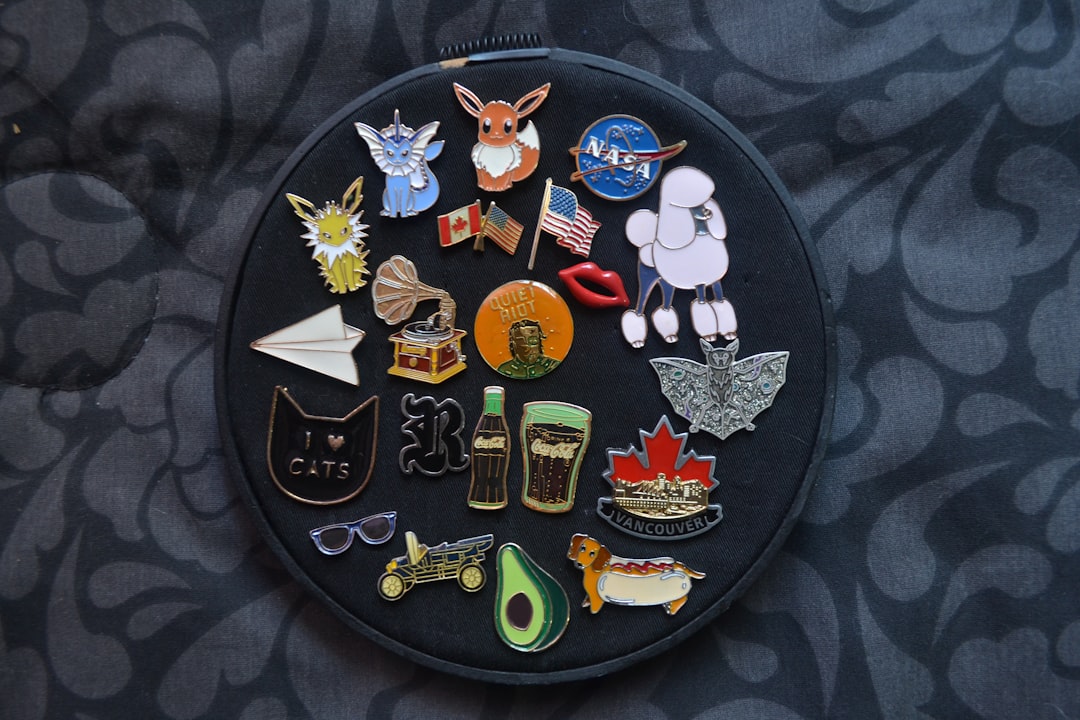
An enamel pin is a stamped or die-struck metal base with raised metal lines forming the outline of every shape and color area. Colored enamel is then filled into the recessed wells between those metal lines. This is the core constraint of the whole craft: color cannot touch color directly, every color region must be bounded by metal. Designing as if you are coloring inside metal outlines, rather than painting freely, is the mental shift that makes a design manufacturable.
Soft Enamel vs Hard Enamel
The single biggest decision is the enamel type, because it changes both look and feel.
| Feature | Soft enamel | Hard enamel |
|---|---|---|
| Surface | Textured — metal lines sit raised above the color | Smooth — polished flat, color level with metal |
| Feel | Tactile, ridged | Glassy, premium |
| Color vibrancy | Bright, can use more effects | Slightly more muted, very durable |
| Cost | Lower | Higher (extra polishing step) |
Choose soft enamel for vibrant, textured pins on a tighter budget, the most common choice for creators. Choose hard enamel for a smooth, jewelry-grade finish that feels more premium and resists scratching, at a higher price.
The Rules That Make a Pin Manufacturable
These are the constraints that decide whether your art survives production:
- Minimum line weight — Metal lines and the thinnest enamel channels generally need to be around 0.15–0.2 mm or thicker. Hairline details simply cannot be cast; bulk them up.
- No gradients — Enamel fills are flat, solid color. You cannot fade one color into another within a single well. Simulate gradients with screen-printed detail (an add-on) if essential.
- Color count — Each distinct color is a separate enamel fill. Many factories include a number of colors in the base price and charge for extras, so keep your palette tight.
- Use named colors — Specify Pantone (PMS) colors so the factory matches your intent rather than guessing from a screen.
- Mind the size — Most pins run roughly 1 to 1.5 in. Fine detail that reads on screen vanishes at pin scale, so simplify.
- Closed shapes only — Every enamel well must be fully enclosed by metal. An open-ended line leaves nowhere for the color to sit, so close every region you intend to fill.
Plating and Color Choices
The exposed metal lines are plated, and the plating color frames your whole design. Common options include gold, silver/nickel, black nickel (dramatic, great with bright enamel), copper, and antique finishes. Pick plating that contrasts your enamel: black nickel makes neon colors pop, while gold suits warm, classic palettes. Remember the metal areas are part of the design, leaving a shape unfilled lets the plating itself become a color.
Preparing Your Artwork File
- Work in vector — Build the pin in Illustrator or Affinity Designer. Vector is essential because the factory makes a mold from clean outlines.
- Flatten to solid shapes — Each color is one solid flat fill; no gradients, no soft shadows, no blur.
- Define the metal lines — Show clearly which areas are raised metal versus enamel fill, often by leaving the metal areas as your background/line color.
- Bulk thin elements — Thicken any line or text below the minimum width.
- Label colors with Pantone codes — Annotate each fill so the factory matches exactly.
- Specify size and backing — Note the finished dimension and the attachment (butterfly clutch, rubber clutch, or screw-back/locking pin).
Backings and Extras
Standard pins ship with a butterfly (military) clutch or a rubber clutch; for heavier or premium pins, a locking or screw-back clasp holds better. Worthwhile upgrades include glitter or glow-in-the-dark enamel, screen-printed detail (for fine art or gradients enamel cannot do), epoxy doming for a glossy raised coating, and a printed backing card for retail presentation. Each adds cost, so weigh it against your price point.
Minimums and Costs (as of 2026)
Pins are made to order with real minimums. As of 2026, a typical minimum order quantity (MOQ) sits around 50–100 pieces, and per-unit cost falls sharply as quantity, simplicity, and size improve. A small soft-enamel pin at a moderate quantity can land in the low single digits of dollars each, with hard enamel, extra colors, special enamels, and larger sizes pushing it higher. Always order or approve a pre-production sample before the full run, treat these figures as estimates and confirm with your manufacturer.
Pins pair naturally with other collectibles, bundle them with a matching sticker or sell them alongside a printed tote to lift order value across a coordinated range.
Frequently Asked Questions
What is the difference between soft and hard enamel pins?
Soft enamel pins have a textured surface where the metal lines sit raised above the recessed color, giving a tactile, vibrant, more affordable result. Hard enamel pins are polished flat so the color is level with the metal, producing a smooth, glassy, jewelry-grade finish that costs more and resists scratching. Soft enamel is the most common creator choice.
Why can’t enamel pins have gradients?
Enamel is filled as flat, solid color into wells bounded by raised metal lines, so one color cannot fade into another within a single well. Every color must be separated by metal. If a gradient or fine detail is essential, factories can add screen-printed detail on top of the enamel as a paid extra, but pure enamel fills are always solid.
What is the minimum order for custom enamel pins?
As of 2026, a typical minimum order quantity for custom enamel pins is around 50 to 100 pieces, since each design needs its own mold. Per-unit cost drops sharply with higher quantities, smaller sizes, fewer colors, and simpler designs. Always approve a pre-production sample before committing to the full run, and treat quoted figures as estimates.
How thin can lines be on an enamel pin?
Metal lines and the thinnest enamel channels generally need to be roughly 0.15 to 0.2 millimeters or thicker, because hairline details cannot be cast or filled cleanly. Bulk up any thin lines or small text before sending artwork. Designing in vector and simplifying detail for the typical 1 to 1.5 inch pin size avoids broken lines and muddy color.
What software should I use to design an enamel pin?
Use a vector tool such as Adobe Illustrator or Affinity Designer, because the factory builds a mold from clean vector outlines. Flatten the design to solid, flat color fills with no gradients or soft shadows, clearly mark which areas are raised metal, bulk up thin lines, and label each color with a Pantone code for accurate matching.