Save the Date Design: Ideas and Templates
Save the date design is the trailer for your event — its only job is to make guests block the date and set expectations for the invitation that follows. Because it arrives months ahead, it carries less information than a full invitation but more responsibility for first impressions. This guide covers the sizes, formats, paper, and type that make a save the date land, plus timing and template ideas you can adapt.
For the broader fundamentals on sizes, stocks, and print methods, start with our complete guide to invitation design. This article focuses on what makes a save the date specifically work.
What a Save the Date Must Include
A save the date is deliberately minimal. Cramming in registry links and full details defeats the purpose and steps on the invitation that comes later. Include only:
- Names of the hosts or couple.
- The date — the single most important element, set large and clear.
- The location — city and state is enough; full address goes on the invitation.
- “Formal invitation to follow” — sets the expectation that more is coming.
- A website URL if you have a wedding or event site for early details.
Sizes and Formats
Save the dates are usually less formal than the invitation, which opens up cheaper and more creative formats. The three dominant choices are the flat card, the postcard, and the magnet.
| Format | Common size (in) | Pros | Watch-outs |
|---|---|---|---|
| Flat card | 5 × 7 or 4 × 6 | Matches invitation suite | Needs an envelope, higher postage |
| Postcard | 4 × 6 or 5 × 7 | No envelope, cheaper to mail | Address & postage on the back |
| Magnet | 4 × 6 or 3.5 × 5 | Sticks on the fridge — high visibility | Send in a rigid mailer to avoid bends |
The postcard is the value pick — no envelope, lower postage, and the photo or art shows immediately without an extra step. The magnet wins on staying power: it lives on the fridge for months as a constant reminder. Whichever you choose, build artwork with a 0.125 in bleed and keep text 0.25 in inside the trim.
Paper and Production
Because a save the date precedes the formal invitation, you can save your premium budget for later. Most save the dates print well as digital on 110lb cardstock — affordable, full color, and perfect for photo-based designs. If you want a tactile upgrade without full letterpress cost, add a single foil accent on the date or a monogram. Magnets are produced on a flexible magnetic sheet with a printed face; postcards run on heavier 14–16pt stock so they survive the mail.
Typography for Save the Dates
The date is the headline, so the type system should make it impossible to miss. A reliable approach pairs a bold display face for the date with a clean sans or serif for the names and supporting line. If your save the date is previewing a formal wedding suite, echo the suite’s pairing — often a calligraphic script with a refined serif — so guests recognize the visual identity when the invitation arrives.
Keep it to two type families and let size do the work: the date largest, names second, the “invitation to follow” line smallest. For help choosing combinations that hold together, see our font pairing guide.
Save the Date Ideas and Templates
A few layout directions that consistently work, ready to adapt:
- Photo postcard. A full-bleed engagement or event photo on the front, date overlaid in clean type; logistics on the back.
- Type-led poster. No photo — a giant date in a bold serif, minimal supporting text, one accent color. Modern and graphic.
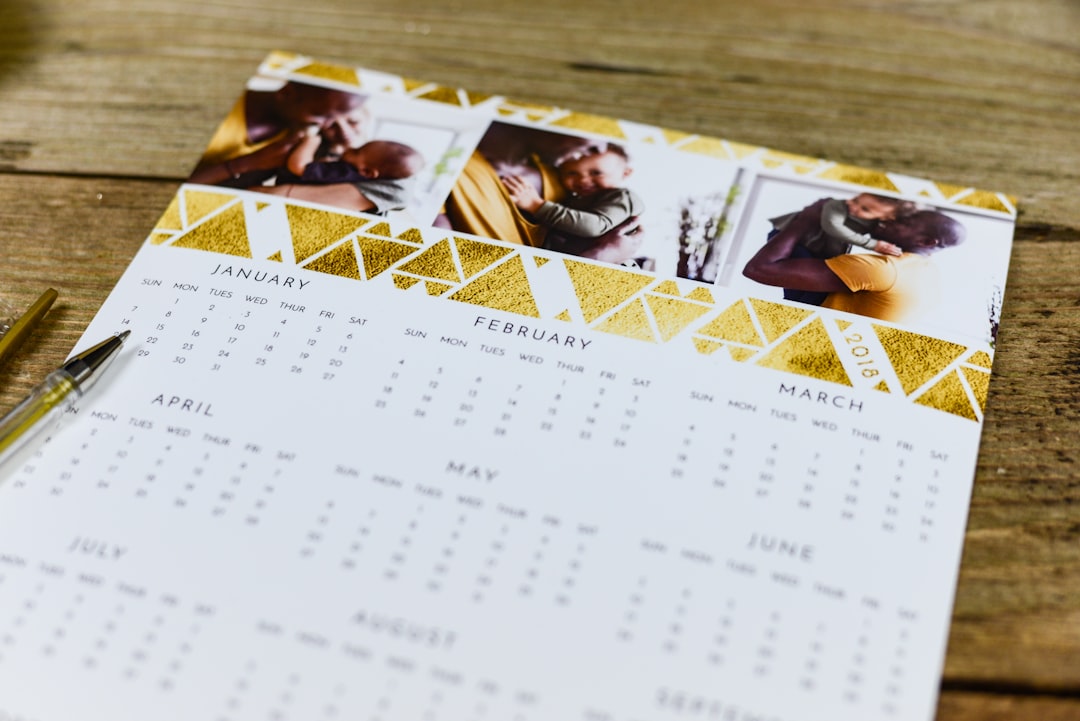
- Fridge magnet. 4×6 magnet with a calendar motif circling the date for instant recognition.
- Vintage stamp. A faux postage-stamp or travel-ticket motif, ideal for destination events.
- Minimal monogram. Initials and date only, foil-accented on heavy stock — elegant and inexpensive.
Color and Photo Direction
Because most save the dates are photo-led, the relationship between image and type does the heavy lifting. If you are using an engagement or event photo, choose one with calm negative space — a clear sky, a plain wall, a stretch of grass — so the date has somewhere to sit without fighting the subject. When the photo is busy edge to edge, drop a subtle gradient or a semi-transparent panel behind the text rather than dumping type onto clutter, which is the most common reason a photo card reads as messy.
On the color side, restraint still wins. Pull one or two accent colors from the photo or from your future invitation palette and use them for the date and the supporting line. A single consistent accent across photo, type, and (if mailed in one) the envelope liner makes a casual card feel intentional. If the save the date previews a formal wedding, keeping the palette in the same family as the invitation primes guests to recognize the suite when it arrives.
Timing: When to Send
Timing is half the value of a save the date. Send too late and it does nothing the invitation could not. The standard windows:
- Local events / weddings: four to six months ahead.
- Destination or holiday-weekend weddings: eight to twelve months ahead so guests can book travel.
- Large milestone parties: two to three months ahead.
Only send save the dates to guests you are certain will be invited — anyone who receives one expects a formal invitation later. Once the date is locked in, carry the same look forward into your wedding invitation design so the two pieces clearly belong to the same event, and apply the same craft to any greeting card design you send alongside it.
Frequently Asked Questions
When should you send save the dates?
Send save the dates four to six months before a local event and eight to twelve months ahead for destination or holiday-weekend weddings so guests can arrange travel. Only send them to people you are certain will receive a formal invitation, since a save the date promises one is coming.
What information goes on a save the date?
Include only the hosts’ or couple’s names, the date set large and prominent, the city and state, a “formal invitation to follow” line, and a website URL if you have one. Leave full address, registry, and RSVP details for the invitation — a save the date is meant to be minimal.
What size is a save the date card?
The most common save the date sizes are 5×7 to match a wedding suite and 4×6 for postcards and magnets. Postcards skip the envelope and lower postage costs, while magnets are typically 4×6 or 3.5×5 and should ship in a rigid mailer so they arrive flat and undamaged.
Are magnet save the dates a good idea?
Magnet save the dates are excellent for visibility because they live on the guest’s fridge for months as a constant reminder. Print them on a flexible magnetic sheet and send them in a rigid mailer to prevent bending. They cost a little more than postcards but deliver the strongest staying power.
Do save the dates need to match the invitation?
They should share a visual identity but need not be identical. Echo the invitation’s type pairing, color palette, or a monogram so guests recognize the connection when the formal invitation arrives. A save the date is usually more casual, so it can be a relaxed preview rather than an exact replica.