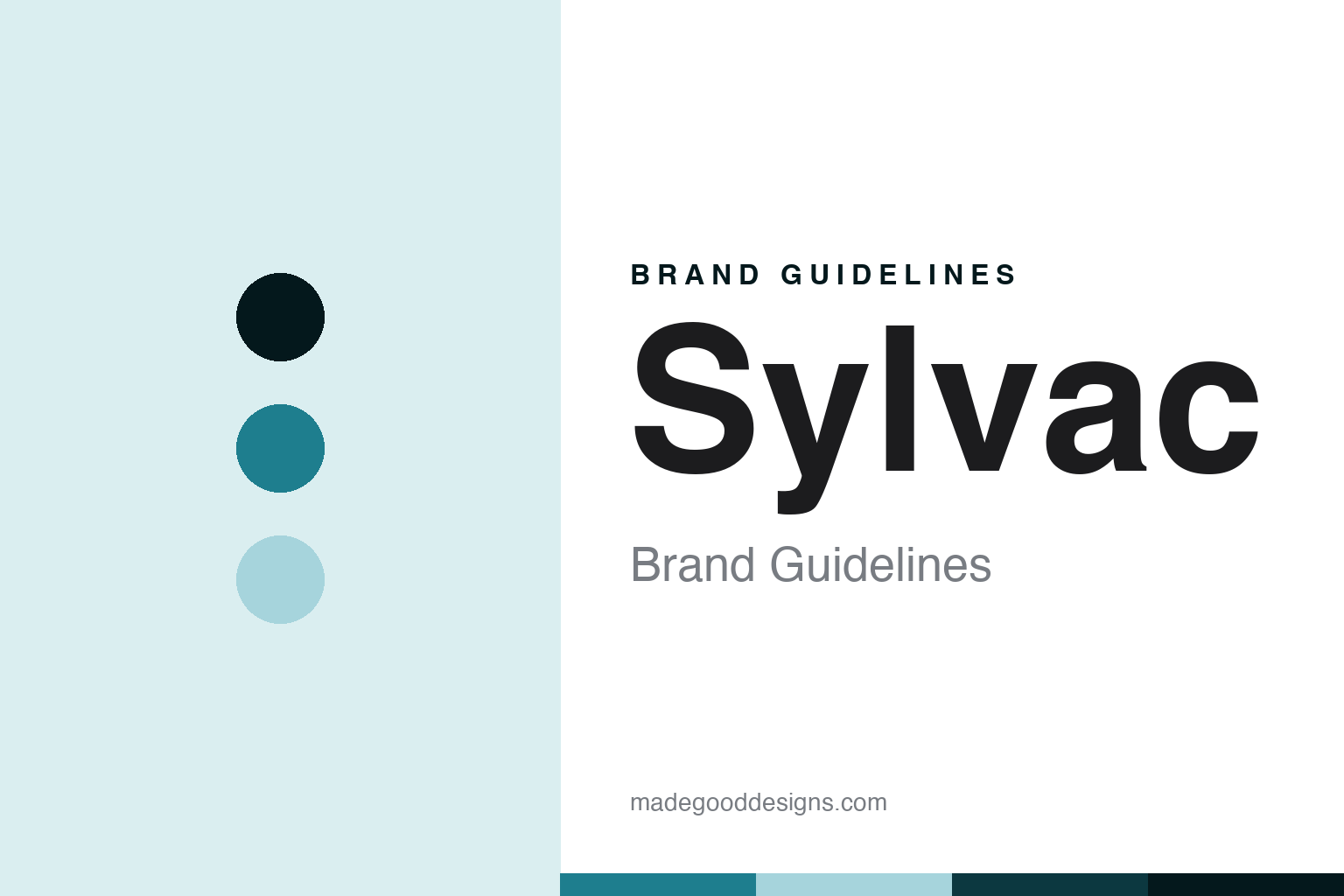
Sylvac Brand Guidelines
The Swiss OEM inside other names.
Aa
Two constants: a Sylvac-teal palette and an OEM-sans register. Abstract homage — not a Sylvac product or mark; no caliper, dial or logo is reproduced.
The Swiss OEM inside other names
Sylvac is a 1969 family-owned Swiss maker whose digital instruments are sold co-branded (Fowler-Sylvac, Bowers Sylvac) — the measurement tech behind names on other tools.
Sylvac follows Brown and Sharpe as the round’s OEM node — a Swiss digital-metrology maker whose instruments and measurement technology are sold co-branded under other companies’ names. Its answer to a round about who owns the measuring tools is the maker-behind-the-labels one: a family-owned Swiss house whose tools carry other names.
Its identity is the Swiss OEM inside other names. The 1969 Swiss founding, the family ownership and the co-branded instruments are the story here. The maker, not always the label. The Swiss OEM inside other names.
(Honest notes, so the founding, the ownership, the co-branding, the making and two traps are framed accurately. Sylvac sells digital measuring instruments as its heroes — the S_Cal EVO digital calipers, digital micrometers, indicators and the Sylvac-Scan optical shaft-measurement system; we report its language as the brand’s own. On founding: Sylvac SA was founded in 1969 in French-speaking Switzerland, with headquarters now in Yverdon-les-Bains, and the founder’s name is not documented. On ownership: it is privately held, owned by three shareholder families, and not listed. On the co-branding, the key angle and attributed: Sylvac instruments are documented as sold co-branded, notably Fowler-Sylvac in the United States and Bowers Sylvac in the United Kingdom, and Sylvac itself claims to have supplied position-sensor technology to most key players, which we treat as a company claim rather than a fact; wider claims that Sylvac electronics sit inside many house brands are trade lore beyond Fowler and Bowers. On the making: Swiss made, though a Chinese unit assembles some calipers, so we do not say fully Swiss. On two traps: Sylvac SA is not SylvaC the defunct British pottery brand, and Sylvac, Trimos and Bowers are trading partners rather than commonly owned companies. There is no official brand hex; these tones are an unofficial interpretation.)
Colour
Sylvac lives in a Sylvac teal. Click a swatch to copy the hex.
Sylvac’s identity is OEM, Swiss-digital and family-owned — a Sylvac teal, an ink, a pale aqua, a deep teal, and a paper. The palette leans Sylvac teal and deep teal: a precise, engineered register that nods to a digital-measurement house behind the labels rather than a loud logo colour. It signals the Swiss OEM inside other names — OEM, Swiss-digital and family-owned. The honest caveat: with no official brand hex, and only a red wordmark documented, these values are an engineered, unofficial interpretation, not first-party colours.
The lesson is a Sylvac teal signals a maker, OEM identity. Sylvac’s world is the measurement tech inside other tools. For designers, it is a reminder that a precise teal and a pale aqua can carry a maker, digital brand — a maker tone held as an accent, not a product shot. Because a mid hue can fail as small text, keep type dark and let the colour live in the accents, palette and band. The takeaways: date the founding to 1969 and Switzerland; keep the ownership three-family and private; attribute the co-branding to Fowler and Bowers without overstating; keep the making Swiss with some Chinese assembly; and flag the pottery and partner traps.
Typography
The register is an OEM sans — OEM, Swiss-digital, family-owned.
Sylvac’s identity carries an OEM, Swiss-digital spirit — a maker whose tech wears other names. An OEM sans captures the mood: clean, exact and engineered, the register of a maker behind the labels. Set in a Sylvac-teal palette, the OEM sans feels precise and modern — exactly the personality Sylvac carries. It behaves like a made, calibrated thing rather than a loud logo, mirroring a digital-scale-line and a graduation-tick. (Sylvac’s real products and the name are things we describe but do not reproduce, and the exact typeface is not ours to use.) Because it is not ours to use, the honest description is “an OEM-sans brand,” shown here in a stand-in. The type behaves like the brand: OEM, Swiss-digital and family-owned.
Aa
An OEM-sans brand — precise and modern. (Specimen set in Outfit, an OEM-sans STAND-IN; NOT the Sylvac logo or products.)
The measuring node
Sylvac stands for the Swiss OEM inside other names.
Sylvac sits fifth in the round as its OEM node. A Sylvac-teal palette, an OEM sans and a 1969 founding make one thing — the Swiss OEM inside other names — the whole identity: OEM, Swiss-digital and family-owned. The 1969 Swiss founding is the pitch, the family ownership is the frame, and the co-branded instruments are the story. The point is a family-owned Swiss house whose tools carry other names, in a round about who owns the measuring tools.
Put to work, the identity is the brand told straight, the co-branding attributed and the traps flagged. A brand in this spirit would date the founding to 1969 and Switzerland, keep the ownership three-family and private, attribute the co-branding to Fowler and Bowers without overstating, keep the making Swiss with some Chinese assembly, and flag the pottery and partner traps. A reader in this spirit would keep the facts right: Sylvac sells the S_Cal EVO and Sylvac-Scan; it was founded in 1969 in Switzerland; it is owned by three families and unlisted; and its instruments are sold co-branded as Fowler-Sylvac and Bowers Sylvac. Sylvac sits after Brown and Sharpe and before Insize. The honest editorial moves are to date the founding, to attribute the co-branding, to keep the making Swiss with a note, and to flag the traps.
For designers and brand-builders, Sylvac carries the measuring node: attribute a co-branding list — and don’t overstate the OEM reach. The lessons: a brand can be the maker whose measurement tech wears other names, here Sylvac; a founding is dated to 1969 in French-speaking Switzerland, with headquarters now in Yverdon-les-Bains and the founder left unnamed; an ownership is kept accurate as privately held by three shareholder families and unlisted; a co-branding is attributed precisely, documented as Fowler-Sylvac in the United States and Bowers Sylvac in the United Kingdom, with Sylvac’s own claim of supplying most key players treated as a company claim and the wider inside-many-brands idea kept as trade lore; a making is kept Swiss with a note that a Chinese unit assembles some calipers so it is not called fully Swiss; and two traps are flagged, that Sylvac is not SylvaC the British pottery and that Sylvac, Trimos and Bowers are partners rather than commonly owned. It is also a reminder to stay precise: Sylvac is the Swiss, family-owned OEM of the measuring aisle — with the palette here an unofficial interpretation. The hook is that role: Sylvac is the Swiss OEM inside other names, a 1969 family-owned Swiss maker whose digital instruments are sold co-branded as Fowler-Sylvac and Bowers Sylvac, the measurement tech behind names on other tools. Read that way, Sylvac is less a single caliper than the Swiss OEM inside other names: OEM, Swiss-digital, family-owned. The lesson for a brand is that attributing a co-branding list and not overstating the OEM reach reinforce the honesty, and dating the founding keeps it earned. Sylvac made the-Swiss-OEM-inside-other-names the identity — proof that an honestly-attributed OEM can anchor a node.
Explore & save
Keep Sylvac’s identity on hand — save it to a board in the Made Good inspiration library.
Sylvac identity set
Pin the Sylvac-teal palette and the OEM-sans register to your own board.