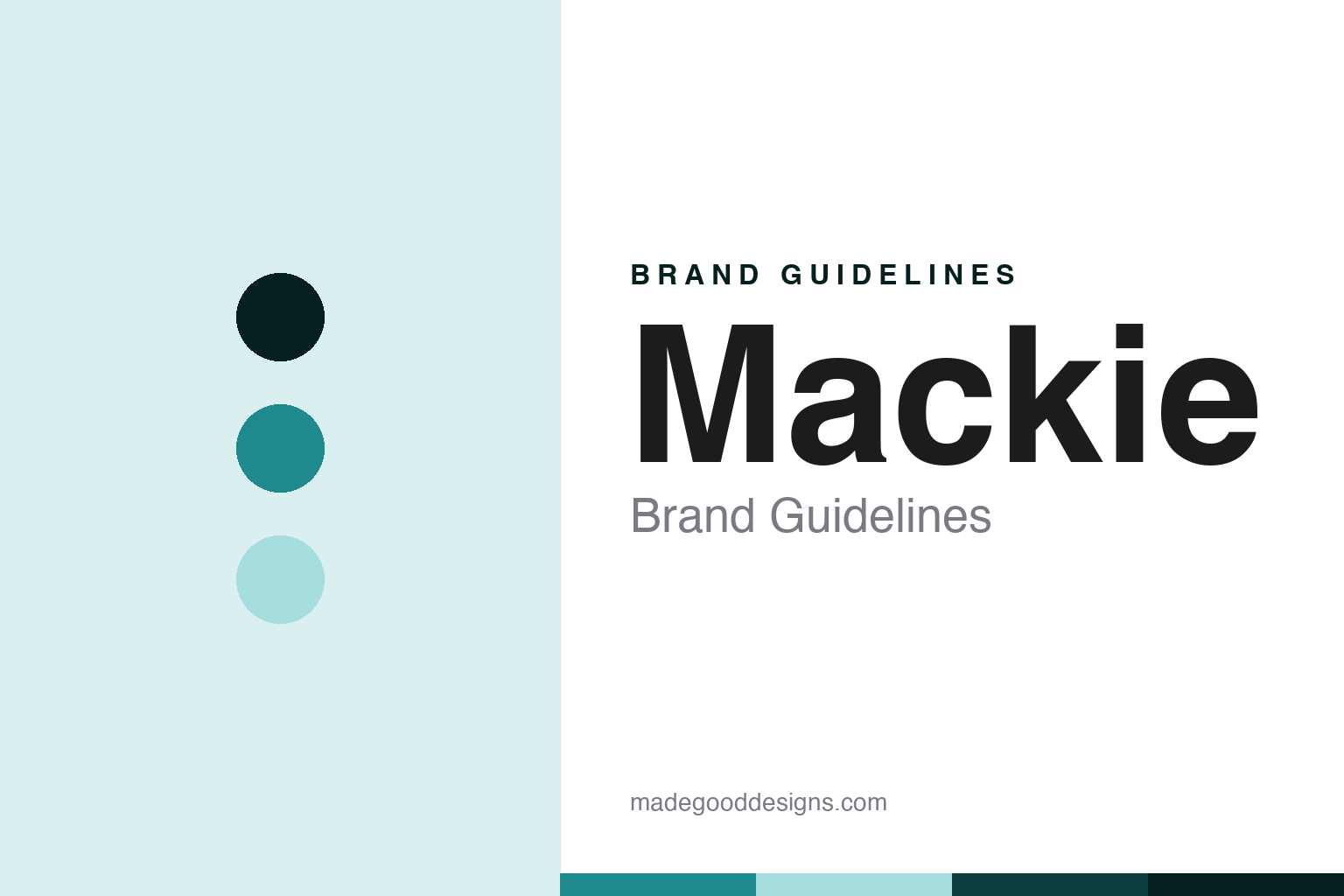
Mackie Brand Guidelines
The mixer house now under RØDE.
Aa
Two constants: a Mackie-teal palette and a mixer-sans register. Abstract homage — not a Mackie product or mark; no mixer, fader or logo is reproduced.
The mixer house now under RØDE
Mackie is a 1988 Washington maker (Greg Mackie’s VLZ compact mixers), the core brand of LOUD Audio — sold in 2023 to the Australian RØDE/Freedman group.
Mackie follows KRK as the round’s mixer node — the value pro-audio house best known for compact mixers rather than monitors, whose ownership recently crossed to Australia. Its answer to a round about who owns the monitor world is the crossed-over one: a mixer brand now under RØDE.
Its identity is the mixer house now under RØDE. The 1988 founding, the VLZ mixers and the 2023 RØDE ownership are the story here. Mixers first. The mixer house now under RØDE.
(Honest notes, so the founding, the ownership, the breadth and a lawsuit are framed accurately. Mackie sells mixers, PA and monitors as its heroes — the VLZ compact mixers above all, plus SRM powered speakers and CR and MR monitors; we report its language as the brand’s own. On founding: Mackie was founded in 1988 by Greg Mackie, a former Boeing worker, as Mackie Designs in Edmonds, Washington, its breakout the CR-1604 compact mixer. On ownership, traced: it became LOUD Technologies, then LOUD Audio under Transom Capital in 2017, and in December 2023 Transom sold LOUD Audio to RØDE, the Australian microphone maker, so Mackie’s current parent is RØDE, not Transom. On the breadth: Mackie is a mixer house first, with monitors a secondary line, unlike KRK where monitors are the whole identity. On a documented lawsuit: Mackie sued Behringer in the late 1990s over mixer circuit-board designs, and the case was dismissed in Behringer’s favor. Its designs and the Mackie name are IP we describe but do not reproduce; there is no official brand hex; these tones are an unofficial interpretation.)
Colour
Mackie lives in a Mackie teal. Click a swatch to copy the hex.
Mackie’s identity is mixer, RØDE-owned and value — a Mackie teal, an ink, a pale teal, a deep teal, and a paper. The palette leans Mackie teal and deep teal: a plain, workmanlike register that nods to a value mixer house rather than a loud logo colour. It signals the mixer house now under RØDE — mixer, RØDE-owned and value. The honest caveat: with no official brand hex, and only a black-and-red identity documented, these values are a workmanlike, unofficial interpretation, not first-party colours.
The lesson is a Mackie teal signals a mixer, value identity. Mackie’s world is the small gig and the project studio. For designers, it is a reminder that a plain teal and a pale teal can carry a mixer, value brand — a workmanlike tone held as an accent, not a product shot. Because a mid hue can fail as small text, keep type dark and let the colour live in the accents, palette and band. The takeaways: date the founding to 1988 and Greg Mackie; trace the ownership to RØDE since 2023; frame Mackie as a mixer house first; and note the dismissed Behringer suit.
Typography
The register is a mixer sans — mixer, RØDE-owned, value.
Mackie’s identity carries a mixer, RØDE-owned spirit — a value house crossed to Australia. A mixer sans captures the mood: clean, plain and practical, the register of a working tool. Set in a Mackie-teal palette, the mixer sans feels sturdy and straightforward — exactly the personality Mackie carries. It behaves like a made, working thing rather than a loud logo, mirroring a fader-band and a port-band. (Mackie’s real products and the name are things we describe but do not reproduce, and the exact typeface is not ours to use.) Because it is not ours to use, the honest description is “a mixer-sans brand,” shown here in a stand-in. The type behaves like the brand: mixer, RØDE-owned and value.
Aa
A mixer-sans brand — sturdy and straightforward. (Specimen set in Jost, a mixer-sans STAND-IN; NOT the Mackie logo or products.)
The monitor node
Mackie stands for the mixer house now under RØDE.
Mackie sits sixth in the round as its mixer node. A Mackie-teal palette, a mixer sans and a 1988 founding make one thing — the mixer house now under RØDE — the whole identity: mixer, RØDE-owned and value. The 1988 founding is the pitch, the VLZ mixers are the substance, and the 2023 RØDE ownership is the twist. The point is a mixer brand now under RØDE, in a round about who owns the monitor world.
Put to work, the identity is the brand told straight, the ownership traced and a suit noted. A brand in this spirit would date the founding to 1988 and Greg Mackie, trace the ownership to RØDE since 2023, frame Mackie as a mixer house first, and note the dismissed Behringer suit. A reader in this spirit would keep the facts right: Mackie sells the VLZ mixers and SRM speakers; it was founded in 1988 by Greg Mackie in Washington; it is the core brand of LOUD Audio, sold to RØDE in 2023; and its monitors are a secondary line. Mackie sits after KRK and before Tannoy. The honest editorial moves are to date the founding, to trace the ownership, to frame the breadth, and to note the suit.
For designers and brand-builders, Mackie carries the monitor node: trace an ownership across a border — and place a brand by its heritage category. The lessons: a brand can be known for a category other than the round’s, here Mackie for mixers in a monitor round; a founding is dated to 1988 and Greg Mackie, a former Boeing worker, as Mackie Designs in Edmonds, Washington, its breakout the CR-1604; an ownership is traced, LOUD Technologies then LOUD Audio under Transom Capital in 2017, and in December 2023 sold to RØDE, the Australian microphone maker, so the current parent is RØDE not Transom; a breadth is placed, a mixer house first with monitors secondary, unlike KRK; and a lawsuit is noted, that Mackie sued Behringer in the late 1990s over mixer circuit-board designs and the case was dismissed in Behringer’s favor — a resonant thread, since Behringer’s Music Tribe now owns Tannoy, a sibling in this round. It is also a reminder to stay precise: Mackie is the RØDE-owned, value mixer house of the monitor aisle — with the palette here an unofficial interpretation. The hook is that crossing: Mackie is the mixer house now under RØDE, a 1988 Washington maker of Greg Mackie’s VLZ compact mixers, the core brand of LOUD Audio, sold in 2023 to the Australian RØDE and Freedman group. Read that way, Mackie is less a single mixer than the mixer house now under RØDE: mixer, RØDE-owned, value. The lesson for a brand is that tracing an ownership across a border and placing a brand by its heritage category reinforce the honesty, and dating the founding keeps it earned. Mackie made the-mixer-house-now-under-RØDE the identity — proof that an honestly-placed value house can anchor a node.
Explore & save
Keep Mackie’s identity on hand — save it to a board in the Made Good inspiration library.
Mackie identity set
Pin the Mackie-teal palette and the mixer-sans register to your own board.