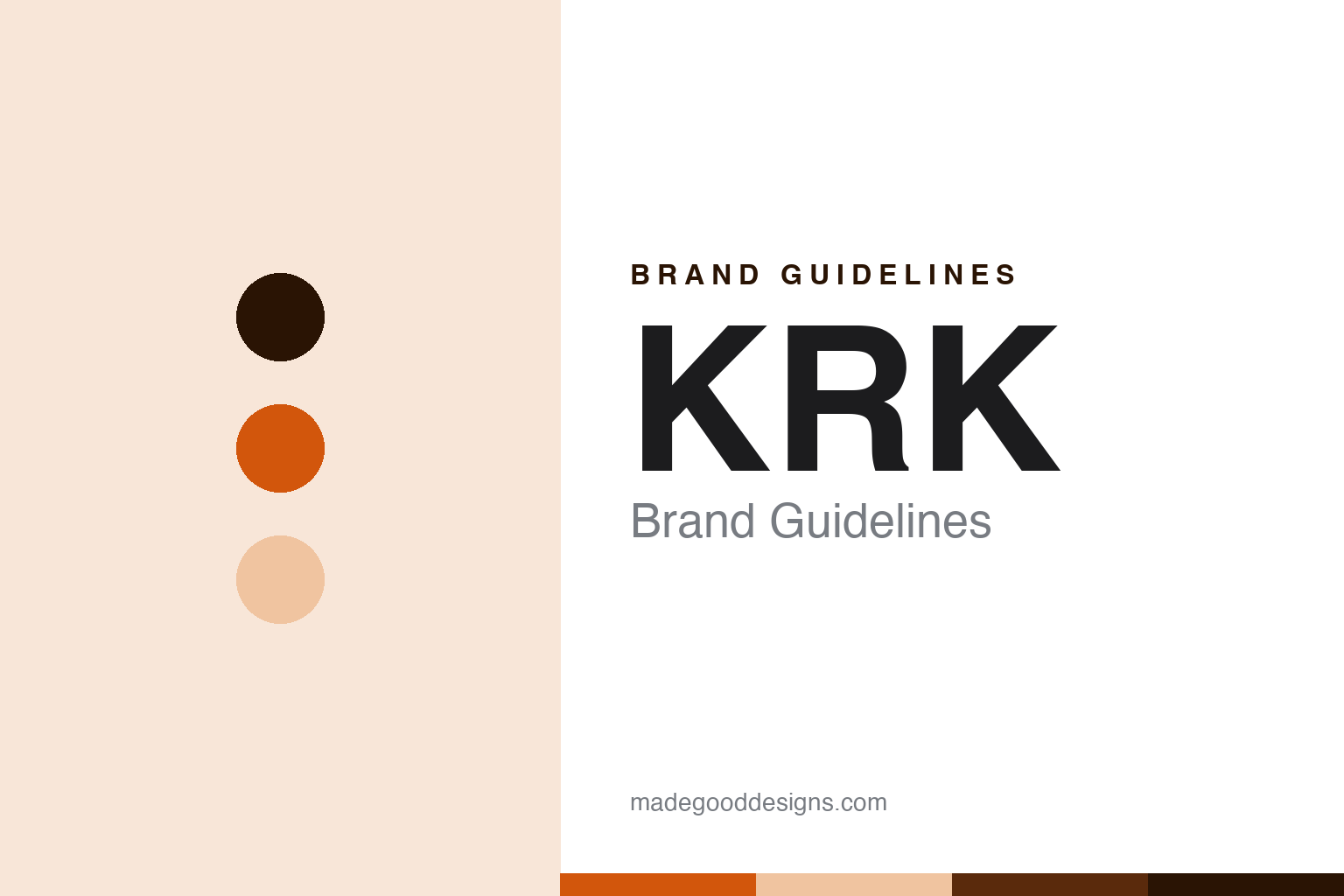
KRK Brand Guidelines
The yellow-cone first monitor.
Aa
Two constants: a KRK-amber palette and a Rokit-sans register. Abstract homage — not a KRK product or mark; no speaker, cone or logo is reproduced.
The yellow-cone first monitor
KRK is a 1986 California brand (Keith R. Klawitter’s initials) whose yellow-Kevlar ROKIT near-fields are the archetypal first studio monitor — and which stayed with Gibson through the 2018 bankruptcy.
KRK follows PreSonus as the round’s entry node — the brand whose yellow-coned near-fields are, for many producers, the first studio monitor they own, and which stayed with Gibson through a famous bankruptcy. Its answer to a round about who owns the monitor world is the survivor one: the first-monitor brand kept by Gibson.
Its identity is the yellow-cone first monitor. The 1986 founding, the yellow-Kevlar ROKIT and the Gibson ownership are the story here. The first monitor. The yellow-cone first monitor.
(Honest notes, so the founding, the ownership, the making and a material detail are framed accurately. KRK sells powered studio monitors as its heroes — the ROKIT near-field series with its yellow cones; we report its language as the brand’s own. On founding: KRK Systems was founded in 1986 by Keith R. Klawitter, whose initials give the name, a film mix engineer, in Southern California. On ownership, traced: KRK passed to the Stanton Group in 2000, then to Gibson in 2011, and when Gibson filed for bankruptcy in 2018 and emerged under the investment firm KKR, KRK stayed with the reorganized Gibson while sisters such as Stanton were sold off. On the making: reportedly China, which we attribute rather than assert, older units having been US-made. On a material detail: the yellow cones are Kevlar or aramid, not just coloured plastic. Its designs and the KRK name are IP we describe but do not reproduce; there is no official brand hex; these tones are an unofficial interpretation of an iconic yellow.)
Colour
KRK lives in a KRK amber. Click a swatch to copy the hex.
KRK’s identity is entry, Gibson-owned and yellow — a KRK amber, an ink, a pale amber, a deep umber, and a paper. The palette leans KRK amber and deep umber: a bold, recognisable register that nods to the iconic yellow cone rather than a loud logo colour. It signals the yellow-cone first monitor — entry, Gibson-owned and yellow. The honest caveat: with no official brand hex, and only the yellow cone documented as iconic, these values are a bold, unofficial interpretation, not first-party colours.
The lesson is a KRK amber signals an entry, recognisable identity. KRK’s world is the first home studio. For designers, it is a reminder that a bold amber and a pale amber can carry an entry, recognisable brand — an iconic tone held as an accent, not a product shot. Because a bright hue fails as small text, keep type dark and let the colour live in the accents, palette and band. The takeaways: date the founding to 1986 and the Klawitter initials; trace the ownership through Stanton and Gibson to the KKR-era Gibson; keep the making China by attribution; and note the Kevlar cone.
Typography
The register is a Rokit sans — entry, Gibson-owned, yellow.
KRK’s identity carries an entry, Gibson-owned spirit — the first monitor for many. A Rokit sans captures the mood: clean, bold and plain, the register of a project-studio staple. Set in a KRK-amber palette, the Rokit sans feels approachable and recognisable — exactly the personality KRK carries. It behaves like a made, working thing rather than a loud logo, mirroring a cone-dot and a driver-ring. (KRK’s real products and the name are things we describe but do not reproduce, and the exact typeface is not ours to use.) Because it is not ours to use, the honest description is “a Rokit-sans brand,” shown here in a stand-in. The type behaves like the brand: entry, Gibson-owned and yellow.
Aa
A Rokit-sans brand — approachable and recognisable. (Specimen set in Outfit, a Rokit-sans STAND-IN; NOT the KRK logo or products.)
The monitor node
KRK stands for the yellow-cone first monitor.
KRK sits fifth in the round as its entry node. A KRK-amber palette, a Rokit sans and a 1986 founding make one thing — the yellow-cone first monitor — the whole identity: entry, Gibson-owned and yellow. The 1986 founding is the pitch, the yellow-Kevlar ROKIT is the icon, and the Gibson ownership is the survival story. The point is the first-monitor brand kept by Gibson, in a round about who owns the monitor world.
Put to work, the identity is the brand told straight, the ownership traced and a rumor corrected. A brand in this spirit would date the founding to 1986 and the Klawitter initials, trace the ownership through Stanton and Gibson to the KKR-era Gibson, keep the making China by attribution, and note the Kevlar cone. A reader in this spirit would keep the facts right: KRK sells the ROKIT near-fields; it was founded in 1986 by Keith R. Klawitter; it stayed with Gibson through the 2018 bankruptcy; and its cones are Kevlar. KRK sits after PreSonus and before Mackie. The honest editorial moves are to date the founding, to trace the ownership, to attribute the making, and to note the cone material.
For designers and brand-builders, KRK carries the monitor node: trace a brand through a bankruptcy — and correct the sold-off rumor. The lessons: a brand can be many producers’ first monitor, here KRK and the ROKIT; a founding is dated to 1986 and Keith R. Klawitter, whose initials give the name, a film mix engineer in Southern California; an ownership is traced, KRK to the Stanton Group in 2000, to Gibson in 2011, and staying with the reorganized Gibson after its 2018 bankruptcy and emergence under the investment firm KKR, while sisters such as Stanton were sold off; a rumor is corrected, that KRK was not itself sold off after the bankruptcy; a making is attributed as China with older units US-made; and a material is noted, the yellow cones being Kevlar or aramid rather than coloured plastic. It is also a reminder to stay precise: KRK is the Gibson-owned, yellow-cone first monitor of the monitor aisle — with the palette here an unofficial interpretation. The hook is that role: KRK is the yellow-cone first monitor, a 1986 California brand from Keith R. Klawitter’s initials, whose yellow-Kevlar ROKIT near-fields are the archetypal first studio monitor, and which stayed with Gibson through the 2018 bankruptcy. Read that way, KRK is less a single monitor than the yellow-cone first monitor: entry, Gibson-owned, yellow. The lesson for a brand is that tracing a brand through a bankruptcy and correcting the sold-off rumor reinforce the honesty, and dating the founding keeps it earned. KRK made the-yellow-cone-first-monitor the identity — proof that an honestly-traced survivor can anchor a node.
Explore & save
Keep KRK’s identity on hand — save it to a board in the Made Good inspiration library.
KRK identity set
Pin the KRK-amber palette and the Rokit-sans register to your own board.