Phase One Brand Guidelines
The medium-format house.
Aa
Two constants: a slate-teal palette and a studio-sans register. Abstract homage — not a Phase One product or mark.
The medium-format house
Phase One is the Danish medium-format digital house, designed in Copenhagen and owned by the investment firm Axcel.
Phase One closes the round as the vein’s high-end digital house — medium-format imaging at the top of the resolution scale. From Copenhagen, Phase One makes medium- and large-format digital camera systems — the XF and XT bodies and the IQ digital backs, with sensors past a hundred megapixels — and runs a separate arm in industrial, aerial and cultural-heritage imaging. Its answer to how a maker becomes a name is the top of the market: build the highest-resolution photographic systems, designed in Denmark. A digital back, at the top of the scale.
Its identity is the medium-format house. Phase One’s IQ digital backs, its XF and XT systems and its Danish design are the work it is known for. A system, designed in Copenhagen. Medium format, at the summit.
(Honest notes, so the story stays precise. Phase One — at phaseone.com — makes medium- and large-format digital systems, the XF and XT bodies and the IQ4 digital backs, plus an industrial and geospatial imaging arm; it is reported to have been founded around 1993 to 1994 in Copenhagen by Samir Léhaff, which we attribute. On where it is made — a key thread of this vein — it is Danish-designed and headquartered in Copenhagen, with an internationally-sourced supply chain: its lenses come from Schneider Kreuznach and Rodenstock in Germany, and it absorbed the Japanese body heritage of Mamiya, so we say Danish-designed and internationally-made rather than made in Denmark. On ownership, a clear chain: the UK firm Silverfleet Capital took a majority stake in 2014, and the Danish private-equity firm Axcel acquired Phase One in 2019, and is reported to remain the owner. On a related point, its Capture One software was split into a separate company, Capture One A/S, in 2019 — also owned by Axcel — so we keep the two distinct. Its name and marks are IP, described but never reproduced, and there is no official brand hex; these tones are an unofficial interpretation. This is design commentary and does not promote any product.)
Colour
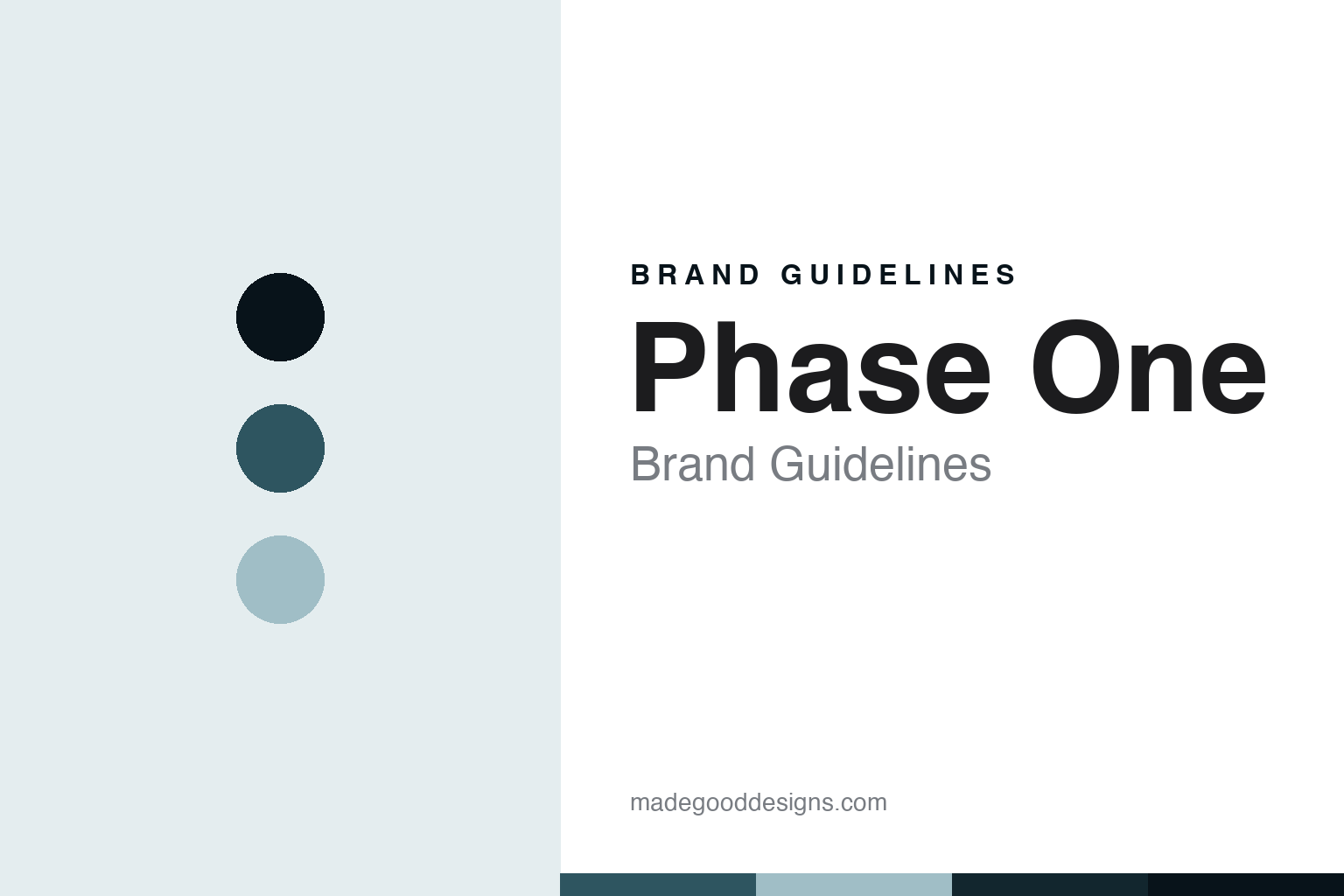
Phase One lives in a slate-teal palette. Click a swatch to copy the hex.
Phase One’s identity is high-end, digital and precise — a slate teal, an ink, a mist, a deep teal, and a paper. The palette leans slate teal and mist: the register of a sensor cover glass and a cool professional finish. It signals high-end digital imaging. The honest caveat: with no published brand hex, these values are an original, unofficial interpretation, not first-party colours.
The lesson is a slate-teal palette signals a high-end, medium-format identity. Phase One’s world is a high-end, digital, precise object. For designers, it is a reminder that a slate teal and a soft mist can carry a digital-imaging house — the tone of sensor glass and the neutral of a professional body. Because these tones can fail as small text, keep type dark and let the colour live in the accents, palette and band. The takeaways: build at the top; design at home; be honest about the international make; and treat any single hex as unofficial.
Typography
The register is a studio sans — clean, precise, professional.
Phase One’s identity carries a clean, precise, professional spirit — a high-end imaging house, not a consumer brand. A studio sans captures the mood: neutral, exact and technical, the register of a Copenhagen imaging company. Set in a slate-teal palette, the studio sans feels precise and professional — exactly the personality Phase One carries. It is high-end imaging rather than a logo, mirroring a digital back. (Phase One’s real wordmark is a thing we describe but do not reproduce, and the exact typeface is not ours to use.) Because it is not ours to use, the honest description is “a studio-sans spirit,” shown here in a stand-in. The type behaves like the system: clean, precise and professional.
Aa
A studio-sans spirit — precise and professional. (Specimen set in Libre Franklin, a studio-sans STAND-IN; NOT the Phase One logo.)
The optics houses
Phase One stands for the Danish medium-format house.
Phase One is a lesson in how a top-of-market position and an honest ownership chain can be an identity. A slate-teal palette, a studio sans and a digital back make one thing — the medium-format house — the whole identity: high-end, digital and precise. The IQ digital back is the differentiator, and the Danish design is the meaning. The point is a Copenhagen house that builds the highest-resolution photographic systems, designed in Denmark and owned, today, by a private-equity firm.
Put to work, the identity is a top-of-market position, placed honestly, as design. A maker in this spirit would build at the summit and design at home — medium-format digital, from Copenhagen. A reader in this spirit would separate design from manufacture and keep the corporate structure straight: Danish-designed but internationally-made, with German lenses and absorbed Japanese heritage; owned by Silverfleet in 2014, then Axcel from 2019; and with Capture One now a separate company under the same owner. Phase One closes the vein’s ownership variety at the private-equity pole, against the family, the foundation, the licensed name and the independents, and it carries the where-made thread as a designed-here, made-internationally case. The honest editorial moves are to present the founding and founder as reported, to say Danish-designed and internationally-made rather than made in Denmark, to place the Silverfleet-then-Axcel ownership precisely, and to keep Capture One distinct. The lesson Phase One teaches is that a top-of-market position and an honest chain can hold an identity: the imaging gives it substance, and the clarity about design, make and owner keeps it credible. The medium-format system is the personality, and the IQ digital back is the proof.
For designers and brand-builders, Phase One closes the optics houses, from Denmark: build at the top — and be honest about design, make and owner. The lessons: aim at the summit of a market; design in-country; separate design from manufacture; place ownership and spin-offs precisely; and never reproduce a logo. It is also a reminder to stay precise: Phase One is the Danish medium-format digital house, designed in Copenhagen and owned by the investment firm Axcel — with the palette here an unofficial interpretation. Phase One made a top-of-market position the identity — proof that a digital system, honestly told, can be the difference. Across the round, seven houses — a family, a foundation, a licensed name, a listed investor, a private-equity owner and two independents; made in Japan, Germany, England, Switzerland, China and beyond — answer the vein’s question: who owns the house, and where is the glass really made?
Explore & save
Keep Phase One’s identity on hand — save it to a board in the Made Good inspiration library.
Phase One identity set
Pin the slate-teal palette and the studio-sans register to your own board.