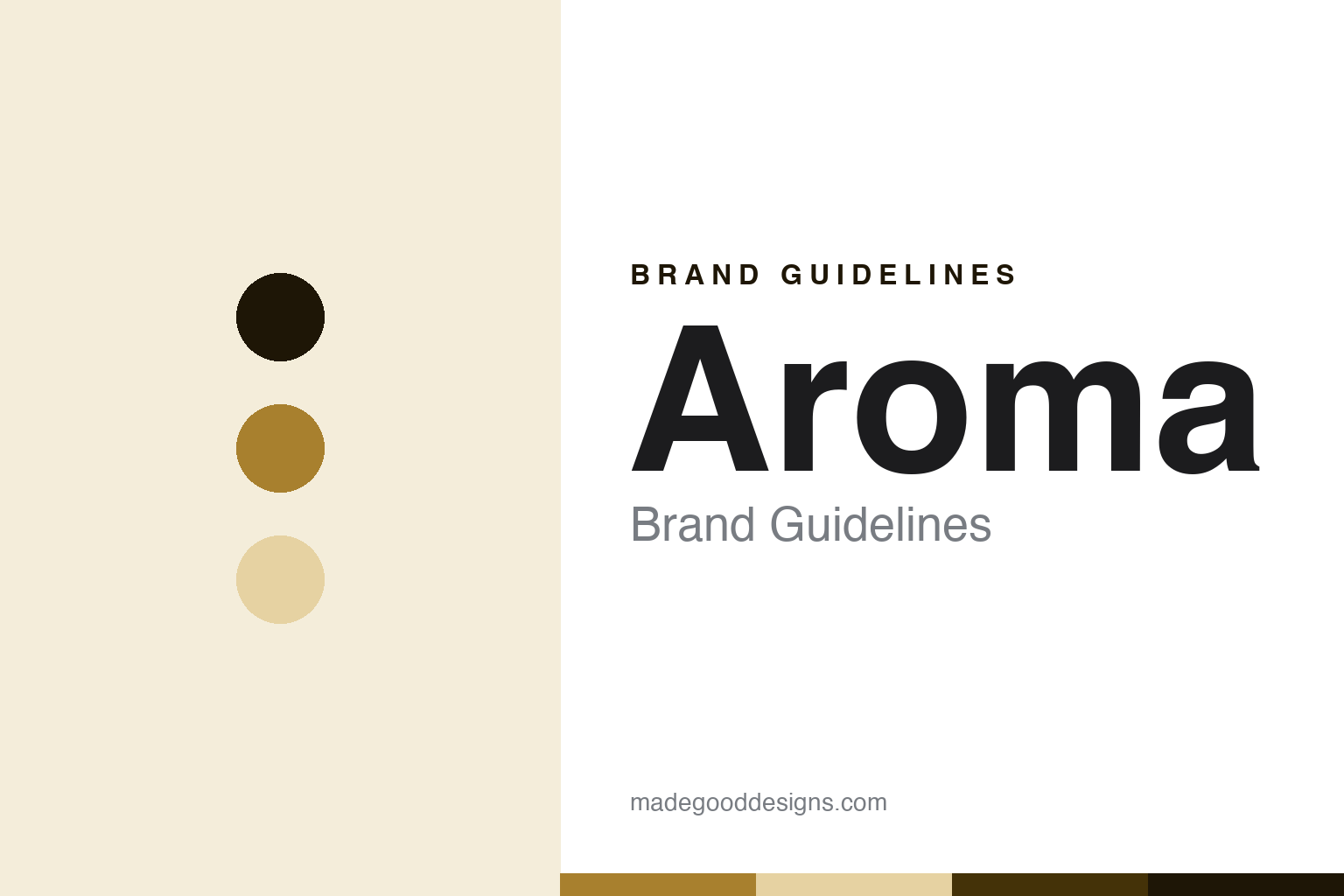
Aroma Brand Guidelines
The American value bestseller.
Aa
Two constants: a kitchen-gold palette and a value-sans register. Abstract homage — not an Aroma product or mark; no cooker, bowl or logo is reproduced.
The American value bestseller
Aroma is the San Diego housewares brand whose affordable, China-made rice cookers became an American mass-market bestseller.
Aroma brings the round its value node — the American housewares brand whose affordable cookers made rice-cooker ownership ordinary in US kitchens. It is Aroma Housewares, based in San Diego, and its answer to a round about who owns the rice cooker and where it is made is an honest American one: a US-owned brand, made in China, built for the value shelf.
Its identity is the American value bestseller. The affordable value positioning, the American ownership and the high-volume US-market success are the story here. A cooker, value. The American value bestseller.
(Honest notes, so the ownership, the history and the manufacturing are framed accurately. Aroma sells affordable, high-volume rice cookers and steamers as its heroes — multi-function cook-and-steam pots, with some fuzzy-logic and digital models, though the core identity is value — and we report its language as the brand’s own. On ownership: Aroma Housewares, the operating name of Mirama Enterprises, is a privately held US company based in San Diego, founded in 1977 by Peter Chang, with rice cookers added in 1992, which became its signature category. On a common misread: despite a name that sounds Asian, Aroma is a US company and its appliances are Chinese-made, not Japanese. On the positioning, the real identity: it is an American mass-market bestseller, competing on affordability and volume rather than premium technology. On where it is made: China, with the brand US-designed and marketed. Its designs and the Aroma name are IP we describe but do not reproduce; these tones are an unofficial interpretation.)
Colour
Aroma lives in a kitchen gold. Click a swatch to copy the hex.
Aroma’s identity is affordable, everyday and American — a kitchen gold, an ink, a pale wheat, a deep bronze, and a paper. The palette leans kitchen gold and pale wheat: a warm, everyday register that nods to a pot of steaming rice rather than a loud logo colour. It signals the American value bestseller — affordable, everyday and American. The honest caveat: with no published brand hex, these values are an original, unofficial interpretation, not first-party colours.
The lesson is a kitchen gold signals an affordable, everyday identity. Aroma’s world is the fairly-priced cooker that a lot of American kitchens actually own. For designers, it is a reminder that a warm kitchen gold and a soft pale wheat can carry a hardware brand — an everyday tone held as colour, not a product shot. Because these tones can fail as small text, keep type dark and let the colour live in the accents, palette and band. The takeaways: date the company to 1977 and rice cookers to 1992; keep it American-owned but China-made; correct the Asian-name assumption; and lead with the value positioning.
Typography
The register is a value sans — affordable, everyday, American.
Aroma’s identity carries an affordable, everyday, American spirit — a value housewares brand, not a premium maker. A value sans captures the mood: clean, plain and approachable, the register of a fairly-priced kitchen staple. Set in a kitchen-gold palette, the value sans feels affordable and everyday — exactly the personality Aroma carries. It behaves like a made, functional thing rather than a loud logo, mirroring a steam plume and a grain scatter. (Aroma’s real products and the name are things we describe but do not reproduce, and the exact typeface is not ours to use.) Because it is not ours to use, the honest description is “a value-sans brand,” shown here in a stand-in. A value sans also keeps the promise plain — an everyday cooker at an everyday price, described without ornament, the way a mass-market bestseller earns a place in a lot of kitchens rather than a few, and stays honest that the brand is American-owned while the machine is made in China. The type behaves like the brand: affordable, everyday and American.
Aa
A value-sans brand — affordable and everyday. (Specimen set in Work Sans, a value-sans STAND-IN; NOT the Aroma logo or livery.)
The rice cooker
Aroma stands for the American value bestseller.
Aroma brings the round its value node. A kitchen-gold palette, a value sans and a 1977 founding make one thing — the American value bestseller — the whole identity: affordable, everyday and American. The value positioning is the pitch, and the high-volume US success is the proof. The point is an American brand that made the rice cooker an affordable staple, in a round about who owns the rice cooker and where it is made.
Put to work, the identity is the brand told straight, the history dated and the manufacturing kept honest. A brand in this spirit would date the company to 1977 and rice cookers to 1992, keep it American-owned but China-made, and correct the Asian-name assumption. A reader in this spirit would keep the facts right: Aroma sells affordable cook-and-steam rice cookers as heroes; it is Aroma Housewares of San Diego, founded in 1977 by Peter Chang, with rice cookers from 1992; it is American-owned; it competes on value and volume; and it is made in China. Aroma sits second in the round, after Tiger. The honest editorial moves are to date the company and the rice-cooker line, to keep it American-owned but China-made, to correct the Asian-name assumption, and to lead with the value positioning.
For designers and brand-builders, Aroma continues the rice cooker: own the American value shelf — and correct the assumptions a name creates. The lessons: win a category on affordability and volume rather than premium features; make one added category, here rice cookers from 1992, the signature; keep an honest owned-versus-made line; and correct a nationality assumption a brand name invites rather than lean on it. It is also a reminder to stay precise: Aroma is the San Diego housewares brand whose affordable, China-made rice cookers became an American mass-market bestseller — with the palette here an unofficial interpretation. The hook is that ordinariness: while Tiger sells the premium end, Aroma made the rice cooker an everyday American buy — an affordable, high-volume San Diego brand whose Asian-sounding name masks a US company with Chinese manufacturing. Read that way, Aroma is less a premium name than an American value bestseller: affordable, everyday, American. The lesson for a brand is that value volume and honest disclosure reinforce each other, and correcting the name assumption keeps the story earned. Aroma made the-American-value-bestseller the identity — proof that value can carry a round.
Explore & save
Keep Aroma’s identity on hand — save it to a board in the Made Good inspiration library.
Aroma identity set
Pin the kitchen-gold palette and the value-sans register to your own board.