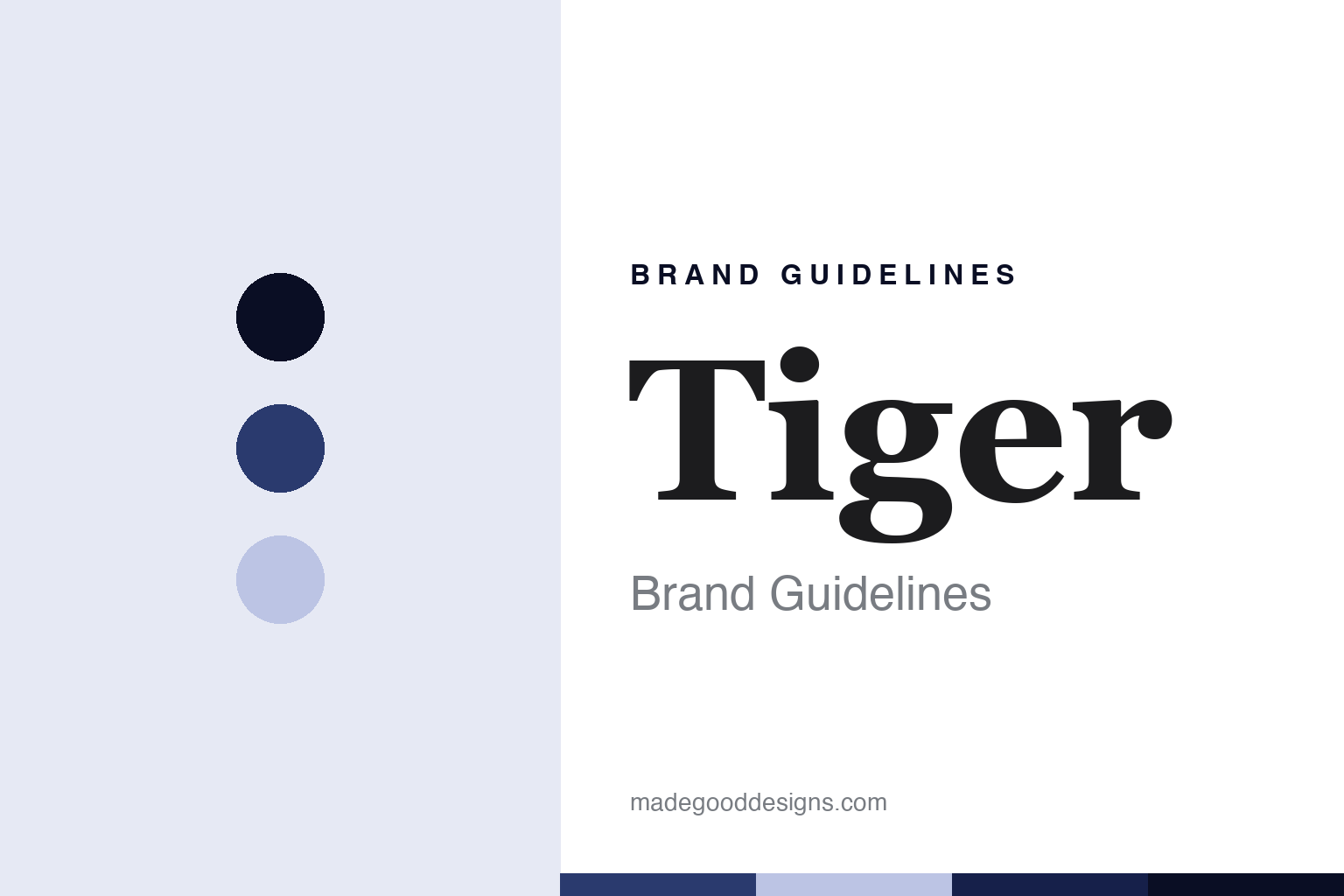
Tiger Brand Guidelines
The Japanese premium.
Aa
Two constants: a lacquer-indigo palette and a premium-serif register. Abstract homage — not a Tiger product or mark; no cooker, bowl, tiger or logo is reproduced.
The Japanese premium
Tiger is the family-owned Osaka maker, born a vacuum-flask company in 1923, whose premium IH rice cookers are made in Japan.
Tiger opens the rice-cooker round as its premium node — a century-old Osaka company that turned vacuum-flask craft into premium rice cooking. Its answer to a round about who owns the rice cooker and where it is made is a clean one: a family-owned Japanese company, with its premium cookers made in Japan.
Its identity is the Japanese premium. The family ownership, the Japanese premium manufacturing and the signature cooking technology are the story here. A cooker, premium. The Japanese premium.
(Honest notes, so the ownership, the manufacturing and one common confusion are framed accurately. Tiger sells premium Japanese rice cookers as its heroes — with its signature tacook synchronized cooking that makes rice and a dish at once, induction and pressure-induction heating, and an earthenware-style inner-bowl heritage — alongside vacuum flasks, bottles and kettles; we report its language as the brand’s own. On ownership: Tiger is the Tiger Corporation, based in Kadoma City, Osaka, privately held and controlled by the founding Kikuchi family, founded on 3 February 1923 as a vacuum-flask maker. On the correction that matters: Tiger and Zojirushi are two separate, rival Japanese companies, both Osaka-region vacuum-flask makers turned appliance giants, frequently confused but unrelated in ownership, so we keep them distinct. On where it is made, hedged honestly: its premium models are made in Japan, while the broader lineup is also made in China and Thailand, so we frame the premium line as Japan-made, not the whole range. On nationality: Japanese, not Chinese. Its designs, the Tiger name, the tiger imagery and the red livery are IP we describe but do not reproduce; these tones are an unofficial interpretation.)
Colour
Tiger lives in a lacquer indigo. Click a swatch to copy the hex.
Tiger’s identity is premium, precise and Japanese — a lacquer indigo, an ink, a pale mist, a deep navy, and a paper. The palette leans lacquer indigo and pale mist: a refined, Japanese register that nods to lacquerware and precise cooking rather than a loud logo colour, and deliberately not to the brand’s own red or its tiger. It signals the Japanese premium — premium, precise and Japanese. The honest caveat: with no adopted brand hex, and with the red and tiger treated as protected marks, these values are an original, unofficial interpretation, not first-party colours.
The lesson is a lacquer indigo signals a premium, Japanese identity. Tiger’s world is a precise IH cooker on a considered Japanese counter. For designers, it is a reminder that a refined lacquer indigo and a soft pale mist can carry a hardware brand — a Japanese tone held as colour, never the signature red or the tiger. Because these tones can fail as small text, keep type dark and let the colour live in the accents, palette and band. The takeaways: date it to 1923; name the Kikuchi family; keep Tiger distinct from Zojirushi; frame the premium line as Japan-made; and lead with tacook and IH.
Typography
The register is a premium serif — premium, precise, Japanese.
Tiger’s identity carries a premium, precise, Japanese spirit — a heritage craft house, not a value brand. A premium serif captures the mood: refined, quiet and confident, the register of a century-old Japanese maker. Set in a lacquer-indigo palette, the premium serif feels premium and precise — exactly the personality Tiger carries. It behaves like a made, considered thing rather than a loud logo, mirroring a steam plume and a lacquer sheen. (Tiger’s real products, the names and the tiger imagery are things we describe but do not reproduce, and the exact typeface is not ours to use.) Because it is not ours to use, the honest description is “a premium-serif brand,” shown here in a stand-in. The type behaves like the brand: premium, precise and Japanese.
Aa
A premium-serif brand — premium and precise. (Specimen set in Cormorant, a premium-serif STAND-IN; NOT the Tiger logo, the tiger mascot or its red livery.)
The rice cooker
Tiger stands for the Japanese premium.
Tiger opens the rice-cooker round as its premium node. A lacquer-indigo palette, a premium serif and a 1923 founding make one thing — the Japanese premium — the whole identity: premium, precise and Japanese. The family ownership is the frame, and the tacook and IH cooking are the proof. The point is a century-old Osaka craft house at the premium end, in a round about who owns the rice cooker and where it is made.
Put to work, the identity is the brand told straight, the ownership named and the confusion corrected. A brand in this spirit would date it to 1923, name the Kikuchi family, and keep Tiger distinct from Zojirushi. A reader in this spirit would keep the facts right: Tiger sells premium tacook and IH rice cookers as heroes; it is the Tiger Corporation of Osaka, family-owned by the Kikuchi family, founded in 1923 as a vacuum-flask maker; it is a separate company from its rival Zojirushi; its premium models are made in Japan; and it is Japanese. Tiger opens the round, before Aroma. The honest editorial moves are to date it to 1923, to name the Kikuchi family, to keep Tiger distinct from Zojirushi, to frame the premium line as Japan-made, and to lead with tacook and IH.
For designers and brand-builders, Tiger opens the rice cooker: hold the premium end with craft and family ownership — and keep a rival brand distinct. The lessons: turn a heritage craft, here vacuum-flask making, into a premium modern category; keep family ownership and Japanese manufacturing as the premium proof; hedge a where-made claim to the premium line when the broader range is made elsewhere; and correct a persistent confusion with a rival rather than let it blur the brand. It is also a reminder to stay precise: Tiger is the family-owned Osaka maker, born a vacuum-flask company in 1923, whose premium IH rice cookers are made in Japan — with the palette here an unofficial interpretation. The hook is that lineage: Tiger began in 1923 making vacuum flasks and carried that heat-and-precision craft into premium rice cookers — tacook synchronized cooking, induction heating, an earthenware-style bowl — a family-owned Osaka house often confused with its separate rival Zojirushi, its premium models still made in Japan. Read that way, Tiger is less a mass brand than a Japanese premium: premium, precise, Japanese. The lesson for a brand is that heritage craft and honest manufacturing reinforce each other, and keeping Tiger distinct from Zojirushi keeps the story earned. Tiger made the-Japanese-premium the identity — proof that craft can open a round.
Explore & save
Keep Tiger’s identity on hand — save it to a board in the Made Good inspiration library.
Tiger identity set
Pin the lacquer-indigo palette and the premium-serif register to your own board.