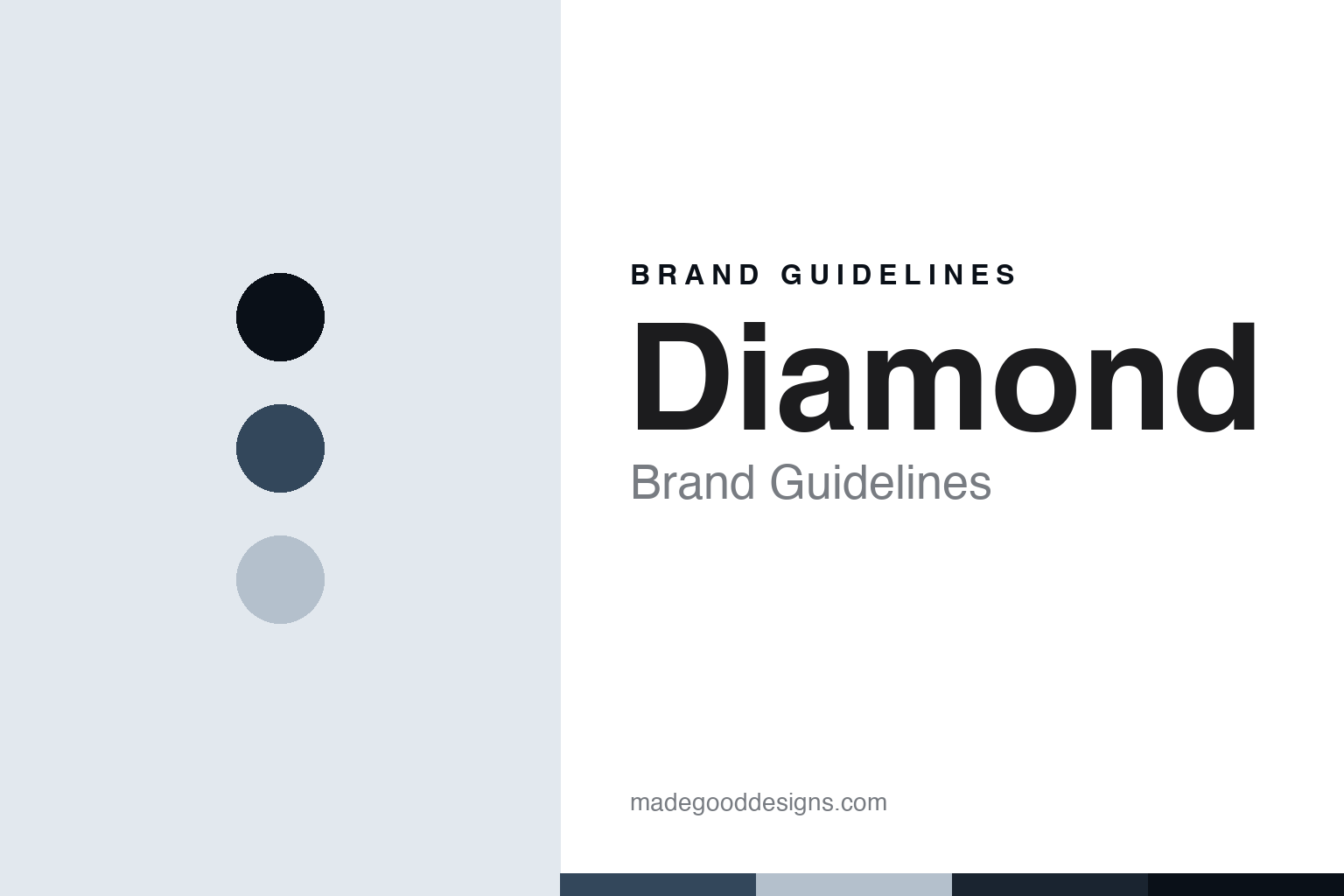
Diamond Brand Guidelines
The modern tournament-standard table.
Aa
Two constants: a Diamond-graphite palette and a tournament-sans register. Abstract homage — not a Diamond product or mark; no table, diamond or logo is reproduced.
The modern tournament-standard table
Diamond is the 1987 Indiana maker (reportedly founded by Greg Sullivan) whose Diamond Professional, 100% US-made, is the table pro tournaments run on, against Brunswick’s heritage Gold Crown.
Diamond follows McDermott as the round’s tournament-standard node — the modern American table that the pro game plays on, the challenger to Brunswick’s heritage. Its answer to a round about who owns the game is the standard: the modern tournament-standard table.
Its identity is the modern tournament-standard table. The 1987 founding, the tournament use and the American making are the story here. The pro table. The modern tournament-standard table.
(Honest notes, so the founding, the location, the status and the making are framed accurately. Diamond sells pool tables as its heroes; we report its language as the brand’s own. On founding: Diamond Billiard Products, Inc. was founded in 1987 by a passionate group of pool players from Louisville, Kentucky, with the founder Greg Sullivan widely reported though not named on the site, so we treat him as reported. On the location: it is based in Jeffersonville, Indiana, with Kentucky roots, not Savannah, Tennessee. On the status: the Diamond Professional table has been used in over five hundred major tournaments, making it the modern tournament-standard table, with the 2026 Derby City Classic documented and the US Open and Mosconi Cup usage reported, a contrast to Brunswick’s heritage Gold Crown. On the making: it is 100% designed and manufactured in the United States at Jeffersonville, Indiana, and it is a privately held US company. Its designs and the Diamond name are IP we describe but do not reproduce; there is no official brand hex; these tones are an unofficial interpretation.)
Colour
Diamond lives in a Diamond graphite. Click a swatch to copy the hex.
Diamond’s identity is tournament, American and made-in-Indiana — a Diamond graphite, an ink, a pale steel, a deep slate, and a paper. The palette leans Diamond graphite and deep slate: a clean, competition register that stands in for the tournament table rather than a loud logo colour. It signals the modern tournament-standard table — tournament, American and made-in-Indiana. The honest caveat: with no official brand hex, these values are a competition, unofficial interpretation, not first-party colours.
The lesson is a Diamond graphite signals a tournament, American identity. Diamond’s world is the pro-event floor and the Indiana factory. For designers, it is a reminder that a clean graphite and a pale steel can carry a tournament, American brand — a competition tone held as an accent, not a product shot. Because a dark hue can flatten small text, keep type dark and even and let the colour live in the accents, palette and band. The takeaways: date the founding to 1987; treat Greg Sullivan as reported; place it in Jeffersonville, Indiana, not Savannah; and stress the tournament use and 100% US-made. A further design lesson is that a challenger brand earns its authority by proof rather than heritage, so an honest article leans on the documented tournament record and the plainly stated made-in-America manufacturing rather than on borrowed prestige, which is exactly why a graphite-and-steel restraint suits Diamond better than a nostalgic flourish would.
Typography
The register is a tournament sans — tournament, American, made-in-Indiana.
Diamond’s identity carries a tournament, American spirit — the table the pros play on. A tournament sans captures the mood: clean, precise and serious, the register of a competition standard. Set in a Diamond-graphite palette, the tournament sans feels dependable and exact — exactly the personality Diamond carries. It behaves like a made, engineered thing rather than a loud logo, mirroring a diamond-ring and a chalk-dot. (Diamond’s real products and the name are things we describe but do not reproduce, and the exact typeface is not ours to use.) Because it is not ours to use, the honest description is “a tournament-sans brand,” shown here in a stand-in. The type behaves like the brand: tournament, American and made-in-Indiana.
Aa
A tournament-sans brand — dependable and exact. (Specimen set in Sora, a tournament-sans STAND-IN; NOT the Diamond logo or products.)
The billiards node
Diamond stands for the modern tournament-standard table.
Diamond sits fourth in the round as its tournament-standard node. A Diamond-graphite palette, a tournament sans and a 1987 founding make one thing — the modern tournament-standard table — the whole identity: tournament, American and made-in-Indiana. The 1987 founding is the pitch, the tournament use is the substance, and the American making is the frame. The point is the modern table the pros play on, in a round about who owns the game.
Put to work, the identity is the brand told straight, the location corrected and the status stressed. A brand in this spirit would date the founding to 1987, treat Greg Sullivan as reported, place it in Jeffersonville, Indiana, not Savannah, and stress the tournament use and 100% US-made. A reader in this spirit would keep the facts right: Diamond makes tournament tables; it dates to 1987; it is in Jeffersonville, Indiana; and it is 100% US-made. Diamond sits after McDermott and before Cuetec. The honest editorial moves are to date the founding, to treat the founder as reported, to correct the location, and to stress the status.
For designers and brand-builders, Diamond carries the billiards node: a modern challenger can become the tournament standard. The lessons: a newer maker can unseat a heritage table as the competition standard, here Diamond against Brunswick’s Gold Crown; a founding is dated to 1987 by a group of pool players from Louisville, Kentucky, the founder Greg Sullivan widely reported though not site-named; a location is corrected, that it is based in Jeffersonville, Indiana, with Kentucky roots, not Savannah, Tennessee; a status is stressed, that the Diamond Professional has been used in over five hundred major tournaments, the 2026 Derby City Classic documented and the US Open and Mosconi Cup usage reported; and a making is placed, 100% designed and manufactured in the United States at Jeffersonville, Indiana. It is also a reminder to stay precise: Diamond is the American tournament-standard table of the billiards aisle — with the palette here an unofficial interpretation, and Greg Sullivan kept as reported. The hook is that standard: Diamond is the modern tournament-standard table, the 1987 Indiana maker, reportedly founded by Greg Sullivan, whose Diamond Professional, 100% US-made, is the table pro tournaments run on, against Brunswick’s heritage Gold Crown. Read that way, Diamond is less a single table than the modern tournament-standard table: tournament, American, made-in-Indiana. The lesson for a brand is that a modern challenger can become the tournament standard, and dating the founding keeps it earned. Diamond made the-modern-tournament-standard-table the identity — proof that a modern challenger can anchor a node.
Explore & save
Keep Diamond’s identity on hand — save it to a board in the Made Good inspiration library.
Diamond identity set
Pin the Diamond-graphite palette and the tournament-sans register to your own board.