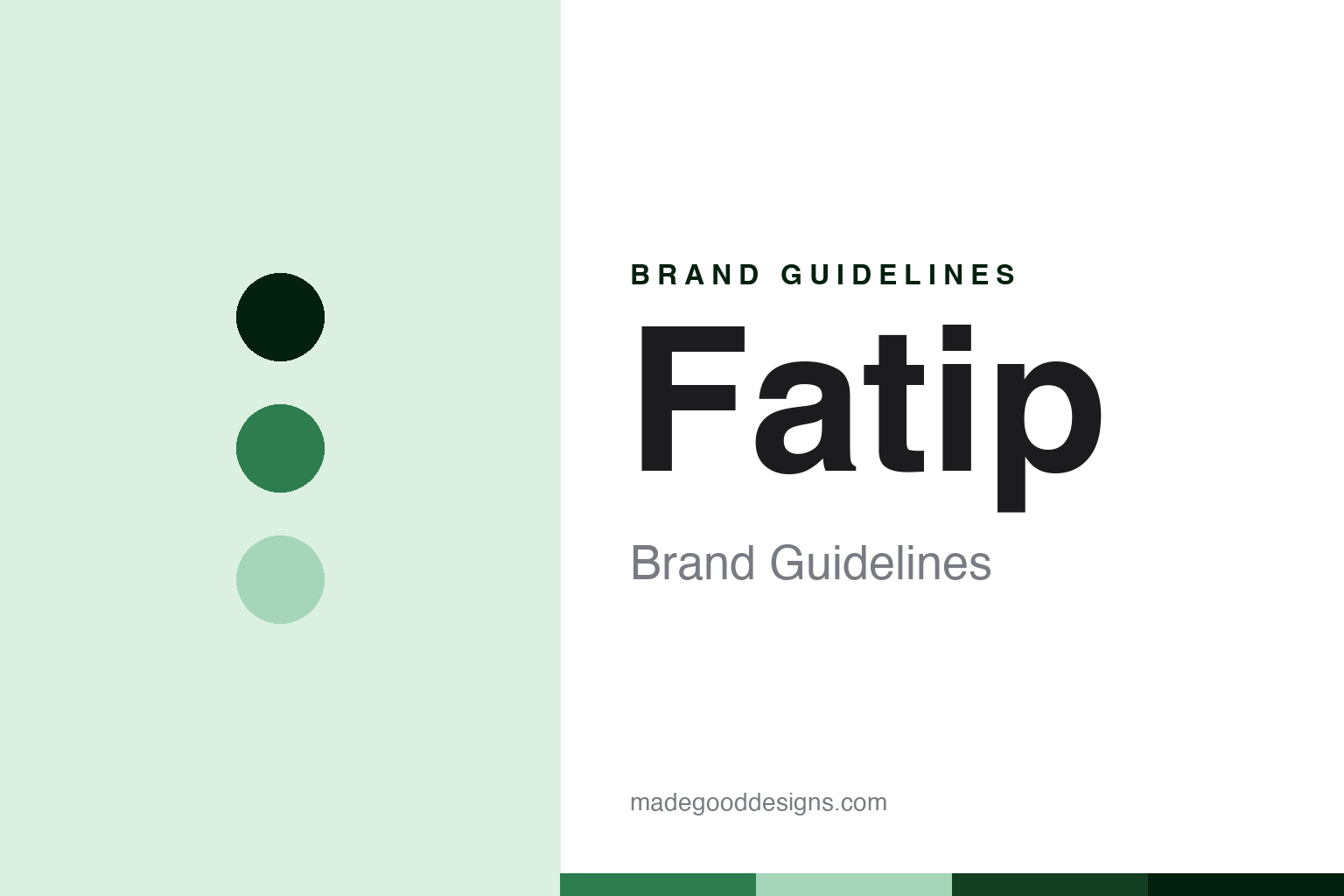
Fatip Brand Guidelines
The open-comb razor from Italy’s village of knife-makers.
Aa
Two constants: a Fatip-green palette and an artisan-sans register. Abstract homage — not a Fatip product or mark; no razor or logo is reproduced.
The open-comb razor from Italy’s village of knife-makers
Fatip is the Italian open-comb double-edge razor, born in Milan in 1950 and handcrafted in Premana — a Lombardy village famous for knives and cutlery.
Fatip follows Edwin Jagger as the round’s Italian node — an open-comb razor made in a mountain village that has worked metal for generations. Its answer to a round about who makes and where-makes the razor is craft and place: the open-comb razor from Italy’s village of knife-makers.
Its identity is the open-comb razor from Italy’s village of knife-makers. The 1950 origin, the Premana making and the open-comb head are the story here. The Italian artisan razor. The open-comb razor from Italy’s village of knife-makers.
(Honest notes, so the origin, the maker, the place and the models are framed accurately. Fatip sells open-comb razors as its heroes; we report its language as the brand’s own. On origin: the Fatip razor was born in Milan in 1950, during the postwar Milanese economic boom, and the artisan Ilario Fazzini, from Premana, launched the FATIP brand, which the site places in the 1980s, so the razor dates to 1950 and the branded FATIP relaunch to the 1980s. On the place, the key point: it is made in Italy, in Premana, a village of artisans above Lake Como, in the Lecco area of Lombardy, famous for professional knives, scissors and cutlery, where production moved in the 1980s, with razors involving many manual processes and exported to dozens of countries. On ownership: the craft is described as handed from father to son, and the brand is distributed by Morocutti Giovanni of Brescia, with the exact current manufacturing owner we treat as uncertain. On the models: open-comb double-edge razors, and since the current catalogue lists names such as Ibrido, Grosso and Vario with gentle and original head variants, we treat older model names as legacy and do not assert a fixed list. Its designs and the Fatip name are IP we describe but do not reproduce; there is no official brand hex; these tones are an unofficial interpretation.)
Colour
Fatip lives in a Fatip green. Click a swatch to copy the hex.
Fatip’s identity is Italian, artisan and open-comb — a Fatip green, an ink, a pale green, a deep forest, and a paper. The palette leans Fatip green and deep forest: a warm, crafted register that stands in for a village artisan maker rather than a loud logo colour. It signals the open-comb razor from Italy’s village of knife-makers — Italian, artisan and open-comb. The honest caveat: with no official brand hex, these values are a crafted, unofficial interpretation, not first-party colours.
The lesson is a Fatip green signals an Italian, artisan identity. Fatip’s world is the open-comb head and the Premana workshop. For designers, it is a reminder that a warm green and a pale green can carry an Italian, artisan brand — a crafted tone held as an accent, not a product shot. Because a mid hue can fail as small text, keep type dark and let the colour live in the accents, palette and band. The takeaways: date the razor to 1950 and the brand relaunch to the 1980s; name Ilario Fazzini; place the making in Premana; and treat the model names as legacy.
Typography
The register is an artisan sans — Italian, artisan, open-comb.
Fatip’s identity carries an Italian, artisan spirit — a village craft. An artisan sans captures the mood: clean, warm and grounded, the register of a handcraft house. Set in a Fatip-green palette, the artisan sans feels dependable and earned — exactly the personality Fatip carries. It behaves like a made, filed thing rather than a loud logo, mirroring a handle-line and a comb-line. (Fatip’s real products and the name are things we describe but do not reproduce, and the exact typeface is not ours to use.) Because it is not ours to use, the honest description is “an artisan-sans brand,” shown here in a stand-in. The type behaves like the brand: Italian, artisan and open-comb.
Aa
An artisan-sans brand — dependable and earned. (Specimen set in Archivo, an artisan-sans STAND-IN; NOT the Fatip logo or products.)
The safety-razor node
Fatip stands for the open-comb razor from Italy’s village of knife-makers.
Fatip sits third in the round as its Italian node. A Fatip-green palette, an artisan sans and a 1950 origin make one thing — the open-comb razor from Italy’s village of knife-makers — the whole identity: Italian, artisan and open-comb. The 1950 origin is the pitch, the Premana making is the substance, and the open-comb head is the signature. The point is a razor from a metalworking village, in a round about who makes and where-makes the razor.
Put to work, the identity is the brand told straight, the dates split and the place named. A brand in this spirit would date the razor to 1950 and the brand relaunch to the 1980s, name Ilario Fazzini, place the making in Premana, and treat the model names as legacy. A reader in this spirit would keep the facts right: Fatip makes open-comb razors; the razor dates to 1950; it is made in Premana, Italy; and Ilario Fazzini launched the FATIP brand. Fatip sits after Edwin Jagger and before Parker. The honest editorial moves are to split the dates, to name Fazzini, to place the making, and to hedge the models.
For designers and brand-builders, Fatip carries the safety-razor node: a village craft heritage can be the whole identity. The lessons: a maker can be defined by its place, here Fatip and Premana; an origin is dated, the razor born in Milan in 1950 during the postwar boom, with the artisan Ilario Fazzini launching the FATIP brand in the 1980s; a place is named, Premana, a village of artisans above Lake Como famous for knives, scissors and cutlery, where production moved in the 1980s; an ownership is hedged, the craft handed father to son and distributed by Morocutti Giovanni of Brescia, with the current owner uncertain; and models are hedged, open-comb double-edge razors with a current catalogue of names such as Ibrido, Grosso and Vario, older names treated as legacy. It is also a reminder to stay precise: Fatip is the Premana-made Italian open-comb razor — with the palette here an unofficial interpretation, and the model list left open. The hook is that village: Fatip is the open-comb razor from Italy’s village of knife-makers, the Italian open-comb double-edge razor born in Milan in 1950 and handcrafted in Premana, a Lombardy village famous for knives and cutlery. Read that way, Fatip is less a single razor than the open-comb razor from Italy’s village of knife-makers: Italian, artisan, open-comb. The lesson for a brand is that a village craft heritage can be the whole identity, and dating the origin keeps it earned. Fatip made the-open-comb-razor-from-Italys-village the identity — proof that a village craft can anchor a node.
Explore & save
Keep Fatip’s identity on hand — save it to a board in the Made Good inspiration library.
Fatip identity set
Pin the Fatip-green palette and the artisan-sans register to your own board.