Parker Brand Guidelines
The family-owned Indian razor house.
Aa
Two constants: a Parker-graphite palette and a value-sans register. Abstract homage — not a Parker product or mark; no razor or logo is reproduced.
The family-owned Indian razor house
Parker is the wet-shaving brand family-owned since 1973, known for its butterfly twist-to-open and three-piece razors — with manufacture widely reported in India.
Parker follows Fatip as the round’s Indian node — a long-running, family-owned wet-shaving house at the value end of the market. Its answer to a round about who makes and where-makes the razor is a family and a country: the family-owned Indian razor house.
Its identity is the family-owned Indian razor house. The family ownership since 1973, the India making and the butterfly razors are the story here. The Indian razor house. The family-owned Indian razor house.
(Honest notes, so the ownership, the making, the products and the trap are framed accurately, with points hedged because Parker’s pages were partly unreachable. Parker sells wet-shaving razors as its heroes; we report its language as the brand’s own. On ownership: Parker’s site says it is family owned and operated since 1973, and its principals are named in an interview as Deepak Grover and Howie Woda, so we say family-owned since 1973 and treat the founding-as-such and the names as reported. On the making: a manufacturing country is not stated on Parker’s own page, and its India manufacture is widely and consistently reported, so we attribute rather than assert it. On the products: Parker is known for butterfly, twist-to-open razors, such as the 99R and the Variant adjustable, and three-piece razors, often with textured, knurled handles, which we treat as reported. On the trap: Parker Safety Razor is not the Parker Pen company, which is an unrelated writing-instruments firm. Its designs and the Parker name are IP we describe but do not reproduce; there is no official brand hex; these tones are an unofficial interpretation.)
Colour
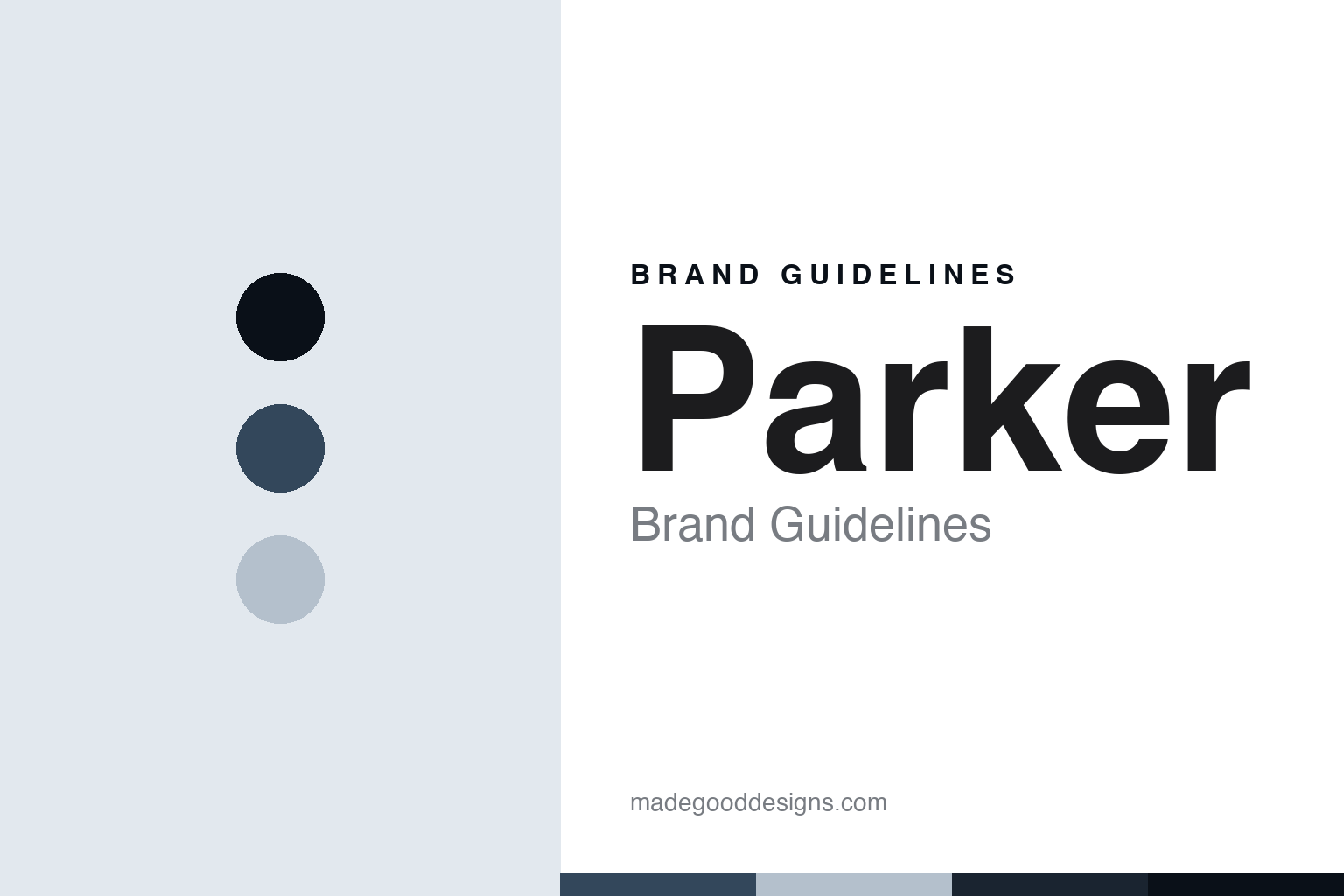
Parker lives in a Parker graphite. Click a swatch to copy the hex.
Parker’s identity is family, Indian and value — a Parker graphite, an ink, a pale steel, a deep slate, and a paper. The palette leans Parker graphite and deep slate: a clean, workmanlike register that stands in for a family value house rather than a loud logo colour. It signals the family-owned Indian razor house — family, Indian and value. The honest caveat: with no official brand hex, these values are a workmanlike, unofficial interpretation, not first-party colours.
The lesson is a Parker graphite signals a family, Indian identity. Parker’s world is the butterfly razor and the knurled handle. For designers, it is a reminder that a clean graphite and a pale steel can carry a family, Indian brand — a workmanlike tone held as an accent, not a product shot. Because a dark hue can flatten small text, keep type dark and even and let the colour live in the accents, palette and band. The takeaways: state family-owned since 1973 as the site’s own; attribute the India making; feature the butterfly and three-piece razors; and keep Parker distinct from Parker Pen. The further design lesson is that a value brand earns trust by being candid about what it can and cannot document: stating the family-owned-since-1973 line as the company’s own, attributing the India manufacture as widely reported rather than dressing it as a confirmed fact, and naming the Parker Pen confusion outright all read as more honest than a glossier claim, which is exactly why the register stays plain and the facts stay hedged.
Typography
The register is a value sans — family, Indian, value.
Parker’s identity carries a family, Indian spirit — a value house. A value sans captures the mood: clean, plain and modern, the register of an accessible brand. Set in a Parker-graphite palette, the value sans feels current and dependable — exactly the personality Parker carries. It behaves like a made, knurled thing rather than a loud logo, mirroring a knurl-dot and a handle-line. (Parker’s real products and the name are things we describe but do not reproduce, and the exact typeface is not ours to use.) Because it is not ours to use, the honest description is “a value-sans brand,” shown here in a stand-in. The type behaves like the brand: family, Indian and value.
Aa
A value-sans brand — current and dependable. (Specimen set in Sora, a value-sans STAND-IN; NOT the Parker logo or products.)
The safety-razor node
Parker stands for the family-owned Indian razor house.
Parker sits fourth in the round as its Indian node. A Parker-graphite palette, a value sans and family ownership make one thing — the family-owned Indian razor house — the whole identity: family, Indian and value. The family ownership since 1973 is the pitch, the reported India making is the honest note, and the butterfly razors are the substance. The point is a family value house, in a round about who makes and where-makes the razor.
Put to work, the identity is the brand told straight, the making attributed and the trap kept. A brand in this spirit would state family-owned since 1973 as the site’s own, attribute the India making, feature the butterfly and three-piece razors, and keep Parker distinct from Parker Pen. A reader in this spirit would keep the facts right: Parker makes wet-shaving razors; it says it is family-owned since 1973; its India make is reported; and it is not Parker Pen. Parker sits after Fatip and before Rockwell. The honest editorial moves are to state the ownership, to attribute the making, to feature the products, and to keep the names straight.
For designers and brand-builders, Parker carries the safety-razor node: a value house can be honest about a reported make. The lessons: a brand can hold the value end for decades, here Parker; an ownership is stated as the site’s own, family owned and operated since 1973, with the principals Deepak Grover and Howie Woda named in an interview and treated as reported; a making is attributed, that a country is not stated on Parker’s page and the India manufacture is widely reported, not asserted; products are featured, butterfly, twist-to-open razors such as the 99R and the Variant adjustable, and three-piece razors with knurled handles; and a trap is kept, that Parker Safety Razor is not the unrelated Parker Pen. It is also a reminder to stay precise: Parker is the family-owned Indian razor house whose make is reported, not stated — with the palette here an unofficial interpretation, and Parker Pen kept separate. The hook is that house: Parker is the family-owned Indian razor house, the wet-shaving brand family-owned since 1973, known for its butterfly twist-to-open and three-piece razors, with manufacture widely reported in India. Read that way, Parker is less a single razor than the family-owned Indian razor house: family, Indian, value. The lesson for a brand is that a value house can be honest about a reported make, and stating the ownership keeps it earned. Parker made the-family-owned-Indian-razor-house the identity — proof that a value house can anchor a node.
Explore & save
Keep Parker’s identity on hand — save it to a board in the Made Good inspiration library.
Parker identity set
Pin the Parker-graphite palette and the value-sans register to your own board.