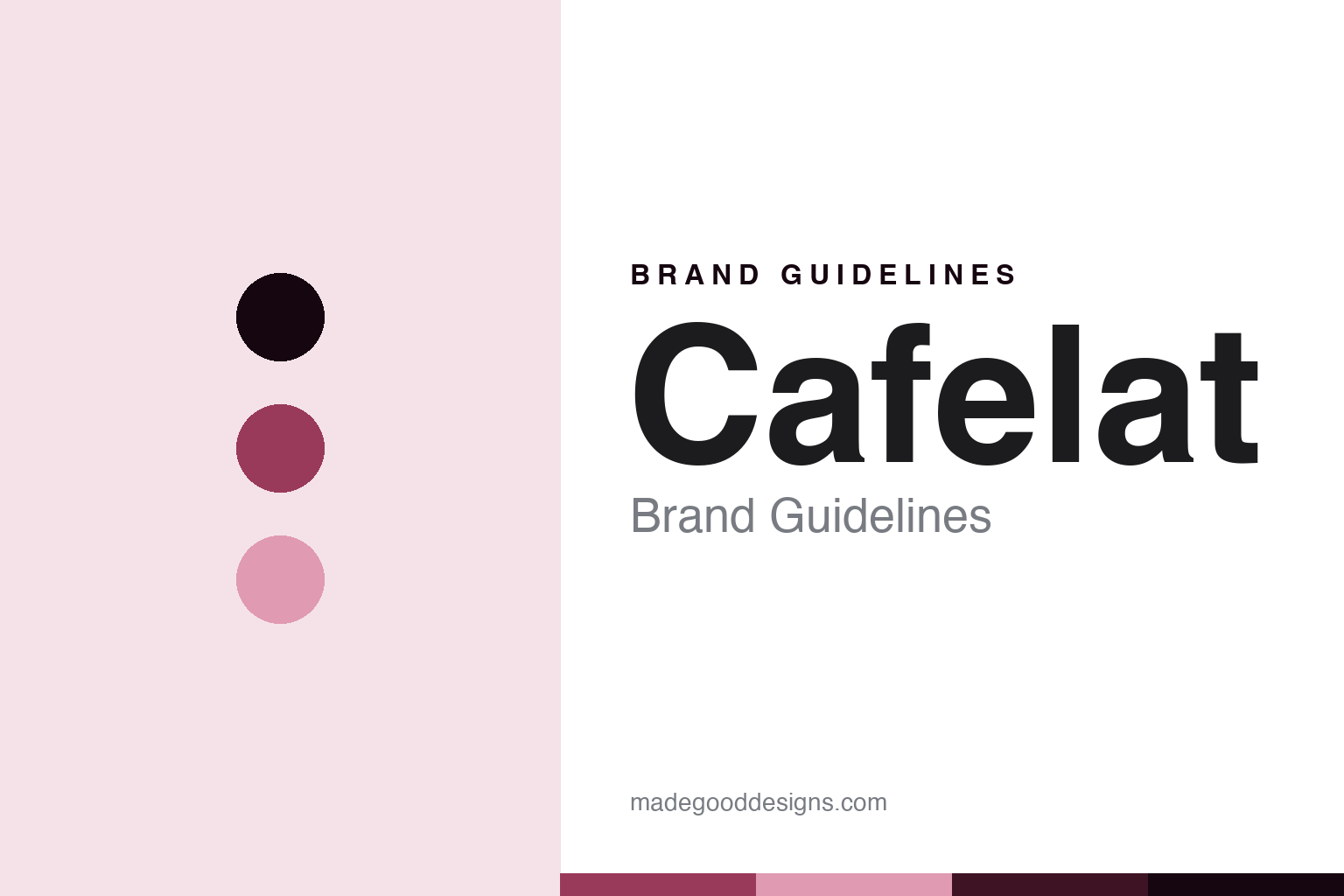
Cafelat Brand Guidelines
Coffee, by hand.
Aa
Two constants: a berry palette and a manual-sans register. Abstract homage — not a Cafelat product or mark.
Coffee, by hand
Cafelat is the Hong Kong maker of barista silicone tools and the manual, no-electricity Cafelat Robot espresso maker.
Cafelat closes the round on the most hands-on note — a Hong Kong maker of barista tools and a manual espresso maker that needs no power. Cafelat makes barista accessories and the Cafelat Robot, a lever-operated espresso maker. Its answer to how a maker becomes a name is to serve the barista and then the home: make the silicone tools professionals reach for, then a manual maker anyone can pull by hand. Coffee, by hand.
Its identity is coffee, by hand. Cafelat’s silicone barista tools, its manual Robot and its Hong Kong roots are the work it is known for. A maker, made in China. Coffee, by hand.
(Honest notes, so the story stays precise. Cafelat — at cafelat.com, as Cafelat Limited of Hong Kong — makes barista accessories, such as silicone tamping mats and corners and group-head gaskets, and the Cafelat Robot, a manual, lever-operated espresso maker that uses no electricity, available in a version with a pressure gauge and in bright colours. A note on category: the Robot is a manual espresso maker, not a pour-over dripper, so it sits on the manual-brewing side of this round. It was founded by Paul Pratt, a career barista and former Hong Kong importer, with the brand dating, as reported, to around 2008. On where it is made — a theme of this round — Cafelat does not state a country of manufacture; it is a Hong Kong brand, with manufacture reported to be in China, so we do not claim it is made in Hong Kong. On ownership, it is an independent, founder-led company. Its name and marks, and the Robot’s twin-lever shape, are IP, described but never reproduced, and there is no official brand hex; these tones are an unofficial interpretation. This is design commentary and does not promote any product.)
Colour
Cafelat lives in a berry palette. Click a swatch to copy the hex.
Cafelat’s identity is hands-on, made and bright — a berry, an ink, a rose, a deep berry, and a paper. The palette leans berry and rose: a bright, characterful register standing in for the Robot’s playful colours, rather than an official hue. It signals a manual, hands-on maker. The honest caveat: with no published brand hex, these values are an original, unofficial interpretation, not first-party colours.
The lesson is a berry palette signals a hands-on, characterful identity. Cafelat’s world is a hands-on, characterful object. For designers, it is a reminder that a bright berry and a soft rose can carry a coffee maker — the character of a tool you work by hand. Because these tones can fail as small text, keep type dark and let the colour live in the accents, palette and band. The takeaways: serve the professional; then the home; be honest about the make; and treat any single hex as unofficial.
Typography
The register is a manual sans — practical, characterful, made.
Cafelat’s identity carries a practical, characterful, made spirit — a hands-on maker, not a plug-in brand. A manual sans captures the mood: functional, friendly and tactile, the register of a tool pulled by hand. Set in a berry palette, the manual sans feels practical and characterful — exactly the personality Cafelat carries. It is hands-on brewing rather than a logo, mirroring a lever pull. (Cafelat’s real wordmark, and the Robot’s twin-lever shape, are things we describe but do not reproduce, and the exact typeface is not ours to use.) Because it is not ours to use, the honest description is “a manual-sans spirit,” shown here in a stand-in. The type behaves like the maker: practical, characterful and made.
Aa
A manual-sans spirit — practical and characterful. (Specimen set in Mulish, a manual-sans STAND-IN; NOT the Cafelat logo or Robot.)
The brewing makers
Coffee, by hand — Cafelat closes the brewing side.
Cafelat closes the round on the hands-on end — a maker whose tools and manual Robot need no power. A berry palette, a manual sans and a lever pull make one thing — coffee, by hand — the whole identity: hands-on, made and bright. The silicone barista tools and manual Robot are the differentiator, and the no-electricity, by-hand spirit is the meaning. The point is a Hong Kong maker that serves the professional with its tools and the home with a maker you pull by hand.
Put to work, the identity is hands-on making, told straight, as design. A maker in this spirit would serve the barista first and the home next — tools, then the Robot. A reader in this spirit would keep two things right: the Robot is a manual espresso maker, not a pour-over dripper, and Cafelat, a Hong Kong brand, does not state a country of manufacture, so the make is reported to be in China, not claimed as Hong Kong. Cafelat closes the round’s designed-here-made-where thread at the undisclosed end with the design-led brands, against the made-at-home Melitta and Origami, and it carries the by-hand end of the brewing-method thread. Across the round, seven makers — the inventor of the paper filter, a Mino-ware dripper, a Portland design brewer, an East London flat-bottom brewer, a Vancouver clean press, a Slovenian smart brewer and a Hong Kong manual maker — answer the vein’s question: on the brewing side, who makes the gear, and where? The honest editorial moves are to file the Robot as manual espresso, to present the founding as reported, and to state the make as reported China rather than Hong Kong. The lesson Cafelat teaches is that hands-on making can hold an identity: the tools and Robot give it substance, and the by-hand spirit keeps it credible. Coffee, by hand is the personality, and the manual Robot is the proof.
For designers and brand-builders, Cafelat closes the brewing makers, from Hong Kong: serve the professional — and the home, by hand. The lessons: make the tools the trade trusts; extend to the home; classify a product accurately; state a make as reported when it is undisclosed; and never reproduce a logo. It is also a reminder to stay precise: Cafelat is the Hong Kong maker of barista silicone tools and the manual, no-electricity Cafelat Robot espresso maker — with the palette here an unofficial interpretation. Cafelat made coffee-by-hand the identity — proof that a maker, honestly told, can be the difference.
Explore & save
Keep Cafelat’s identity on hand — save it to a board in the Made Good inspiration library.
Cafelat identity set
Pin the berry palette and the manual-sans register to your own board.