Eureka Brand Guidelines
The Florentine grinder.
Aa
Two constants: a burgundy palette and a heritage-serif register. Abstract homage — not a Eureka product or mark.
The Florentine grinder
Eureka is the Florentine grinder house of 1920, maker of the Mignon, hand-assembled in the Florence area by the Conti family.
Eureka opens the round as a heritage house — a Florentine grinder maker with more than a century behind it. From the Florence area, Eureka makes espresso and coffee grinders for the home and the café, and it is known above all for the Mignon. Its answer to how a maker becomes a name is a long, quiet mastery of one machine: build grinders that are quiet, on-demand and low in retention, and hand-assemble them near Florence. A grinder, from the Florentine bench.
Its identity is the Florentine grinder. Eureka’s Mignon home grinder, its quiet on-demand design and its Florence making are the work it is known for. A grinder, from Italy. The Florentine grinder.
(Honest notes, so the story stays precise. Eureka — at eureka.co.it, trading as Conti Valerio — makes espresso and coffee grinders for the home, above all the Mignon family (the Specialità, Silenzio, Zero and Libra), and for the café (the Atom, Helios and Olympus), plus a couple of espresso machines; it is known for quiet, on-demand, low-retention grinding. It was founded in 1920 in Sesto Fiorentino, near Florence, by Aurelio Conti; a detail to get right is that the founder was Aurelio Conti, while “Conti Valerio” is the company name, so we do not conflate the two. On where it is made — a theme of this round — Eureka hand-assembles in the Florence area, and it also runs a plant in Ningbo, China, so we say “made in the Florence area, with an additional plant in China” rather than claiming the whole range is Italian. On ownership, it is an independent, Conti-family firm. Its name — a common word it does not own, and shared with an unrelated American maker — and its marks are IP, described but never reproduced, and there is no official brand hex; these tones are an unofficial interpretation. This is design commentary and does not promote any product.)
Colour
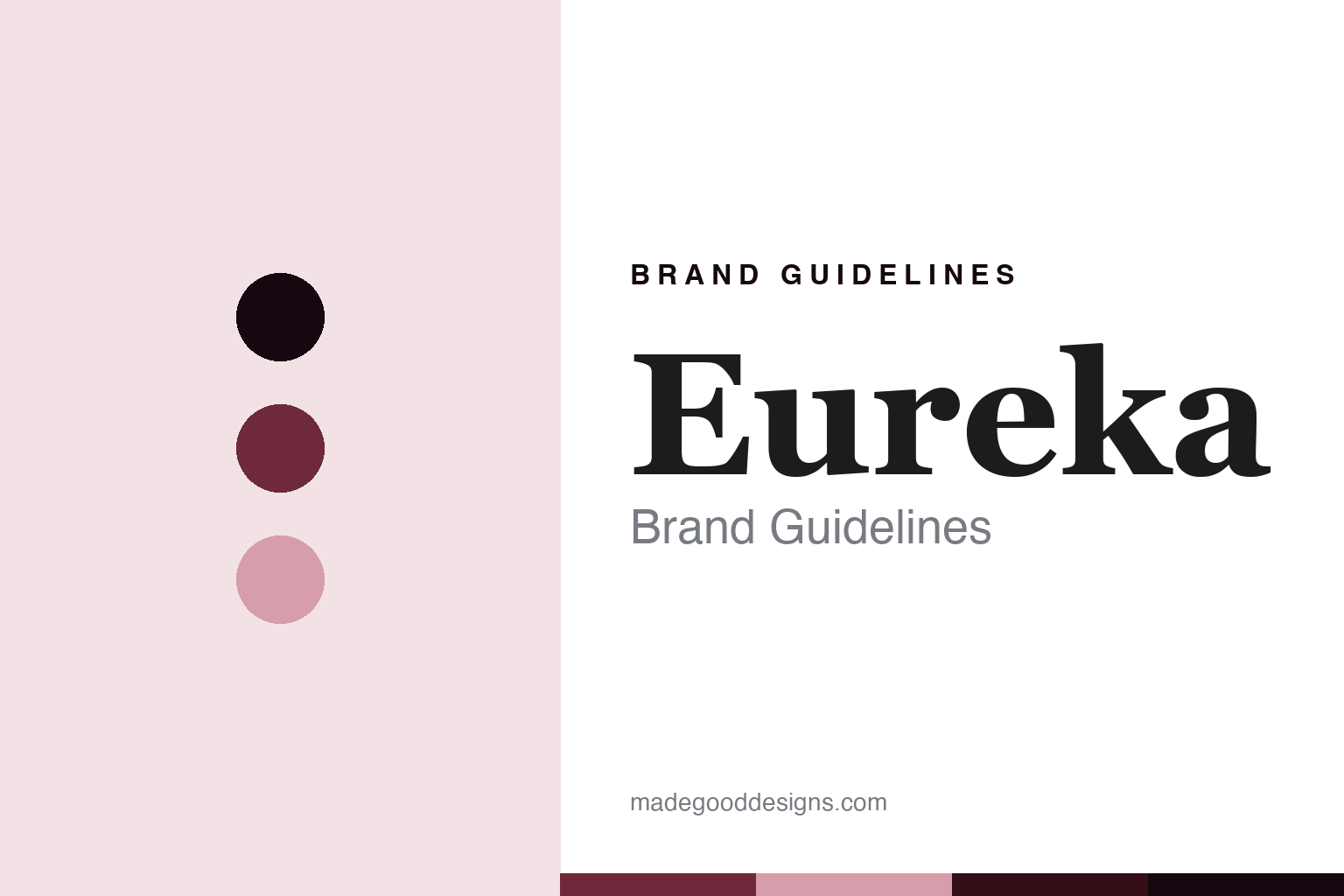
Eureka lives in a burgundy palette. Click a swatch to copy the hex.
Eureka’s identity is Italian, made and warm — a burgundy, an ink, a blush, a deep wine, and a paper. The palette leans burgundy and blush: the warm, considered register of a Florentine bench and a century of grinders. It signals a heritage grinder house. The honest caveat: with no published brand hex, these values are an original, unofficial interpretation, not first-party colours.
The lesson is a burgundy palette signals an Italian, heritage identity. Eureka’s world is a warm, hand-assembled object. For designers, it is a reminder that a deep burgundy and a soft blush can carry a grinder maker — the warmth of an old workshop and a fresh grind. Because these tones can fail as small text, keep type dark and let the colour live in the accents, palette and band. The takeaways: master one machine over decades; hand-assemble it at home; be honest about a second plant; and treat any single hex as unofficial.
Typography
The register is a heritage serif — classical, Italian, made.
Eureka’s identity carries a classical, Italian, made spirit — a heritage grinder house, not a start-up. A heritage serif captures the mood: traditional, warm and Florentine, the register of a grinder maker from 1920. Set in a burgundy palette, the heritage serif feels classical and Italian — exactly the personality Eureka carries. It is a century of grinding rather than a logo, mirroring a quiet Mignon. (Eureka’s real wordmark, and the Mignon’s compact shape, are things we describe but do not reproduce, and the exact typeface is not ours to use.) Because it is not ours to use, the honest description is “a heritage-serif spirit,” shown here in a stand-in. The type behaves like the grinder: classical, warm and made.
Aa
A heritage-serif spirit — classical and Italian. (Specimen set in Cormorant Garamond, a heritage-serif STAND-IN; NOT the Eureka logo.)
The grinder makers
Eureka stands for the Florentine grinder, made in Italy.
Eureka opens the round with its recurring question ready: where is the grind really made? A burgundy palette, a heritage serif and a quiet Mignon make one thing — the Florentine grinder — the whole identity: Italian, made and warm. The hand-assembled Florentine grinders are the differentiator, and the century of quiet mastery is the meaning. The point is a Florentine house that has made grinders since 1920, gave the home the Mignon, and hand-assembles near Florence — while honestly running a second plant abroad.
Put to work, the identity is quiet mastery, told straight, as design. A maker in this spirit would master one machine over decades and assemble it at home — the Mignon, near Florence. A reader in this spirit would keep two things right: the founder was Aurelio Conti, not “Conti Valerio,” which is the company; and the making is Italian for the Florentine-assembled grinders but not the whole range, since a Ningbo plant exists too. Eureka opens the round’s where-made thread at the heritage-at-home end with Mazzer and Mahlkönig, and its ownership thread at the independent, family end. The honest editorial moves are to separate the founder from the company name, to state the Florence making while noting the China plant, and to disambiguate the common name from the unrelated American maker. The lesson Eureka teaches is that quiet mastery can hold an identity: the Florentine making gives it substance, and the Mignon keeps it credible. The Florentine grinder is the personality, and the Mignon is the proof.
For designers and brand-builders, Eureka opens the grinder makers, from Italy: master one machine — and be honest about where it is made. The lessons: build quiet mastery over decades; hand-assemble at home; disclose a second plant; separate the founder from the company; and never reproduce a logo. It is also a reminder to stay precise: Eureka is the Florentine grinder house of 1920, maker of the Mignon, hand-assembled in the Florence area by the Conti family — with the palette here an unofficial interpretation. Eureka made the Florentine grinder the identity — proof that a grinder, honestly made, can be the difference.
Explore & save
Keep Eureka’s identity on hand — save it to a board in the Made Good inspiration library.
Eureka identity set
Pin the burgundy palette and the heritage-serif register to your own board.