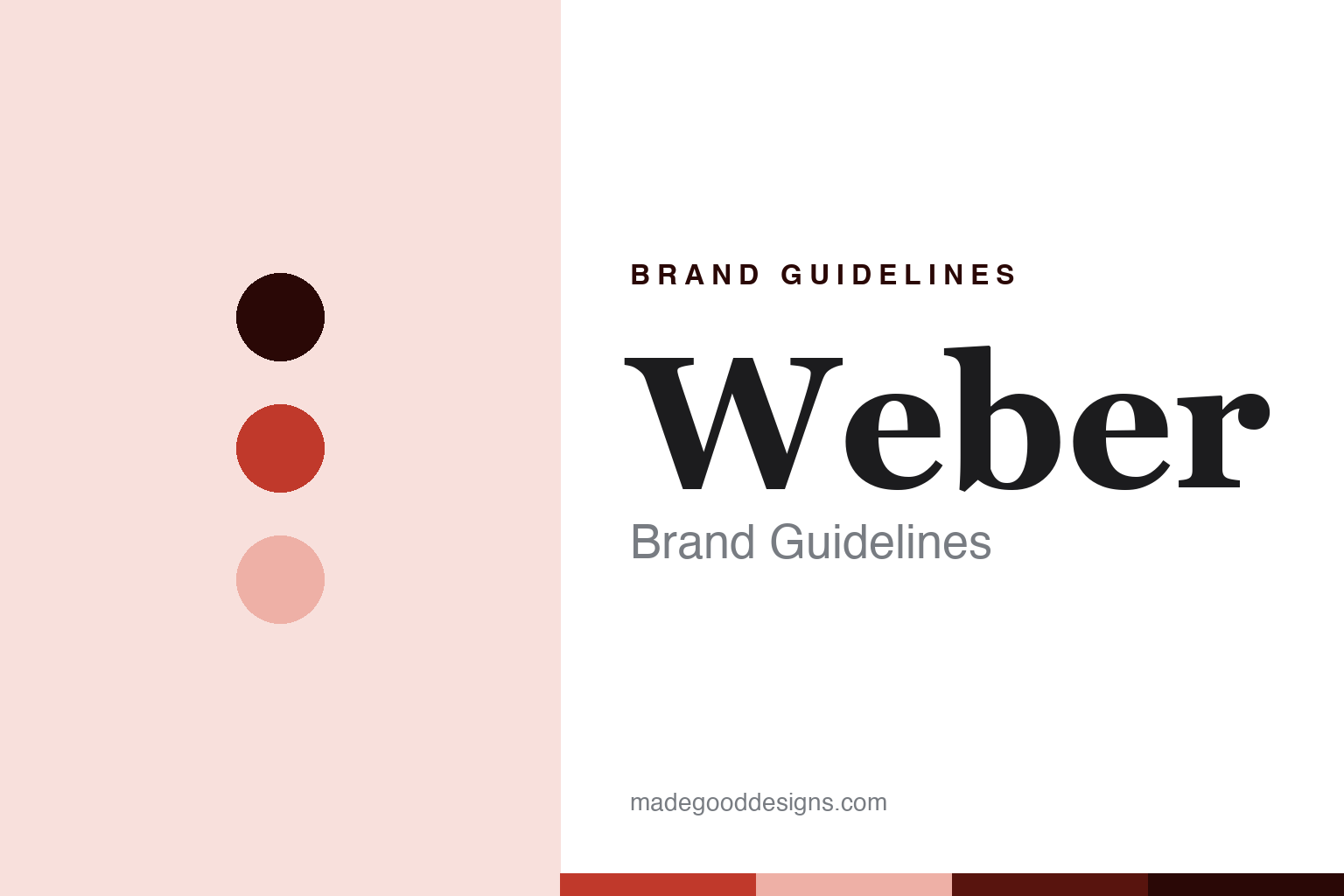
Weber Brand Guidelines
The kettle icon that went public, then private.
Aa
Two constants: a Weber-red palette and a kettle-serif register. Abstract homage — not a Weber product or mark; no grill, grate or logo is reproduced.
The kettle icon that went public, then private
Weber is the American maker of the 1952 charcoal kettle grill — taken public on the NYSE in 2021 and then private again by BDT Capital in 2023.
Weber opens the grill round as its icon node — the brand whose round charcoal kettle defined the backyard barbecue, with an ownership arc that swung public and back. Its answer to a round about who owns and where-makes the grill is a private-equity round trip: the kettle icon that went public, then private.
Its identity is the kettle icon that went public, then private. The 1952 kettle, the 2021 listing and the 2023 buyout are the story here. The kettle icon. The kettle icon that went public, then private.
(Honest notes, so the origin, the ownership and the making are framed accurately. Weber sells grills as its heroes; we report its language as the brand’s own. On origin: George Stephen invented the round charcoal kettle grill and began selling it in 1952, in Palatine, Illinois, though the company itself traces to 1893 as Weber Bros. Metal Works, with Stephen later becoming sole owner and renaming it Weber-Stephen Products. On ownership, the key point: Weber was family-owned until 2010, when BDT Capital Partners took a majority; it went public on the New York Stock Exchange, as WEBR, in August 2021; and BDT then took it private again, buying the remaining stock at about a three-and-a-half-billion-dollar enterprise value, with the delisting in 2023, so the public window was brief. On the range: the charcoal Kettle, the Genesis and Spirit gas grills, the Smokey Mountain smoker and the SmokeFire pellet grill, with Weber Connect smart tech. On the making: we hedge it as US-rooted with global sourcing, rather than claim made-in-USA. Its designs and the Weber name are IP we describe but do not reproduce; there is no official brand hex; these tones are an unofficial interpretation.)
Colour
Weber lives in a Weber red. Click a swatch to copy the hex.
Weber’s identity is iconic, American and round-tripped — a Weber red, an ink, a pale red, a deep crimson, and a paper. The palette leans Weber red and deep crimson: a bold, confident register that stands in for a barbecue icon rather than a loud logo colour. It signals the kettle icon that went public, then private — iconic, American and round-tripped. The honest caveat: with no official brand hex, these values are a confident, unofficial interpretation, not first-party colours.
The lesson is a Weber red signals an iconic, American identity. Weber’s world is the kettle grill and the backyard. For designers, it is a reminder that a bold red and a pale red can carry an iconic, American brand — a confident tone held as an accent, not a product shot. Because a strong hue can fail as small text, keep type dark and let the colour live in the accents, palette and band. The takeaways: date the kettle to 1952 and note the 1893 company; name BDT as the owner; frame the 2021 listing and the 2023 buyout; and hedge the making.
Typography
The register is a kettle serif — iconic, American, round-tripped.
Weber’s identity carries an iconic, American spirit — a household name with a corporate arc. A kettle serif captures the mood: confident, established and warm, the register of a category-definer. Set in a Weber-red palette, the kettle serif feels dependable and earned — exactly the personality Weber carries. It behaves like a made, enamelled thing rather than a loud logo, mirroring a grate-line and a lid-dot. (Weber’s real products and the name are things we describe but do not reproduce, and the exact typeface is not ours to use.) Because it is not ours to use, the honest description is “a kettle-serif brand,” shown here in a stand-in. The type behaves like the brand: iconic, American and round-tripped.
Aa
A kettle-serif brand — confident and warm. (Specimen set in Fraunces, a kettle-serif STAND-IN; NOT the Weber logo or products.)
The grill node
Weber stands for the kettle icon that went public, then private.
Weber opens the round as its icon node. A Weber-red palette, a kettle serif and the 1952 grill make one thing — the kettle icon that went public, then private — the whole identity: iconic, American and round-tripped. The 1952 kettle is the origin, the 2021 listing is the peak, and the 2023 buyout is the turn. The point is a category-defining icon that swung public and back, anchoring a round about who owns and where-makes the grill.
Put to work, the identity is the brand told straight, the ownership traced and the making hedged. A brand in this spirit would date the kettle to 1952 and note the 1893 company, name BDT as the owner, frame the 2021 listing and the 2023 buyout, and hedge the making. A reader in this spirit would keep the facts right: Weber makes the kettle grill; it dates to 1952; BDT owns it; and it went public in 2021 and private in 2023. Weber opens the round, before Napoleon. The honest editorial moves are to date the kettle, to name the owner, to frame the round trip, and to hedge the making.
For designers and brand-builders, Weber opens the grill node: anchor a round with the icon whose ownership swung public and back. The lessons: a category can open with its defining product, here the Weber kettle; an origin is dated, George Stephen’s round charcoal kettle sold from 1952 in Palatine, Illinois, with the company itself from 1893; an ownership is traced, family-owned until 2010, then BDT Capital majority, public on the NYSE as WEBR in August 2021, and private again via BDT at about three and a half billion dollars with the 2023 delisting; a range is placed, the Kettle, Genesis, Spirit, Smokey Mountain and SmokeFire; and a making is hedged, US-rooted with global sourcing. It is also a reminder to trace ownership: Weber is the American kettle icon taken public then private by BDT — with the palette here an unofficial interpretation, and the making hedged. The hook is that round trip: Weber is the kettle icon that went public, then private, the American maker of the 1952 charcoal kettle grill, taken public on the NYSE in 2021 and then private again by BDT Capital in 2023. Read that way, Weber is less a single grill than the kettle icon that went public, then private: iconic, American, round-tripped. The lesson for a brand is that anchoring a round with the icon whose ownership swung public and back reinforces the honesty, and dating the kettle keeps it earned. Weber made the-kettle-icon-that-went-public-then-private the identity — proof that an icon can open a round.
Explore & save
Keep Weber’s identity on hand — save it to a board in the Made Good inspiration library.
Weber identity set
Pin the Weber-red palette and the kettle-serif register to your own board.