Bang Brand Guidelines
Neon cans, a social-media army and a courtroom saga — the fitness energy drink Monster bought out of bankruptcy.
Aa
Two constants: a neon, flavor-coded palette and a bold, rounded sans. Abstract homage — not the Bang wordmark or cans.
Neon and social media
Bang grew on influencers and bold cans.
Bang Energy is a lesson in social-media growth — and its limits. The drink was made by Vital Pharmaceuticals (VPX), founded in 1993 by Jack Owoc, a former science teacher who had spent two decades building a bodybuilding-supplement reputation in South Florida. The Bang carbonated energy drink launched around 2012 as a zero-sugar, zero-calorie performance beverage (caffeine, BCAAs, electrolytes, CoQ10), and it exploded in the late 2010s: by 2020, sales reached roughly $780 million, making Bang the #3 US energy drink behind Red Bull and Monster. Its rise was powered almost entirely by fitness influencers and Owoc’s own flamboyant social-media persona (@bangenergy.ceo). (Honest caveats: no official brand hex or wordmark typeface is published, so the colours and type here are approximate.)
Visually, Bang is defined by bold, high-contrast, flavour-coded neon cans — a wall of bright colours with the lowercase “bang” wordmark (a crosshair through the “B”), aimed at gyms and a young, fitness-obsessed audience. Its taglines — “Potent Brain & Body Fuel” and “Fuel Your Destiny” — and its “super creatine” marketing were central to the pitch. Here’s the important caveat: the “super creatine” and related health claims were legally disputed and found unsubstantiated — the ingredient is Creatyl-L-Leucine, and Bang ultimately agreed to drop “super creatine” from its packaging and advertising. Those claims should never be repeated as fact.
Ownership is the dramatic part. After losing a major false-advertising and trade case to Monster Energy (a jury verdict of roughly $293 million in 2022), VPX filed for Chapter 11 bankruptcy in October 2022. In 2023, Monster Beverage acquired Bang’s assets out of bankruptcy for about $362 million — so today Bang is owned by Monster, and founder Jack Owoc was ousted. A brand that rose on hype and neon, then changed hands in a courtroom.
Colour
Bang lives in bold neon. Click a swatch to copy the hex.
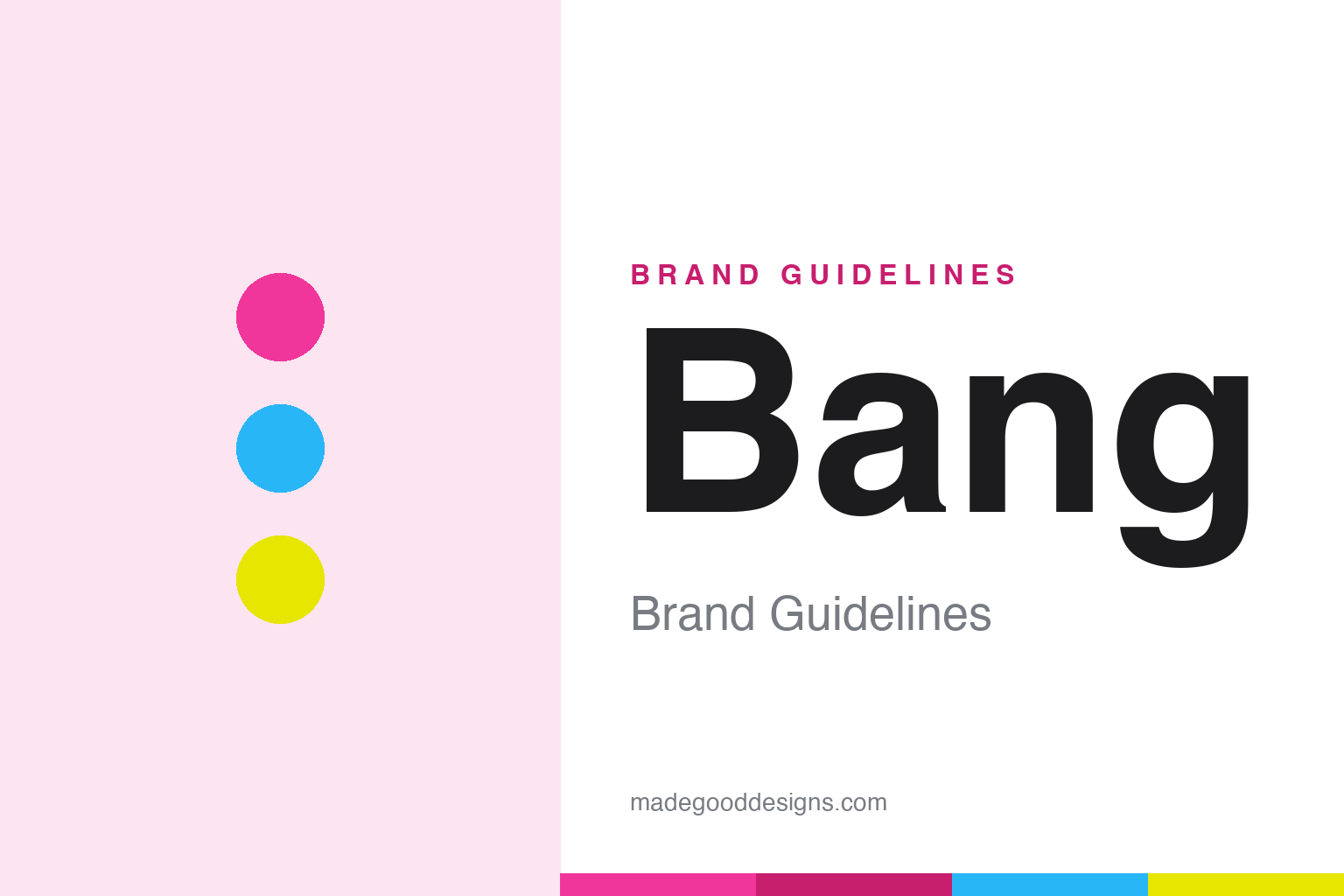
Bang’s palette is bold neon — a bright, high-contrast, flavour-coded system where each SKU gets its own vivid colour, with pink and sky-blue often anchoring the wordmark. It’s loud, energetic and unapologetically eye-catching, designed to grab attention in a cooler full of competitors and to pop on a phone screen in an influencer video. The neon look is aggressive and youthful, matching a fitness energy drink built for the gym and social media. It’s the opposite of Celsius’ clean minimalism — Bang shouts in colour. The honest caveat: Bang publishes no official public brand hex — the pink, blue and neon flavour colours here are approximations, not a confirmed spec.
The lesson is colour as attention. Bang’s neon, flavour-coded palette is engineered to stop the scroll and win the cooler. For designers, it’s a reminder that maximum-contrast, flavour-coded colour can drive recognition in a crowded, visual-first category. The takeaways: use bold, high-contrast neon to grab attention (the flavour-coded cans); anchor the wordmark on a couple of signature colours (pink + sky-blue); and treat specific hexes as approximate when no official spec is published.
Typography
The wordmark is a bold, rounded sans — punchy and loud.
Bang’s bold, rounded wordmark — the lowercase “bang,” with a crosshair punched through the “B” — is punchy and loud. The heavy, rounded letters feel energetic and aggressive at once, matching a fitness energy drink built on intensity and social-media hype, and the crosshair detail gives the mark an ownable, slightly tactical edge. Set against the neon, flavour-coded cans, the type is designed to read fast and hit hard, whether on a shelf or in a two-second video. It’s brash and confident, exactly like the brand’s persona. (Because the exact typeface isn’t documented, the honest description is “a bold, rounded sans,” not a named font — resemblances to specific fonts are just resemblances.) The type behaves like the brand: punchy, loud and bold.
Aa
A bold, rounded sans — punchy and loud. (Specimen set in Rubik, a bold rounded sans in the spirit of the Bang wordmark; the real face is undocumented.)
Hype, and its limits
Bang shows the power and the risk of claims.
Bang Energy is a lesson in the power — and the risk — of a hype-driven brand. Through neon cans, a fitness-influencer army and a larger-than-life founder, Bang rocketed to the #3 spot in US energy drinks in just a few years, proving how fast social media can build a beverage. But the same aggression that drove its rise also drove its fall: the disputed “super creatine” and health claims and the legal war with Monster ended in a $293M verdict, bankruptcy, and Monster acquiring the brand. The design and marketing were brilliant at growth and dangerous at the edges — a cautionary tale as much as a success story.
For designers and brand-builders, Bang offers a clear takeaway: bold design and social reach can build a brand fast, but claims must be defensible. The lessons: use loud, flavour-coded, high-contrast design to win a visual category (the neon cans); harness communities and creators for growth (the influencer model); and never let marketing outrun what you can substantiate (the “super creatine” claims were disputed and dropped). It’s also a reminder to keep the facts precise — Bang was made by VPX (founded 1993 by Jack Owoc) with the drink launching around 2012; its “super creatine” claims were legally disputed and removed; VPX filed for Chapter 11 in 2022 after a ~$293M Monster verdict; and Monster Beverage acquired Bang’s assets for about $362 million in 2023. Bang made hype the engine — proof that design can build a rocket, but claims decide whether it lands.
Explore & save
Keep Bang’s identity on hand — save it to a board in the Made Good inspiration library.
Bang identity set
Pin the neon palette and the bold-rounded-sans spirit to your own board.