Color Palettes for Restaurants (With Hex Codes)
Color shapes appetite, ambiance, and how long guests linger — making it one of the most powerful tools in restaurant branding. The right color palettes for restaurants reinforce your cuisine and price point before a single dish arrives. The principle: warm reds, oranges, and yellows stimulate appetite and energy, while deep neutrals and greens signal calm, freshness, or upscale dining.
How to choose a restaurant color palette
Build around three to four colors that match your concept: a fast-casual taco shop wants energetic warm tones, while a steakhouse leans moody and refined. Use the 60-30-10 rule across your space — a dominant wall or background color, a secondary surface, and an accent for signage and call-to-action elements. Warm hues encourage faster turnover; cooler, darker palettes invite lingering and higher spend. Make sure menu text stays legible against its background. Learn how hues influence behavior in our guide to color psychology.
Appetite Red
Energetic and hunger-inducing — the classic choice for pizzerias, diners, and fast-casual spots that want buzz and quick turnover.
Hex: #C0392B, #E67E22, #F1C40F, #FDF6EC — #C0392B for signage and walls, #E67E22 and #F1C40F as accents, #FDF6EC keeps menus readable.
Rustic Earth
Cozy, honest, and farm-to-table — warm browns and olive suit cafes, bakeries, and casual bistros that feel homemade.
Hex: #6F4E37, #A9744F, #7D8A5B, #F0E9DD — #6F4E37 for wood-tone walls, #7D8A5B olive accents, #F0E9DD warm background for menus and packaging.
Upscale Dark
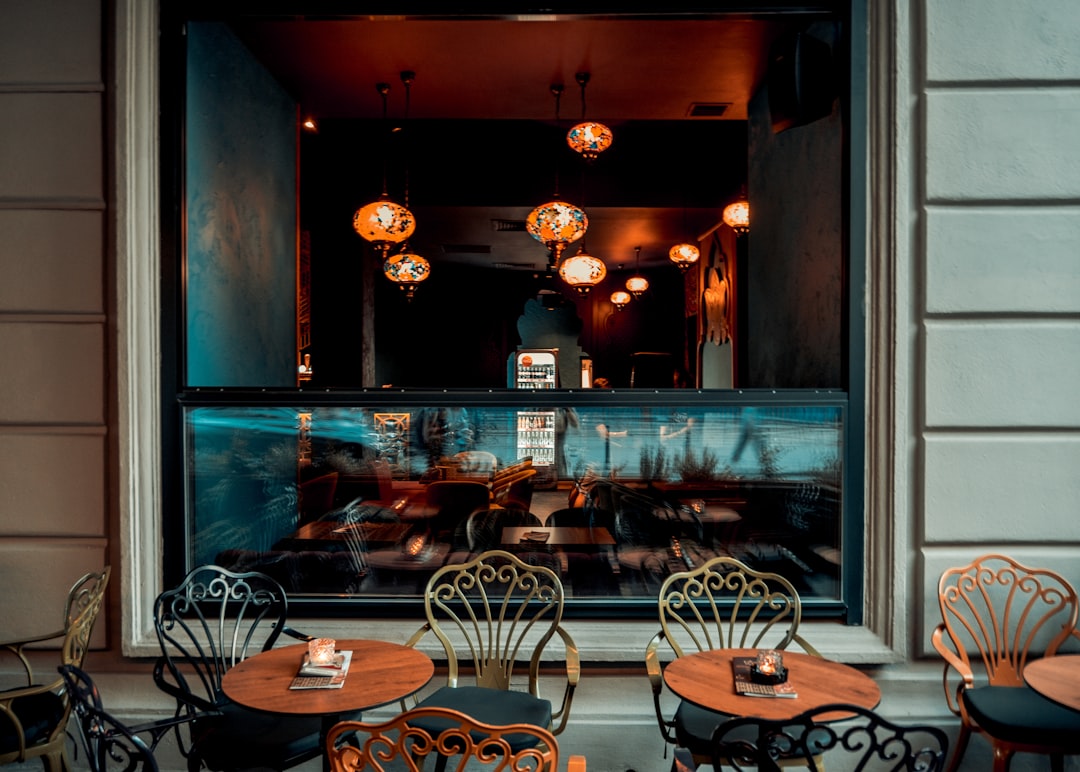
Moody, refined, and exclusive — charcoal with gold creates the hushed luxury of fine dining and cocktail lounges.
Hex: #1C1C1E, #2E2A26, #B08D3F, #E8E2D5 — #1C1C1E for walls, #B08D3F gold for logos and trim, #E8E2D5 for menu text on dark surfaces.
Fresh Cafe
Light, airy, and Instagram-ready — soft greens and cream define brunch spots, juice bars, and modern cafes.
Hex: #88B04B, #4F7942, #FAF7F0, #E9A85C — #FAF7F0 light background, #88B04B and #4F7942 greens for branding, #E9A85C warm accent for energy.
Coastal Seafood
Crisp navy and seafoam evoke the ocean — perfect for seafood shacks, oyster bars, and coastal grills.
Hex: #1F4E5F, #5AA9A3, #F4F1E6, #E2683C — #1F4E5F navy walls and signage, #5AA9A3 seafoam accents, #E2683C a crab-orange pop for menus.
Bold Street Food
Loud, playful, and youthful — vivid pink and teal grab attention for food trucks, taquerias, and casual joints.
Hex: #E63950, #15A3A3, #FFD23F, #1D1D1D — #E63950 and #15A3A3 carry branding, #FFD23F for highlights, #1D1D1D for bold readable text.
Tips for using these restaurant palettes
Keep menus high-contrast — dark text on a light field, or light text on a dark field — so guests can read in dim lighting. Repeat your accent color across signage, uniforms, packaging, and social media for instant brand recognition. Test paint and print samples under your actual restaurant lighting, which is often warmer and dimmer than a design studio. Remember that warm palettes speed up turnover while cooler, darker ones encourage guests to relax and order more. For pairing logic, see warm vs cool colors and our broader color theory guide.
Frequently Asked Questions
What colors make people hungry?
Warm colors — especially red, orange, and yellow — are most strongly linked to appetite and energy, which is why so many fast-food and casual brands use them. Red can also create urgency that encourages faster ordering. Earthy browns and warm creams suggest comfort and homemade quality.
What colors are best for a fine-dining restaurant?
Deep, muted tones like charcoal, navy, forest green, and burgundy convey sophistication and exclusivity. Pairing one dark base with a metallic accent such as gold or bronze signals luxury. These cooler, dimmer palettes also encourage guests to linger and spend more.
How many colors should a restaurant brand use?
Three to four colors works best: a dominant brand color, a secondary tone, an accent, and a neutral for backgrounds and text. This keeps signage, menus, and packaging cohesive without looking busy. Apply the 60-30-10 rule to balance the proportions across your space.
What colors should a cafe use?
Light, fresh palettes — soft greens, warm cream, and a cheerful accent like terracotta or mustard — suit cafes and brunch spots that want a bright, welcoming, photo-friendly feel. These airy schemes read as healthy and casual, fitting coffee, juice, and breakfast concepts.
Do restaurant colors affect how long guests stay?
Yes. Bright warm colors create energy and tend to speed up turnover, ideal for high-volume casual spots. Cooler, darker, and more muted palettes feel calmer and encourage guests to relax, stay longer, and order additional courses or drinks, which suits upscale and bar-focused venues.