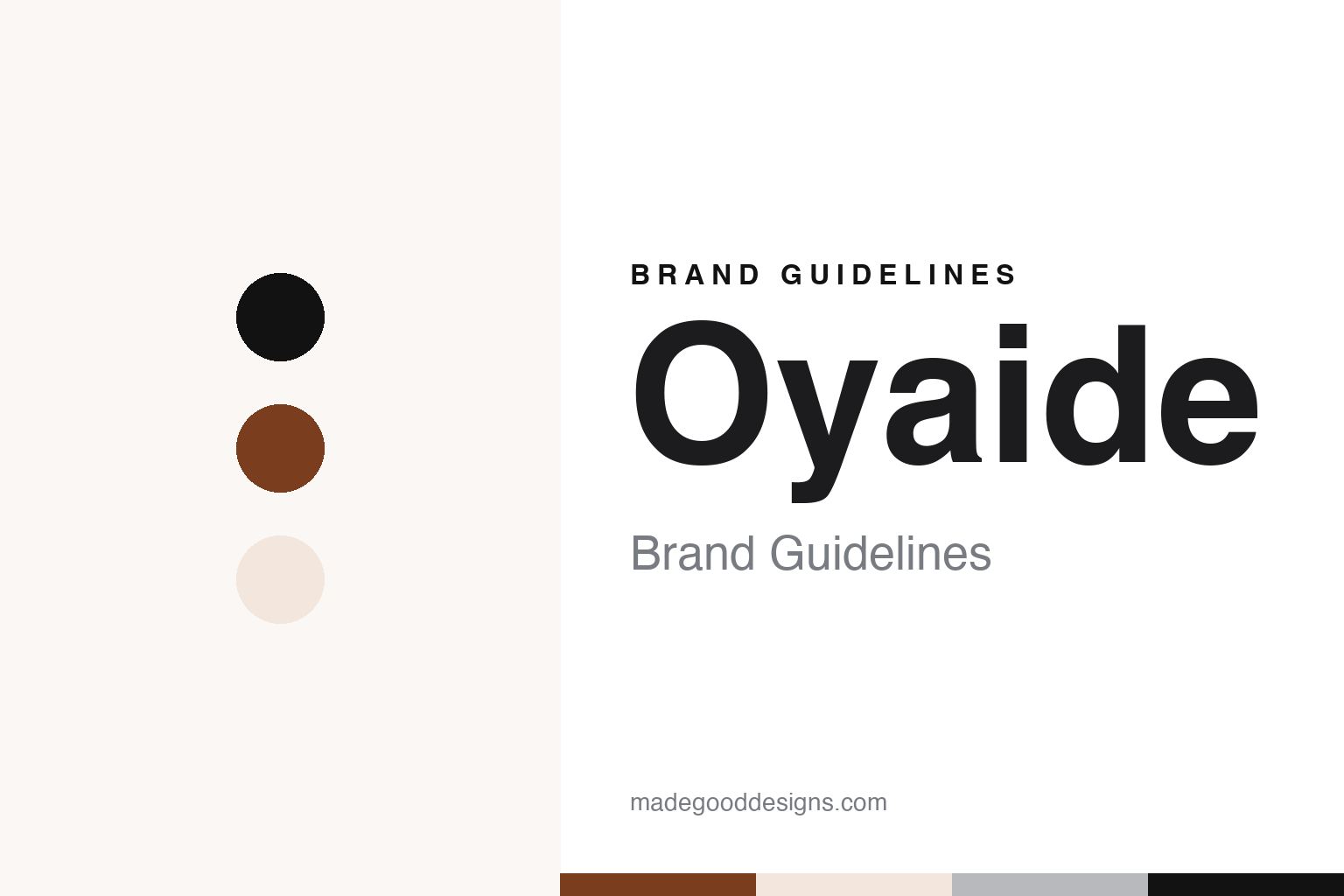
Copland Brand Guidelines
Ole Møller’s Copenhagen valve amplifiers since 1984.
Aa
Two constants: a Copland black, silver and valve amber palette and a geometric sans register. Abstract homage — not a Copland product or mark; no amplifier, logo or nameplate is reproduced.
Since 1984
An Ortofon engineer and a valve amplifier.
Copland is a small Danish maker of amplifiers, and its own account of its beginnings is short. The company says it was founded by Ole Møller, who remains its “founder and principal designer,” and that it is “based in central Copenhagen.” Its website carries the line “Copland Stereo Amplification Since 1984,” and its product chronology, headed “since the establishment of the company in 1984,” begins in that year — although the same website’s history page says only that Copland was “founded in the mid-1980s.” We found no independent register entry or encyclopedia article that fixes the date, so 1984 here is the company’s own figure.
Before Copland, Møller worked at Ortofon, the Danish maker of phono cartridges, the company says, on pick-ups, record-cutting heads and amplifiers for the recording industry, and was later assigned to low-noise amplifiers for the tiny signals produced by moving-magnet and moving-coil cartridges. Copland, it says, gave him the chance to pursue his own engineering “with special dedication to valves as active devices,” using components and techniques that earlier designers of valve amplifiers had not had.
The first product, according to the company, was the CTA15 power amplifier of 1984, rated at 2 × 12 watts with EL84 output valves. Copland says its use of printed circuit boards cut much of the slow hand-wiring usual in valve amplifiers, so that the CTA15 sold at a price “within the means of many audiophiles in the 1980s.” The chronology then lists the CTA10 in 1985 and a Mark 2 version in 1987. The website does not explain the choice of the name Copland.
Colour
Hat knobs, hybrids and a Swedish licence.
Copland’s international growth came through a partnership in Sweden. In 1990, the company says, it “teamed up with the new established company Xena Audio,” which for “more than a decade” made Copland products under licence; Copland credits the Swedish firm’s “marketing and production skills” with an early international success. We found no independent account of the licence and give it as Copland’s description.
The first amplifier of that era was the CTA401 integrated valve amplifier of 1990. Copland says its exterior — rotary “hat” knobs set in a symmetrical front panel — became “a hallmark of Copland amplifiers,” and reviewers still single out the controls: What Hi-Fi?, reviewing the CSA70 in April 2022, wrote of “those traditional Copland rotary controls” and said the brand’s amplifiers “have always been for those who admire understatement.”
Alongside pure valve designs came hybrids. Copland calls them “Copland Synetic Amplifiers,” or CSA, and says the circuit — one or two dual triodes in a differential input stage, direct-coupled to a solid-state class A cascode output — was developed in the 1980s and first used in the CSA14 integrated of 1993. The company’s chronology lists a steady run of models through the 1990s, from the CTA501 and CTA301 to the CSA28 and CSA8.
Copland also made CD players for a time. It says the first, the CDA288, was developed by Møller with Morten Simonson, whom it describes as formerly of Philips research and development in the Netherlands, and that its digital-to-analogue stage used four Burr-Brown converters connected in series. The chronology dates the CDA288 to 1996 and lists later players up to the CDA825 of 2010. By 2022, What Hi-Fi? observed, Copland “doesn’t seem to make a disc spinner anymore.”
Typography
Danish amplification.
Beyond its best-known names, Nordic hi-fi is a business of small companies. Several of Denmark’s larger loudspeaker brands have passed to foreign owners — Jamo to Klipsch in 2005 and Dynaudio to China’s Goertek in 2014, according to English Wikipedia — while many smaller makers remain private or sit in small groups.
The clearest such group is Dantax, an audio company in Pandrup, North Jutland, listed in Copenhagen since 1984. It took over Raidho in 2009 and announced in January 2018 that it was taking over GamuT, and it has long owned the Scansonic name. In its 2024/25 annual report Dantax says it sells loudspeakers under the Raidho, GamuT and Scansonic HD names, that they are produced in Pandrup, and that it employed an average of 12 people.
In Finland, Genelec was founded in Iisalmi in 1978 by Ilpo Martikainen and Topi Partanen, and Amphion by Anssi Hyvönen in 1998, moving to Kuopio in 2000, English Wikipedia says; both say they make their speakers in Finland.
The makers in this guide are spread across three countries: Penaudio, founded in Jyväskylä in 1999 and now at Luumäki in south-eastern Finland; System Audio in Roskilde; Copland in Copenhagen; GamuT and Scansonic at Dantax in Pandrup; Holfi, whose factory was at Hillerød in 2000 and which we found no sign of trading after the late 2000s; and Dynavoice, which designs its speakers in Örebro, Sweden — according to their own websites, company registers and archived pages.
This guide sets out what can be checked about each brand — who founded it, who owns it, and what it says about where its products are made — and marks clearly what rests only on the company’s own word.
Aa
A geometric sans — a nod to the letter-spaced “C O P L A N D” of the company’s early website. (Specimen set in Jost, a sans STAND-IN; NOT the Copland logo.)
Copland
A small range with a consistent face.
In 2001, the company says, production “moved back to Denmark,” and the first products from “the factory outside Copenhagen” were the CVA306 and CVA506 multichannel amplifiers; the CVA306 preamplifier let buyers use valve amplification in a combined music and film system. (The history page dates the CVA306 to 2002, the chronology to 2003.) The website does not say where its current products are assembled, and we found no independent statement, so we make no claim about where they are made today.
The range has stayed small. When What Hi-Fi? reviewed the range-topping CTA407 in November 2024, at £6,500, it called Copland a “tiny Danish manufacturer” offering four integrated amplifiers and a DAC/headphone amplifier, with “no source components, as was once the case,” and noted that it uses “solid-state, valve and hybrid circuits.” The CTA407 is a push-pull, ultra-linear valve design of 50 watts per channel that accepts KT90, KT100, KT120 or KT150 output valves, the magazine reported. Copland’s current list is the CSA70, CSA100 and CSA150 integrated amplifiers, the CTA407 and the DAC215 headphone amplifier; the 2022 What Hi-Fi? review describes the CSA70 as fully solid-state and the CSA100 as a hybrid with a valve in its line stage.
The company cites two recent awards: a Diapason d’Or for the CSA70, announced in November 2022 and presented in Paris in January 2023, and an “Outstanding product” rating from Hi-Fi News for the CTA407 in its November 2023 issue. It sells through national distributors, its website says, including SAS Audio in Denmark and Absolute Sounds in the UK.
For a design guide, Copland shows how a single, consistent face — round knobs on a symmetrical panel — can carry a small brand for four decades. Compare Gato Audio, another Danish amplifier maker, and Primare, a Swedish one. For this guide we use black, brushed silver and a warm valve amber with a geometric sans, an unofficial interpretation; no product or logo is reproduced.
Explore & save
Keep Copland’s identity on hand — save it to a board in the Made Good inspiration library.
Copland identity set
Pin the Copland black, silver and valve amber palette and the geometric sans register to your own board.