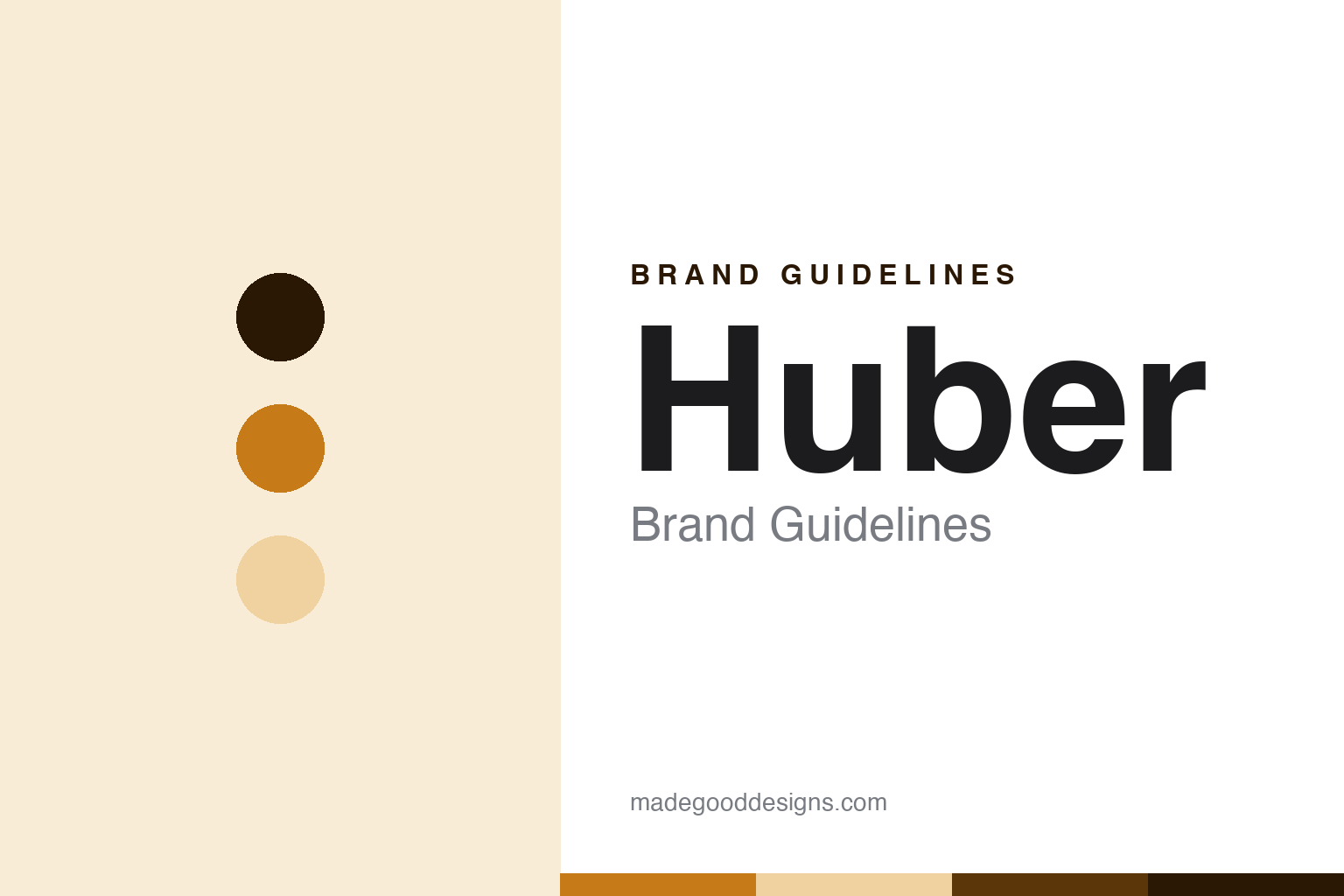
Huber Brand Guidelines
The Nashville maker chasing the prewar tone.
Aa
Two constants: a Huber-amber palette and a tone-sans register. Abstract homage — not a Huber product or mark; no banjo, peghead or logo is reproduced.
The Nashville maker chasing the prewar tone
Huber is Steve Huber’s Tennessee banjo shop recreating the prewar Gibson Mastertone tone — whose proprietary tone rings are sold to builders across the trade.
Huber follows Nechville as the round’s prewar-tone node — a Tennessee maker who set out to recreate a specific vintage sound and ended up supplying the part that makes it. Its answer to a round about who owns and where-makes the banjo is a chase for a tone: the Nashville maker chasing the prewar tone.
Its identity is the Nashville maker chasing the prewar tone. The prewar-Gibson recreation, the proprietary tone rings and the founder are the story here. The prewar tone. The Nashville maker chasing the prewar tone.
(Honest notes, so the founder, the specialty, the parts business and the making are framed accurately, with a couple of points hedged. Huber sells bluegrass banjos as its heroes; we report its language as the brand’s own. On the founder: the company was started by Steve Huber, a trained mechanical engineer who worked at George Gruhn’s Nashville shop, with the first Huber banjos introduced in 2000 and Huber going full-time around 2005. On the base: it is in Hendersonville, Tennessee, in greater Nashville, and brands itself made in Nashville, with the precise town Hendersonville. On the specialty, the key point: Huber recreates the tone of pre-1942, or prewar, Gibson flathead Mastertone bluegrass resonator banjos, having replicated the vintage tone-ring alloy. On the parts business: Huber sells proprietary tone rings as standalone parts to other builders, including the HR-30, the Vintage and the 844, with its main banjo line the Huber Truetone. On the making: it is handmade in the USA, a self-claim. On ownership: it is founder-run and independent, with family-owned treated as reported. A trap: the site’s Prewar Gibsons category is resale of genuine vintage Gibsons, not Huber-made. Its designs and the Huber name are IP we describe but do not reproduce; there is no official brand hex; these tones are an unofficial interpretation.)
Colour
Huber lives in a Huber amber. Click a swatch to copy the hex.
Huber’s identity is prewar-toned, American-made and founder-run — a Huber amber, an ink, a pale amber, a deep umber, and a paper. The palette leans Huber amber and deep umber: a warm, vintage register that stands in for a prewar-tone recreation rather than a loud logo colour. It signals the Nashville maker chasing the prewar tone — prewar-toned, American-made and founder-run. The honest caveat: with no official brand hex, these values are a warm, unofficial interpretation, not first-party colours.
The lesson is a Huber amber signals a prewar-toned, American-made identity. Huber’s world is the vintage tone ring and the Truetone line. For designers, it is a reminder that a warm amber and a pale amber can carry a prewar-toned, American-made brand — a vintage tone held as an accent, not a product shot. Because a warm hue can fail as small text, keep type dark and let the colour live in the accents, palette and band. The takeaways: name Steve Huber and date the first banjos to 2000; center the prewar-Gibson recreation; note the tone rings sold to the trade; and keep the vintage-Gibson resale distinct from Huber-made.
Typography
The register is a tone sans — prewar-toned, American-made, founder-run.
Huber’s identity carries a prewar-toned, American-made spirit — a maker chasing a sound. A tone sans captures the mood: warm, made and precise, the register of a tone-focused builder. Set in a Huber-amber palette, the tone sans feels dependable and earned — exactly the personality Huber carries. It behaves like a made, cast thing rather than a loud logo, mirroring a peghead-line and a tone-ring-dot. (Huber’s real products and the name are things we describe but do not reproduce, and the exact typeface is not ours to use.) Because it is not ours to use, the honest description is “a tone-sans brand,” shown here in a stand-in. The type behaves like the brand: prewar-toned, American-made and founder-run.
Aa
A tone-sans brand — warm and precise. (Specimen set in Jost, a tone-sans STAND-IN; NOT the Huber logo or products.)
The banjo node
Huber stands for the Nashville maker chasing the prewar tone.
Huber sits fifth in the round as its prewar-tone node. A Huber-amber palette, a tone sans and a 2000 first-banjo make one thing — the Nashville maker chasing the prewar tone — the whole identity: prewar-toned, American-made and founder-run. The prewar-Gibson recreation is the frame, the proprietary tone rings are the substance, and the founder is the constant. The point is a maker who chased a vintage sound and ended up supplying the part, in a round about who owns and where-makes the banjo.
Put to work, the identity is the brand told straight, the specialty centered and the resale kept distinct. A brand in this spirit would name Steve Huber and date the first banjos to 2000, center the prewar-Gibson recreation, note the tone rings sold to the trade, and keep the vintage-Gibson resale distinct from Huber-made. A reader in this spirit would keep the facts right: Huber makes bluegrass banjos; its founder is Steve Huber; it recreates the prewar Gibson tone; and it sells tone rings to other builders. Huber sits after Nechville and before Pisgah. The honest editorial moves are to name the founder, to center the specialty, to note the parts business, and to separate the resale.
For designers and brand-builders, Huber carries the banjo node: chasing a specific tone can become a business in itself. The lessons: a maker can build a brand on recreating a sound, here Huber and the prewar Gibson tone; a founder is named, Steve Huber, a trained mechanical engineer who worked at George Gruhn’s Nashville shop, with the first Huber banjos in 2000 and full-time around 2005; a base is placed, Hendersonville, Tennessee, in greater Nashville, branded made in Nashville; a specialty is centered, recreating the tone of pre-1942 Gibson flathead Mastertone bluegrass resonator banjos by replicating the vintage tone-ring alloy; a parts business is noted, proprietary tone rings sold to other builders, the HR-30, Vintage and 844, with the main line the Huber Truetone; and a trap is kept, that the site’s Prewar Gibsons category is resale of genuine vintage Gibsons, not Huber-made. It is also a reminder to keep the resale distinct: Huber is the founder-run, American-made maker chasing the prewar Gibson tone, and supplying the tone ring — with the palette here an unofficial interpretation. The hook is that chase: Huber is the Nashville maker chasing the prewar tone, Steve Huber’s Tennessee banjo shop recreating the prewar Gibson Mastertone tone, whose proprietary tone rings are sold to builders across the trade. Read that way, Huber is less a single banjo than the Nashville maker chasing the prewar tone: prewar-toned, American-made, founder-run. The lesson for a brand is that chasing a specific tone can become a business in itself, and naming the founder keeps it earned. Huber made the-Nashville-maker-chasing-the-prewar-tone the identity — proof that a tone chase can carry a node.
Explore & save
Keep Huber’s identity on hand — save it to a board in the Made Good inspiration library.
Huber identity set
Pin the Huber-amber palette and the tone-sans register to your own board.


