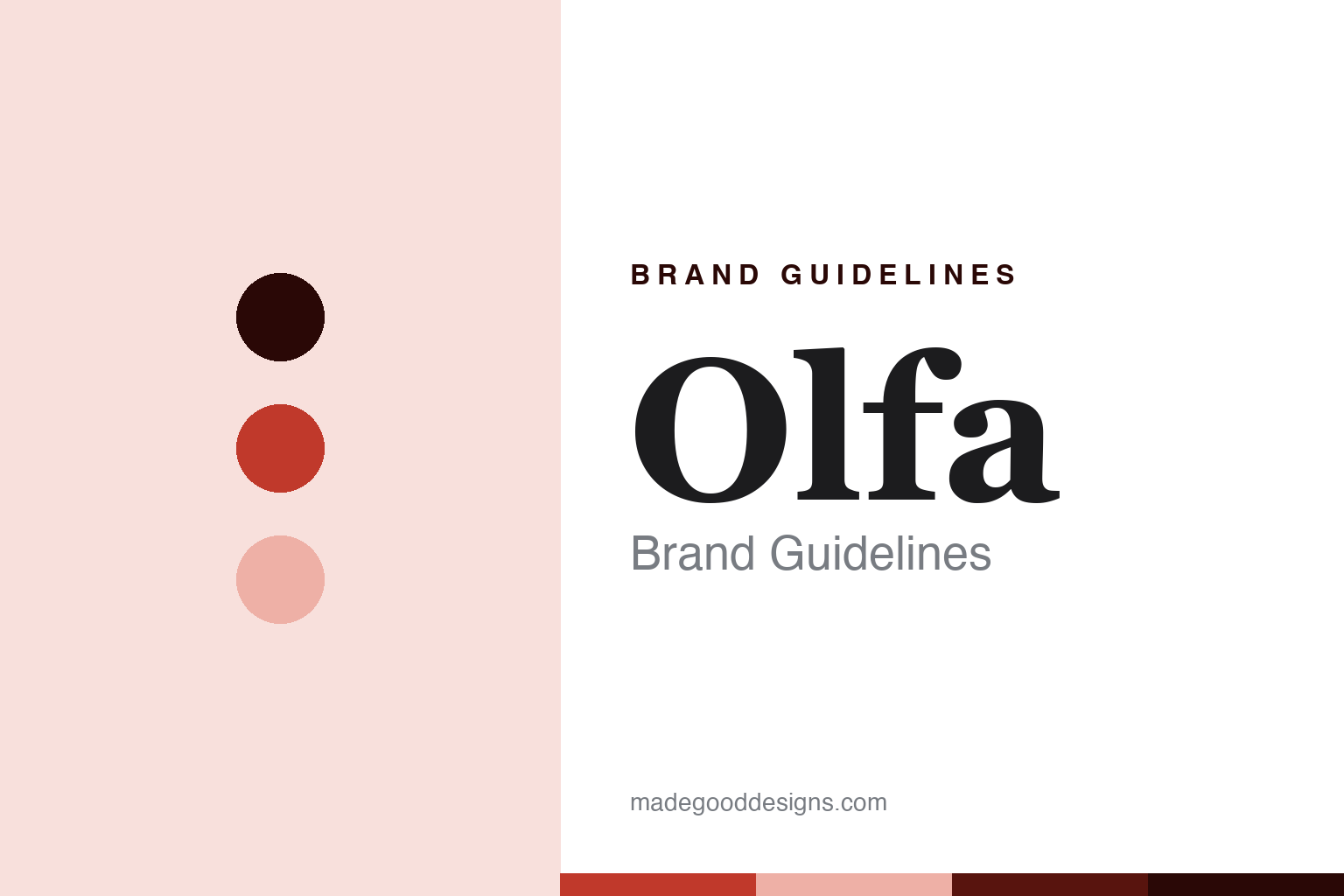
Olfa Brand Guidelines
The company that invented the snap-off blade.
Aa
Two constants: an Olfa-red palette and a snap-off-serif register. Abstract homage — not an Olfa product or mark; no knife, blade or logo is reproduced.
The company that invented the snap-off blade
Olfa is the family-led Osaka maker that invented the snap-off segmented utility blade in 1956 — its name meaning simply “break the blade.”
Olfa opens the cutter round as its inventor node — the company that created the thing everyone else makes, the segmented blade you snap to renew. Its answer to a round about who owns and where-makes the cutter is an invention and a family: the company that invented the snap-off blade.
Its identity is the company that invented the snap-off blade. The 1956 invention, the Okada family and the snap-off name are the story here. The snap-off blade. The company that invented the snap-off blade.
(Honest notes, so the founding, the invention, the name, the ownership and the making are framed accurately. Olfa sells snap-off cutters as its heroes; we report its language as the brand’s own. On founding: Olfa Corporation is a Japanese maker headquartered in Osaka, founded in 1956 by Yoshio Okada. On the invention, the key point: Okada, working around printing and paper-cutting and with his brother, is credited with inventing the snap-off segmented utility blade in 1956, inspired by the segments of a chocolate bar and the clean edges of broken glass, and Olfa added the rotary cutter for fabric in 1979. On the name: Olfa comes from the Japanese oru, to break or snap, and ha, blade, so the name means break the blade. On ownership: it is a private, family-led company, with the Okada name still in its leadership, and Olfa North America uses the mark under license as a distributor, not the owner. On the making: the core cutters are designed and made in Japan, though we do not over-claim every product as Japanese-made. Its designs and the Olfa name are IP we describe but do not reproduce; there is no official brand hex; these tones are an unofficial interpretation.)
Colour
Olfa lives in an Olfa red. Click a swatch to copy the hex.
Olfa’s identity is inventive, Japanese and family-led — an Olfa red, an ink, a pale red, a deep crimson, and a paper. The palette leans Olfa red and deep crimson: a bold, precise register that stands in for the snap-off inventor rather than a loud logo colour. It signals the company that invented the snap-off blade — inventive, Japanese and family-led. The honest caveat: with no official brand hex, these values are a workmanlike, unofficial interpretation, not first-party colours, and the brand’s own signature is famously yellow, which we describe rather than reproduce.
The lesson is an Olfa red signals an inventive, Japanese identity. Olfa’s world is the yellow snap-off cutter and the workbench. For designers, it is a reminder that a bold red and a pale red can carry an inventive, Japanese brand — a precise tone held as an accent, not a product shot. Because a strong hue can fail as small text, keep type dark and let the colour live in the accents, palette and band. The takeaways: date the invention to 1956 and name Yoshio Okada; tell the snap-off invention and the chocolate-bar and broken-glass inspiration; translate the oru-ha name; and keep the making Japanese at the core.
Typography
The register is a snap-off serif — inventive, Japanese, family-led.
Olfa’s identity carries an inventive, Japanese spirit — the maker that created a category. A snap-off serif captures the mood: confident, precise and practical, the register of an inventor. Set in an Olfa-red palette, the snap-off serif feels dependable and earned — exactly the personality Olfa carries. It behaves like a made, scored thing rather than a loud logo, mirroring a snap-line and a blade-dot. (Olfa’s real products and the name are things we describe but do not reproduce, and the exact typeface is not ours to use.) Because it is not ours to use, the honest description is “a snap-off-serif brand,” shown here in a stand-in. The type behaves like the brand: inventive, Japanese and family-led.
Aa
A snap-off-serif brand — confident and precise. (Specimen set in Fraunces, a snap-off-serif STAND-IN; NOT the Olfa logo or products.)
The cutter node
Olfa stands for the company that invented the snap-off blade.
Olfa opens the round as its inventor node. An Olfa-red palette, a snap-off serif and a 1956 invention make one thing — the company that invented the snap-off blade — the whole identity: inventive, Japanese and family-led. The 1956 invention is the frame, the Okada family is the substance, and the snap-off name is the signature. The point is the maker that created the segmented blade everyone else now makes, anchoring a round about who owns and where-makes the cutter.
Put to work, the identity is the brand told straight, the invention dated and the name translated. A brand in this spirit would date the invention to 1956 and name Yoshio Okada, tell the snap-off invention and its inspiration, translate the oru-ha name, and keep the making Japanese at the core. A reader in this spirit would keep the facts right: Olfa makes snap-off cutters; it dates to 1956; Okada invented the snap-off blade; and the name means break the blade. Olfa opens the round, before NT Cutter. The honest editorial moves are to date the invention, to name the founder, to translate the name, and to place the making.
For designers and brand-builders, Olfa opens the cutter node: an inventor can own a category and stay a family firm. The lessons: a category can open with its inventor, here Olfa and the snap-off blade; a founding is dated to 1956, by Yoshio Okada in Osaka; an invention is told, the snap-off segmented blade of 1956 inspired by a chocolate bar and broken glass, with the rotary cutter added in 1979; a name is translated, Olfa from oru, to break, and ha, blade; an ownership is kept, a private, family-led company with the Okada name in its leadership and Olfa North America a licensee not the owner; and a making is placed, Japanese at the core without over-claiming every product. It is also a reminder to keep an inventor’s claim precise: Olfa is the family-led Japanese company that invented the snap-off blade — with the palette here an unofficial interpretation, and the famous yellow described rather than copied. The hook is that invention: Olfa is the company that invented the snap-off blade, the family-led Osaka maker that invented the snap-off segmented utility blade in 1956, its name meaning break the blade. Read that way, Olfa is less a single cutter than the company that invented the snap-off blade: inventive, Japanese, family-led. The lesson for a brand is that an inventor can own a category and stay a family firm, and dating the invention keeps it earned. Olfa made the-company-that-invented-the-snap-off-blade the identity — proof that an inventor can open a round.
Explore & save
Keep Olfa’s identity on hand — save it to a board in the Made Good inspiration library.
Olfa identity set
Pin the Olfa-red palette and the snap-off-serif register to your own board.