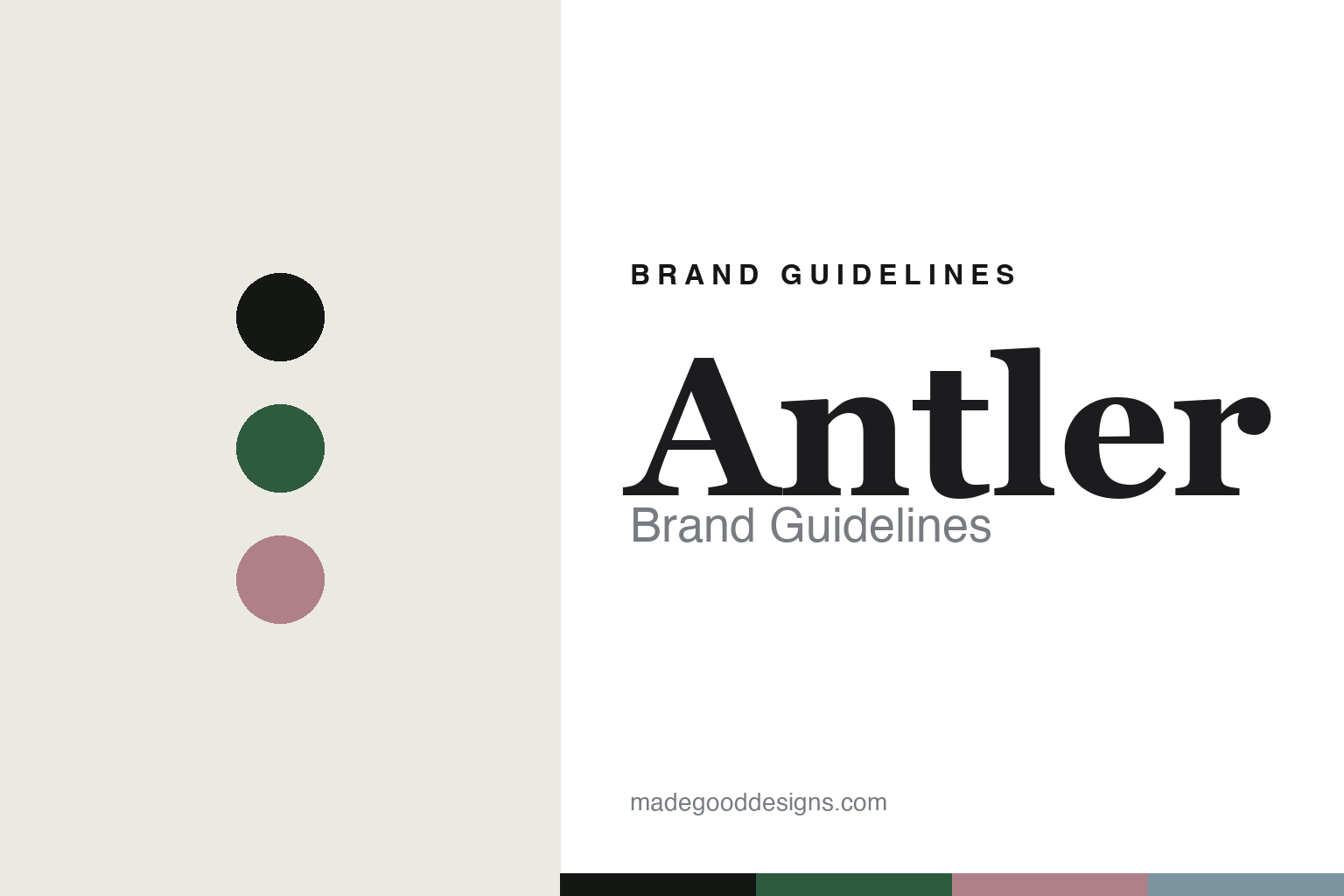
Antler Brand Guidelines
The British travel green.
Aa
Two constants: a green-and-moorland palette and a heritage serif register. Abstract homage — not the Antler products or packaging.
The British travel green
Antler makes a colour the identity.
Antler is a lesson in colour and heritage. “The British Travel Brand. Since 1914,” it carries over a century of luggage history — and a name that is also its logo, in the shape of a stag.
Its identity is British travel heritage, told through colour. Antler leans on a “British colour palette inspired by UK landscapes,” anchored by its house colour, an “iconic Antler Green,” across ranges like Icon Stripe, Discovery, Heritage and Stamford (in colourways from moorland pink to mist blue to taupe), all under a lifetime warranty. The stag-and-antler emblem — a visual pun on the name — completes it. A place, a palette, a stag.
(Honest notes: the 1914 date is the brand’s own and safe, but the founder is genuinely unclear — one widely-cited account looks like a conflation with the Brooks saddle maker — so we don’t name a founder. Ownership has changed hands repeatedly and is reported to sit with the Australian group Strandbags since 2020, so this British heritage brand is now Australian-owned. No manufacturing country is stated, so we don’t assert one. There’s no official brand hex, so these tones are an unofficial interpretation. This is design commentary and does not promote any product.)
Colour
Antler lives in a green-and-moorland palette. Click a swatch to copy the hex.
Antler’s identity is British, natural and heritage — an Antler green, an ink, a moorland pink, a mist blue, and a cream. The palette pairs a green with a moorland pink — the register of a UK-landscape colour story. It signals place and heritage rather than novelty. The honest caveat: with no published brand hex, these tones are an original, unofficial interpretation, not first-party values.
The lesson is a green with a moorland pink signals a landscape-coloured travel brand. Antler’s world is a British countryside on a suitcase. For designers, it is a reminder that a named house colour — “Antler Green” — can anchor a whole identity. Because a mid green can fail as small text, keep type dark and let the colour live in the accents, palette and band. The takeaways: name a house colour; draw the palette from a place; keep a memorable emblem; and treat any single hex as unofficial.
Typography
The register is a heritage serif — British, natural, established.
Antler’s identity carries a British, natural, established spirit — a landscape-coloured case. A traditional British book serif captures the mood: it is dignified and grounded, the register of a century-old travel house. Set in a green-and-moorland palette, the heritage serif feels British and natural — exactly the personality Antler carries. It is established rather than flashy, mirroring heritage luggage. (Antler’s real products, wordmark and stag mark are works we describe but do not reproduce, and the exact typeface is not ours to use.) Because it is not ours to use, the honest description is “a heritage serif spirit,” shown here in a stand-in. The type behaves like the brand: British, natural and established.
Aa
A heritage serif spirit — British and natural. (Specimen set in Libre Baskerville, a traditional book serif STAND-IN; NOT the Antler packaging.)
Colour and heritage
Antler stands for a British travel colour.
Antler is a lesson in making a colour the identity. A green-and-moorland palette, a heritage serif and a landscape-coloured case make colour the whole brand — British, natural, established. The colour is the differentiator. The differentiator is “Antler Green” and a UK-landscape palette.
For designers and brand-builders, Antler offers a clear takeaway: name a house colour, and root it in a place. The lessons: name a house colour; draw the palette from a place; keep a memorable emblem; and be honest about the story. It is also a reminder to stay accurate: it’s a 1914 British brand with an unverified founder, now reported to be Australian-owned (Strandbags), and the palette here is an unofficial interpretation. Antler made a colour the brand — proof that a named hue can be the difference.
Explore & save
Keep Antler’s identity on hand — save it to a board in the Made Good inspiration library.
Antler identity set
Pin the green-and-moorland palette and the heritage-serif register to your own board.