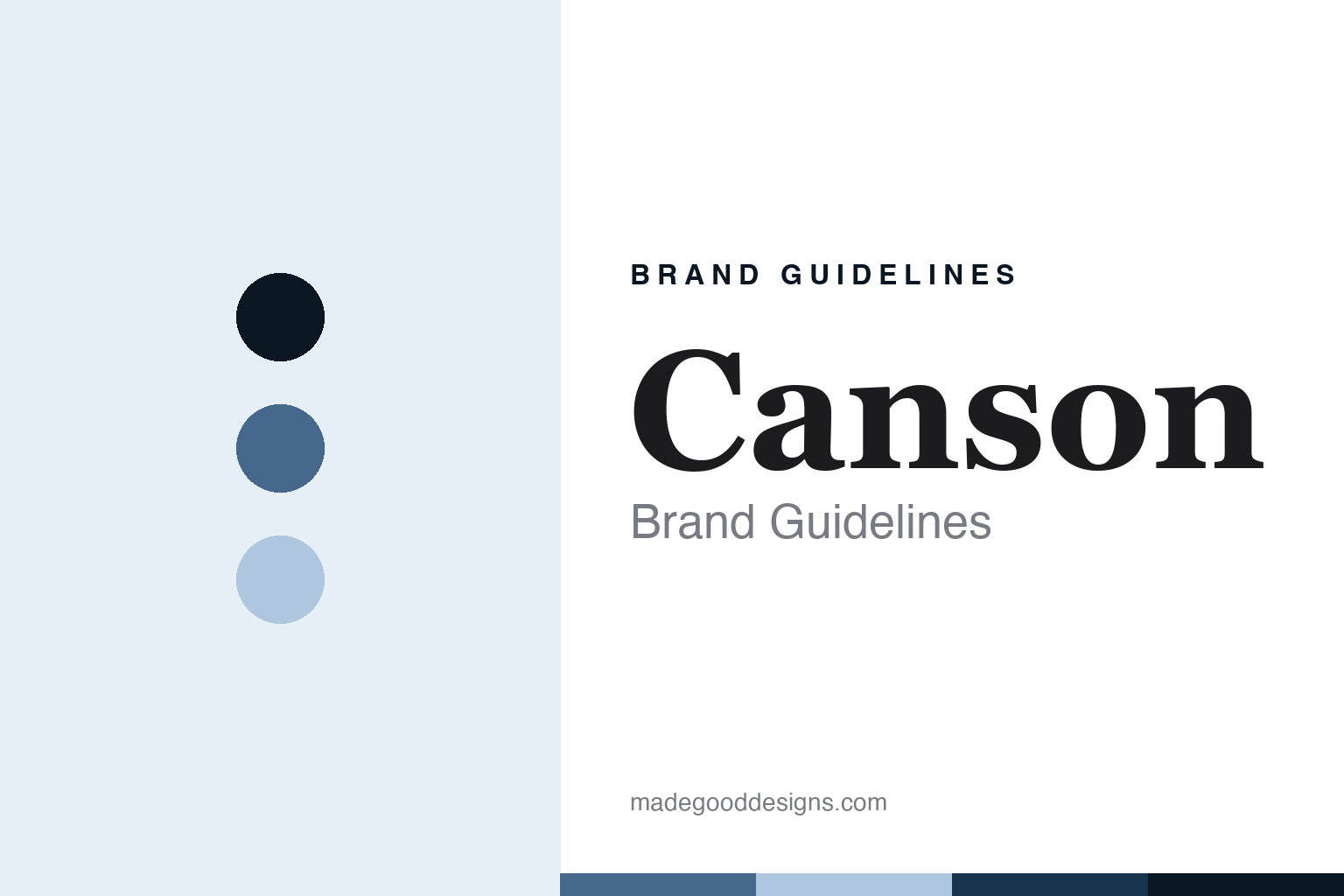
Canson Brand Guidelines
The near-500-year French paper mill.
Aa
Two constants: a French-slate-blue palette and a paper-mill-serif register. Abstract homage — not a Canson product or mark; no sheet silhouette, no Montgolfier crest and no logo is reproduced.
The near-500-year French paper mill
Canson is the French paper house tracing to 1557 and the Montgolfier family, maker of Mi-Teintes and Moulin du Roy, now owned by Italy’s F.I.L.A.
Canson opens the third surface round — the paper round — as its heritage keystone: the French paper house that traces its history to 1557 and to the Montgolfier paper family, and that makes some of the best-known fine-art papers in the world. Canson makes the surface the artwork sits on, and its answer to a round about the mill is the sheet with a near-five-century pedigree — pastel, drawing, watercolour and printmaking paper, French by heritage, now Italian by ownership. A brand, milled.
Its identity is the near-500-year French paper mill, now F.I.L.A.-owned. The Montgolfier heritage, the French papers and the F.I.L.A. ownership are the story here. A brand, milled. The near-500-year French paper mill.
(Honest notes, so the heritage stays precise, and the ownership stays named. Canson makes fine-art paper as its heroes — a Moulin du Roy watercolour line, a Montval, a “C à grain” drawing paper, a Mi-Teintes pastel paper and an Edition printmaking paper — and we report its performance language as the brand’s own marketing. Its history is traced to 1557 and associated with the Montgolfier paper family of Annonay, France; the current owner markets it as nearly five hundred years old, a claim we attribute to the brand. On where it is made, a theme of this round, its papers are historically made in France; note that “Moulin du Roy” is a Canson line and mill name, not a separate company. On who owns it, the star theme of this round, it is not independent: it was acquired by the Italian group F.I.L.A. in October 2016, bought from Hamelin. The Montgolfier balloon crest and the product names — Mi-Teintes, C à grain, Moulin du Roy — are IP we describe but do not reproduce; there is no official brand hex; these tones are an unofficial interpretation.)
Colour
Canson lives in a French slate blue. Click a swatch to copy the hex.
Canson’s identity is milled, French and F.I.L.A.-owned — a French slate blue, an ink, a pale sky, a deep navy, and a paper. The palette leans French slate blue and pale sky: a papermaking register that nods to a French mill rather than a loud logo colour. It signals a near-500-year paper house. The honest caveat: with no published brand hex, these values are an original, unofficial interpretation, not first-party colours.
The lesson is a French slate blue signals a milled, French identity. Canson’s world is a mould-made, archival sheet. For designers, it is a reminder that a French slate blue and a soft pale sky can carry an art-materials brand — the tone of the old French mill. Because these tones can fail as small text, keep type dark and let the colour live in the accents, palette and band. The takeaways: let the heritage be the brand; name the F.I.L.A. owner; treat a line name as a line, not a company; and treat any single hex as unofficial.
Typography
The register is a paper-mill serif — milled, editorial, French.
Canson’s identity carries a milled, editorial, French spirit — a paper mill, not a graphics label. A paper-mill serif captures the mood: refined, traditional and confident, the register of a mould-made French sheet. Set in a French-slate-blue palette, the paper-mill serif feels milled and French — exactly the personality Canson carries. It is a milled object rather than a logo, mirroring paper grain. (Canson’s real papers, the Montgolfier crest and the product names are things we describe but do not reproduce, and the exact typeface is not ours to use.) Because it is not ours to use, the honest description is “a paper-mill-serif house,” shown here in a stand-in. The type behaves like the brand: milled, editorial and French.
Aa
A paper-mill-serif house — milled and French. (Specimen set in Cormorant Garamond, a paper-mill-serif STAND-IN; NOT the Canson logo, the Montgolfier crest or any sheet.)
The mill
Canson stands for the near-500-year French paper mill, now F.I.L.A.-owned.
Canson opens the paper round as its heritage keystone. A French-slate-blue palette, a paper-mill serif and a 1557 lineage make one thing — the near-500-year French paper mill, now F.I.L.A.-owned — the whole identity: milled, French and group-owned. The Montgolfier heritage is the pitch, and the F.I.L.A. ownership is the honest turn. The point is a sheet with a near-five-century pedigree, now Italian-owned, opening a round about the mill.
Put to work, the identity is the French paper told straight, as heritage and ownership — with the pedigree honoured and the owner named. A maker in this spirit would let the heritage be the brand, name the F.I.L.A. owner, and treat a line name as a line. A reader in this spirit would keep the facts right: Canson makes fine-art paper as its heroes — a Moulin du Roy watercolour, a Montval, a C à grain drawing paper, a Mi-Teintes pastel paper and an Edition printmaking paper; its history is traced to 1557 and to the Montgolfier family of Annonay, France, marketed as nearly five hundred years old (a claim attributed to the brand); its papers are historically made in France, with “Moulin du Roy” a line and mill name, not a separate company; and it is not independent — acquired by the Italian group F.I.L.A. in October 2016, from Hamelin. Canson anchors the F.I.L.A. consolidation web that runs through this round, beside Arches, St Cuthberts Mill and Strathmore. The honest editorial moves are to trace the heritage to 1557, to credit the Montgolfier family, to attribute the “nearly 500 years” claim, to name F.I.L.A., and to keep the crest and product names un-reproduced.
For designers and brand-builders, Canson opens the mill: let the heritage be the brand — and name who owns the mill now. The lessons: let a near-five-century pedigree carry a paper brand; attribute a heritage superlative to its source; name the group behind a heritage name; distinguish a product line from a company; and never reproduce a crest, a product name or a sheet. It is also a reminder to stay precise: Canson is the French paper house tracing to 1557 and the Montgolfier family, maker of Mi-Teintes and Moulin du Roy, now owned by Italy’s F.I.L.A. — with the palette here an unofficial interpretation. Read that way, Canson is less a sheet than a pedigree-plus-owner: milled, French, F.I.L.A.-owned. The lesson for a brand is that heritage and honest ownership reinforce each other, and naming the group keeps the story earned. Canson made the-near-500-year-French-paper-mill the identity — proof that a milled sheet can open a round, its keystone.
Explore & save
Keep Canson’s identity on hand — save it to a board in the Made Good inspiration library.
Canson identity set
Pin the French-slate-blue palette and the paper-mill-serif register to your own board.