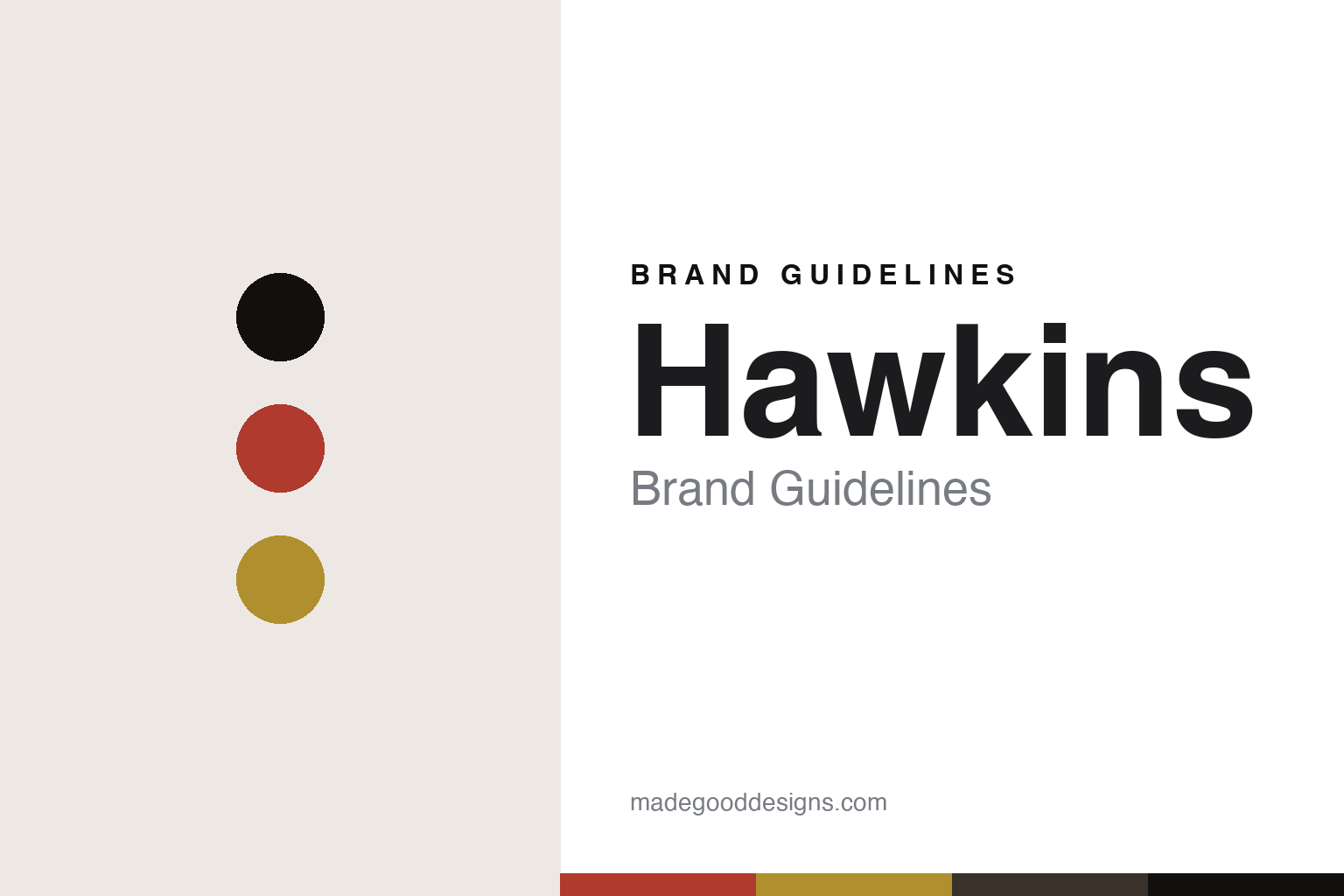
Hawkins Brand Guidelines
India’s pressure cooker.
Aa
Two constants: a vermilion palette and an everyday-sans register. Abstract homage — not a Hawkins cooker, lid or wordmark.
India’s pressure cooker
Hawkins is the Indian maker of the iconic pressure cooker, made in India since 1959.
Hawkins is a lesson in a national everyday object as the identity. An Indian company since 1959, it is, above all, the pressure cooker — the appliance at the heart of everyday Indian cooking, a genuine household name across the country. Its answer to how a country makes the everyday pot is the pressure cooker itself: build it well, make it in India, and become the word people use for the thing. A cooker that is part of the national kitchen.
Its identity is the everyday cooker, made in India. Hawkins’ pressure cookers, its Indian making and its Futura line are the work it is known for. A national staple, made a signature. A maker whose name means pressure cooker to a country.
(Honest notes, so the story stays precise. Hawkins — Hawkins Cookers Ltd — was founded in 1959 as Pressure Cookers and Appliances Ltd by H. D. Vasudeva, in a technical collaboration with L. G. Hawkins & Co. of England, and it took the Hawkins name in 1986 when it acquired the trademark; it is a Mumbai-headquartered, Vasudeva-family-led company, publicly listed on the Bombay Stock Exchange. It is made in India, across three plants at Thane, Hoshiarpur and Jaunpur, and its Futura line is hard-anodised cookware. Two honest notes: the British connection was a historical technical collaboration and a trademark acquisition, not foreign ownership today, so we frame it in the past; and we scope made-in-India to its factories rather than claim every material is domestic. Its designs, the pressure-cooker form and its wordmark are its IP, described but never reproduced, and there is no official brand hex — these tones are an unofficial interpretation. This is design commentary and does not promote any product.)
Colour
Hawkins lives in a vermilion palette. Click a swatch to copy the hex.
Hawkins’ identity is warm, everyday and Indian — a vermilion, an ink, a turmeric, a char, and a chalk. The palette leans vermilion and turmeric: the register of a busy Indian kitchen and its spices. It signals the everyday and the nation over luxury. The honest caveat: with no published brand hex, these values are an original, unofficial interpretation, not first-party colours.
The lesson is a vermilion palette signals a warm, made-in-India identity. Hawkins’ world is a pressure-cooking, made-in-India, everyday object. For designers, it is a reminder that a warm vermilion and a turmeric can carry a brand built on the national kitchen — the red and gold of Indian cooking. Because these tones can fail as small text, keep type dark and let the colour live in the accents, palette and band. The takeaways: serve the everyday; make it in India; frame the heritage honestly; and treat any single hex as unofficial.
Typography
The register is an everyday sans — friendly, clear, dependable.
Hawkins’ identity carries a friendly, clear, dependable spirit — an everyday staple, not a luxury. An everyday sans captures the mood: warm, legible and unpretentious, the register of a household name. Set in a vermilion palette, the everyday sans feels friendly and clear — exactly the personality Hawkins carries. It is dependable rather than precious, mirroring a pressure cooker used every day. (Hawkins’ real designs and the cooker form are things we describe but do not reproduce, and the exact typeface is not ours to use.) Because it is not ours to use, the honest description is “an everyday-sans spirit,” shown here in a stand-in. The type behaves like the maker: friendly, clear and dependable.
Aa
An everyday-sans spirit — friendly and clear. (Specimen set in Hind, an everyday-sans STAND-IN; NOT the Hawkins wordmark or any cooker design.)
The pan around the world
Hawkins stands for India’s pressure cooker.
Hawkins is a lesson in making a national everyday object the identity. A vermilion palette, an everyday sans and a pressure cooker make one thing — the appliance at the centre of everyday Indian cooking — the whole maker: warm, everyday and Indian. The national ubiquity is the differentiator. The differentiator is being the country’s pressure cooker: made in India, in millions of kitchens, so trusted that the brand name stands for the object.
Put to work, the identity is national ubiquity as design. A maker building in this spirit would earn a permanent place in everyday cooking through reliability and safety, keep the making in the country it serves, and be honest about a heritage — here a British-collaboration origin — without overstating it. It would treat being a household word as its greatest asset. A brand learning from it would see that becoming the everyday default for a whole country is a rare and durable identity, built on decades of dependable use rather than marketing. It would say plainly it is made in India. A brand learning from it would see that when a name becomes the everyday word for a product, that ubiquity is both an asset and a duty: the maker has to keep the object safe and dependable precisely because a whole country reaches for it daily without a second thought. It would guard the trademark and the reputation as one and the same thing, knowing a household name is only as safe as its last batch. The lesson Hawkins teaches is that national ubiquity can build a brand: the trust gives it a place in the kitchen, and the Indian making gives it substance. The ubiquity is the personality, and the pressure cooker is the proof.
For designers and brand-builders, Hawkins holds the national-staple pole in this round about the pan around the world: become the everyday default, and make it where you serve. The lessons: earn the everyday; make it at home; frame heritage honestly; and never reproduce a protected design. It is also a reminder to stay precise: Hawkins is an Indian cookware company founded in 1959, the maker of India’s iconic pressure cooker, made in India — with the British connection kept honestly in the past, and the palette here an unofficial interpretation. Hawkins made the national cooker the maker — proof that being made where it says can be the difference.
Explore & save
Keep Hawkins’s identity on hand — save it to a board in the Made Good inspiration library.
Hawkins identity set
Pin the vermilion palette and the everyday-sans register to your own board.