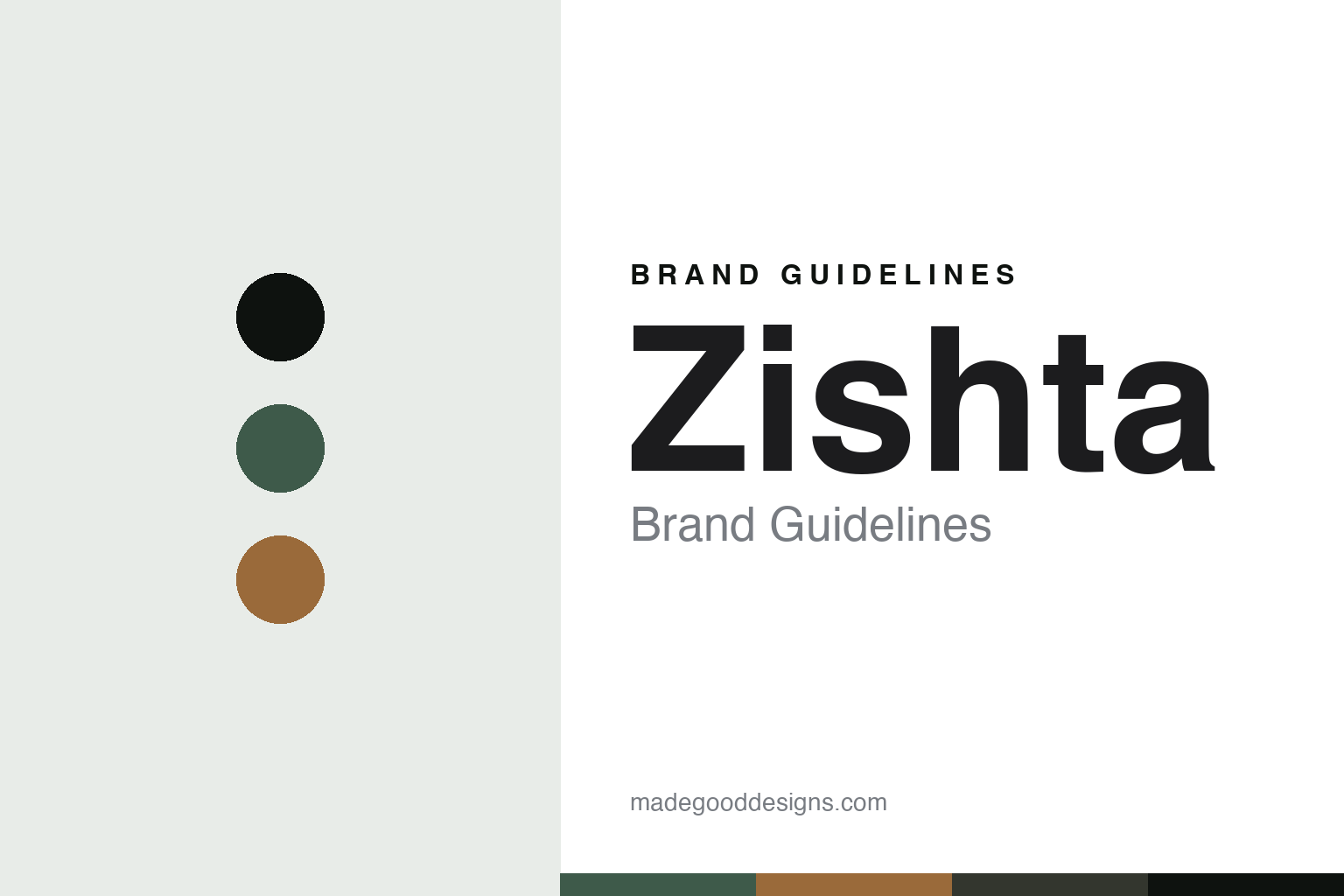
Zishta Brand Guidelines
India’s traditional cookware, revived.
Aa
Two constants: a soapstone-green palette and a craft-sans register. Abstract homage — not a Zishta vessel, its craft patterns, or any regional motif.
India’s traditional cookware, revived
Zishta is an Indian brand reviving traditional cookware crafts across India, handcrafted by artisan communities.
Zishta is a lesson in reviving many traditional crafts as the identity. An Indian brand, it works with heritage artisan communities across the country to bring back traditional cookware in their own materials — soapstone pots, cast iron, kansa bronze, brass, clay and tinned vessels. Its answer to how a specialist pan is made is a many-handed one: not one factory, but many regional crafts, each making the vessel it has always made. Cookware from the traditions that invented it.
Its identity is the specialist vessel, revived across India. Zishta’s soapstone, cast iron, kansa and clay, its artisan communities and its Indian making are the work it is known for. A revival, made a signature. A brand that carries many crafts forward at once.
(Honest notes, so the story stays precise, and with respect for cultural crafts. Zishta, based in Bengaluru, was founded around 2016 — it marks ten years in 2026 — by Meera Ramakrishnan and team, and it works as a multi-craft, pan-India revival: soapstone (kalchatti) from the south, cast iron, kansa bronze and brass, clay, tin eeya chombu from Tamil Nadu, Manipur black pottery and Bengal’s woven mats. It is genuinely handcrafted in India by traditional artisan communities. Three points of care. It is a broad, multi-craft brand — distinct from single-craft makers, so we frame it on that pan-India breadth. These crafts belong to their communities, so we describe Zishta as a reviver, partner and aggregator, not the originator, and we never reproduce their patterns or motifs, only evoke the materials. And its “traditional metals” and Ayurvedic framing is the brand’s own positioning, which we report as such rather than as verified health fact. Its designs and wordmark are its IP; there is no official brand hex — these tones are a respectful, unofficial interpretation. This is design commentary and does not promote any product.)
Colour
Zishta lives in a soapstone-green palette. Click a swatch to copy the hex.
Zishta’s identity is earthy, traditional and Indian — a soapstone green, an ink, a clay, a bark, and a chalk. The palette leans soapstone green and clay: the register of carved stone and fired clay, evoked rather than copied. It signals craft and material over show. The honest caveat: there is no brand hex for these cultural crafts, so these values are a respectful, unofficial evocation of stone and clay — not any sampled surface or motif.
The lesson is a soapstone-green palette signals a craft-revival, made-in-India identity. Zishta’s world is a many-material, hand-made, made-across-India object. For designers, it is a reminder that a soapstone green and a clay can evoke traditional Indian cookware — the grey-green of carved stone and the brown of fired clay — without reproducing any specific craft. Because these tones can fail as small text, keep type dark and let the colour live in the accents, palette and band. The takeaways: revive many crafts with their communities; keep it made in India; never copy the patterns; and treat any single hex as unofficial.
Typography
The register is a craft sans — warm, human, unfussy.
Zishta’s identity carries a warm, human, unfussy spirit — a hand-made, traditional object, not a factory one. A warm, humane sans captures the mood: friendly, even and grounded, the register of many hand workshops. Set in a soapstone-green palette, the craft sans feels warm and human — exactly the personality the revival carries. It is unfussy rather than slick, mirroring a carved soapstone pot. (Zishta’s craft patterns and marks are cultural and brand works we describe but do not reproduce, and the exact typeface is not ours to use.) Because it is not ours to use, the honest description is “a craft-sans spirit,” shown here in a stand-in. The type behaves like the crafts: warm, human and unfussy.
Aa
A craft-sans spirit — warm and human. (Specimen set in Hind, a craft-sans STAND-IN; NOT the Zishta wordmark or any regional craft pattern.)
The specialist’s pan
Zishta stands for reviving many crafts at once.
Zishta is a lesson in a many-craft revival worth doing well. A soapstone-green palette, a craft sans and a carved stone pot make one thing — traditional Indian cookware brought back in its own materials — the whole story: earthy, traditional and Indian. The breadth is the differentiator, and the crafts are the meaning. The point is reviving not one craft but many — soapstone, cast iron, kansa, clay — each made by the community that holds it, so a range of endangered traditions gets steady work.
Told with respect, the identity is many crafts as design. A maker or brand-builder learning from Zishta would see the value of genuinely hand-made, place-rooted vessels and the care owed to living crafts: honour each tradition on its own terms, keep the making with the communities, and — crucially — credit those communities as the source, framing a brand as a reviver and partner rather than an owner. It would never reproduce the crafts’ patterns, only point to them, and it would present traditional-wisdom claims honestly as positioning. A brand learning from it would see that breadth done respectfully — many crafts, each credited to its community — can revive more than a single-craft focus, so long as every tradition is named and paid rather than absorbed. The lesson Zishta teaches is that a many-craft revival can hold an identity when it is done honestly: the materials give it warmth, and the communities give it meaning. The revival is the personality, and the hand-made vessel is the proof.
For designers and brand-builders, Zishta holds the many-craft-revival pole in this round about the specialist’s pan: revive living crafts with their communities, credit them, and never copy them. The lessons: work with many communities; keep it made in India; attribute the crafts honestly; and treat any palette as respectful evocation. It is also a reminder to stay precise: Zishta is an Indian brand founded around 2016, reviving traditional cookware crafts across India, handcrafted by artisan communities — with the crafts credited to those communities, and the palette here a respectful, unofficial interpretation. Zishta made the many-craft revival the identity — proof that honouring living crafts can be the difference.
Explore & save
Keep Zishta’s identity on hand — save it to a board in the Made Good inspiration library.
Zishta identity set
Pin the soapstone-green palette and the craft-sans register to your own board.