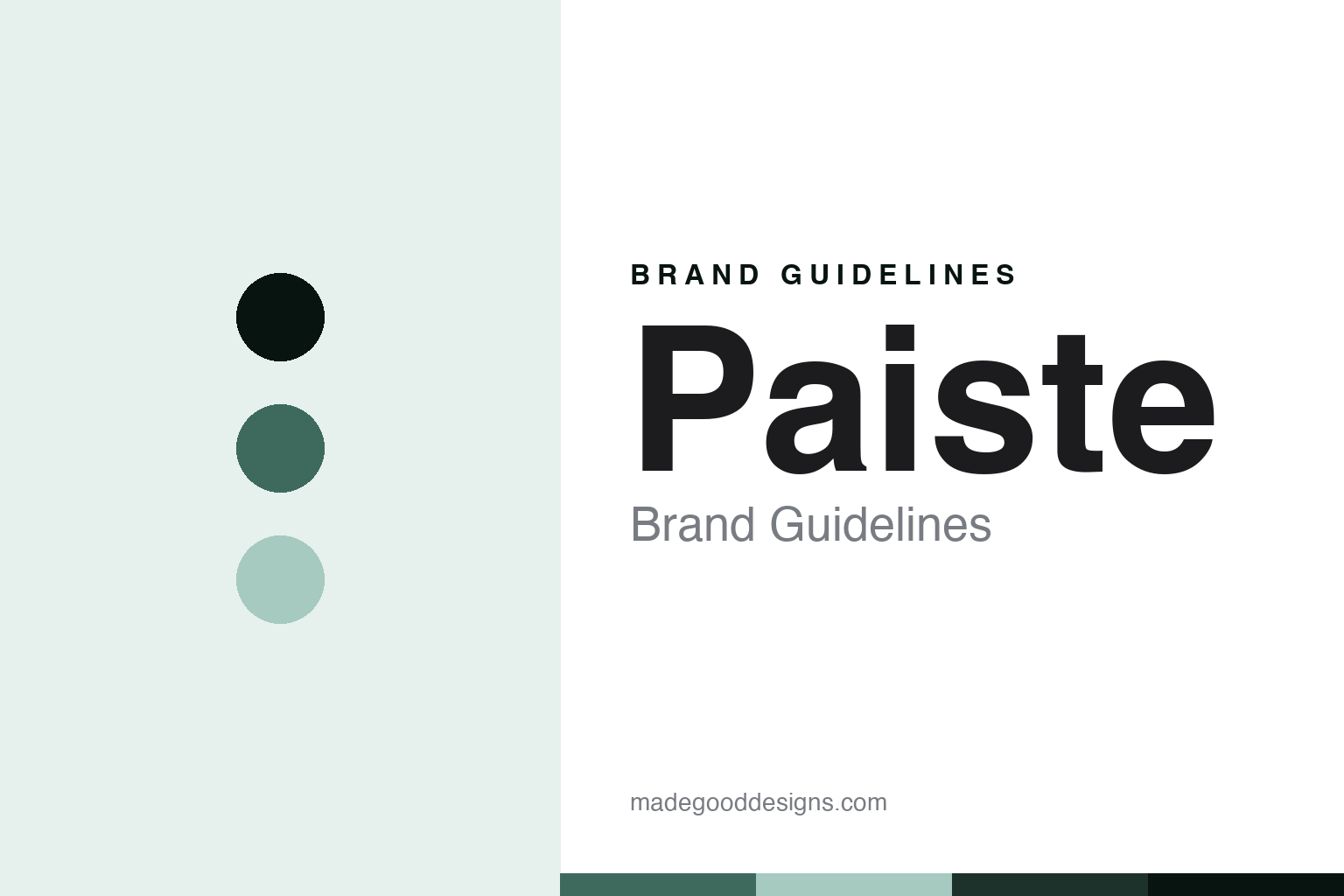
Paiste Brand Guidelines
The cymbal family.
Aa
Two constants: a patina-bronze palette and a dynasty-sans register. Abstract homage — not a Paiste cymbal, gong or mark.
The cymbal family
Paiste is the cymbal and gong maker founded in 1901, an Estonian family dynasty that migrated across Europe to Switzerland, still family-owned and made in Switzerland and Germany.
Paiste closes the round with the most literal “around the world” story of all — a family that carried its craft across five countries. A cymbal and gong maker founded in 1901, the Paiste family began in the Russian empire, moved to Estonia, then Poland, then Germany, and finally settled in Switzerland. Its answer to how a house becomes a name is a dynasty that would not stop making cymbals no matter where war or politics pushed it. A cymbal family that carried its craft across a continent.
Its identity is the cymbal family. Paiste’s 1901 founding, its five-country migration and its family ownership are the work it is known for. A cymbal, from a dynasty. A family that took its craft across Europe.
(Honest notes, so the story stays precise. Paiste traces to 1901 and its founder Michail Toomas Paiste — the family was ethnically Estonian, but per its own history the business began in St. Petersburg, in Russia, not in Estonia; we flag that a secondary source gives 1906 and follow Paiste’s own 1901. On the migration — the heart of this entry — the family and firm moved from Russia (1901) to Tallinn, Estonia (1917), then to Poland (1940, after Estonia’s annexation), to Germany (1945), and finally to Switzerland, Nottwil, its permanent home from 1957. On what it makes, it is cymbals and gongs, including symphonic gongs, in named professional lines and budget lines. On where it is made — a theme of this round — Paiste manufactures at both its Swiss plant (Nottwil) and its German plant (Schacht-Audorf); the company does not publish a per-line breakdown, so we do not assert which lines are made where, and we do not blanket-claim “Swiss-made.” On ownership, it is still family-owned and independent, a private Swiss company led by Erik Paiste since 2003, into what its own account frames as the fourth generation. Its patented Signature Bronze (1989) and its famous-drummer endorsers we attribute as its own claim and as reported. Its name and marks are IP, described but never reproduced, and there is no official brand hex; these tones are an unofficial interpretation. This is design commentary and does not promote any product.)
Colour
Paiste lives in a patina-bronze palette. Click a swatch to copy the hex.
Paiste’s identity is enduring, migratory and family — a patina bronze, an ink, a verdigris, a deep bronze, and a paper. The palette leans patina bronze and verdigris: the register of aged cymbal bronze and the green patina it takes on. It signals a dynasty that carried its craft. The honest caveat: with no published brand hex, these values are an original, unofficial interpretation, not first-party colours.
The lesson is a patina-bronze palette signals an enduring, family-dynasty identity. Paiste’s world is an enduring, metal, migratory object. For designers, it is a reminder that a patina bronze and a soft verdigris can carry a family that moved five times — the aged colour of bronze and the green of a weathered cymbal. Because these tones can fail as small text, keep type dark and let the colour live in the accents, palette and band. The takeaways: carry the craft; keep the family; be honest about the two plants; and treat any single hex as unofficial.
Typography
The register is a dynasty sans — enduring, plain, made.
Paiste’s identity carries an enduring, plain, made spirit — a family cymbal dynasty, not a fashion label. A dynasty sans captures the mood: even, solid and modern, the register of a family that never stopped making cymbals. Set in a patina-bronze palette, the dynasty sans feels enduring and made — exactly the personality Paiste carries. It is a migration and a craft rather than a logo, mirroring a hand-hammered cymbal. (Paiste’s real logo and wordmark are things we describe but do not reproduce, and the exact typeface is not ours to use.) Because it is not ours to use, the honest description is “a dynasty-sans spirit,” shown here in a stand-in. The type behaves like the family: enduring, plain and made.
Aa
A dynasty-sans spirit — enduring and made. (Specimen set in Libre Franklin, a dynasty-sans STAND-IN; NOT the Paiste logo or any mark.)
The heritage houses
Paiste stands for the cymbal family that carried its craft across Europe.
Paiste closes the round with the fullest version of its theme: a house that endured by moving. A patina-bronze palette, a dynasty sans and a hammered cymbal make one thing — the cymbal family — the whole identity: enduring, migratory and family. The five-country migration is the differentiator, and the unbroken family craft is the meaning. The point is a cymbal dynasty that began in the Russian empire and carried its trade through Estonia, Poland and Germany to Switzerland, making cymbals the whole way.
Put to work, the identity is endurance-by-migration, honestly told, as design. A family in this spirit would carry the craft, keep the ownership, and be candid about the making — a 1901 founding, a five-country journey, two plants in Switzerland and Germany. A brand learning from it would see that a migrating dynasty is a powerful identity — that a family that kept making cymbals across a century of upheaval holds a place a settled brand cannot — and that being precise, traced to 1901, Estonian-family but Russian-founded, made at both Swiss and German plants, family-owned, keeps the story honest. Paiste is the round’s literal “house around the world”: where Blüthner survived by staying and enduring the state, and Premier survived by changing hands, Paiste survived by moving — the same lesson, endurance, told as a map of Europe. The discipline is in the caveats: following Paiste’s own 1901 over a conflicting 1906, placing the founding in Russia rather than Estonia while honouring the Estonian family, and not asserting a Swiss-versus-German per-line split the company does not publish. The lesson Paiste teaches is that a dynasty can hold an identity: the migration gives it a remarkable story, and the honesty about the founding and the two plants keeps it credible. The family is the personality, and the carried-across-Europe craft is the proof.
For designers and brand-builders, Paiste closes the heritage houses, from Switzerland: carry the craft, and keep it in the family. The lessons: endure however you must; hold the ownership through upheaval; be honest about multiple plants; get the founding history right; and never reproduce a logo. It is also a reminder to stay precise: Paiste is the cymbal and gong maker founded in 1901, an Estonian family dynasty that migrated across Europe to Switzerland, still family-owned and made in Switzerland and Germany — with the palette here an unofficial interpretation. Paiste made endurance-by-migration the identity — proof that a family that carried its craft across a continent, honestly told, can be the difference.
Explore & save
Keep Paiste’s identity on hand — save it to a board in the Made Good inspiration library.
Paiste identity set
Pin the patina-bronze palette and the dynasty-sans register to your own board.