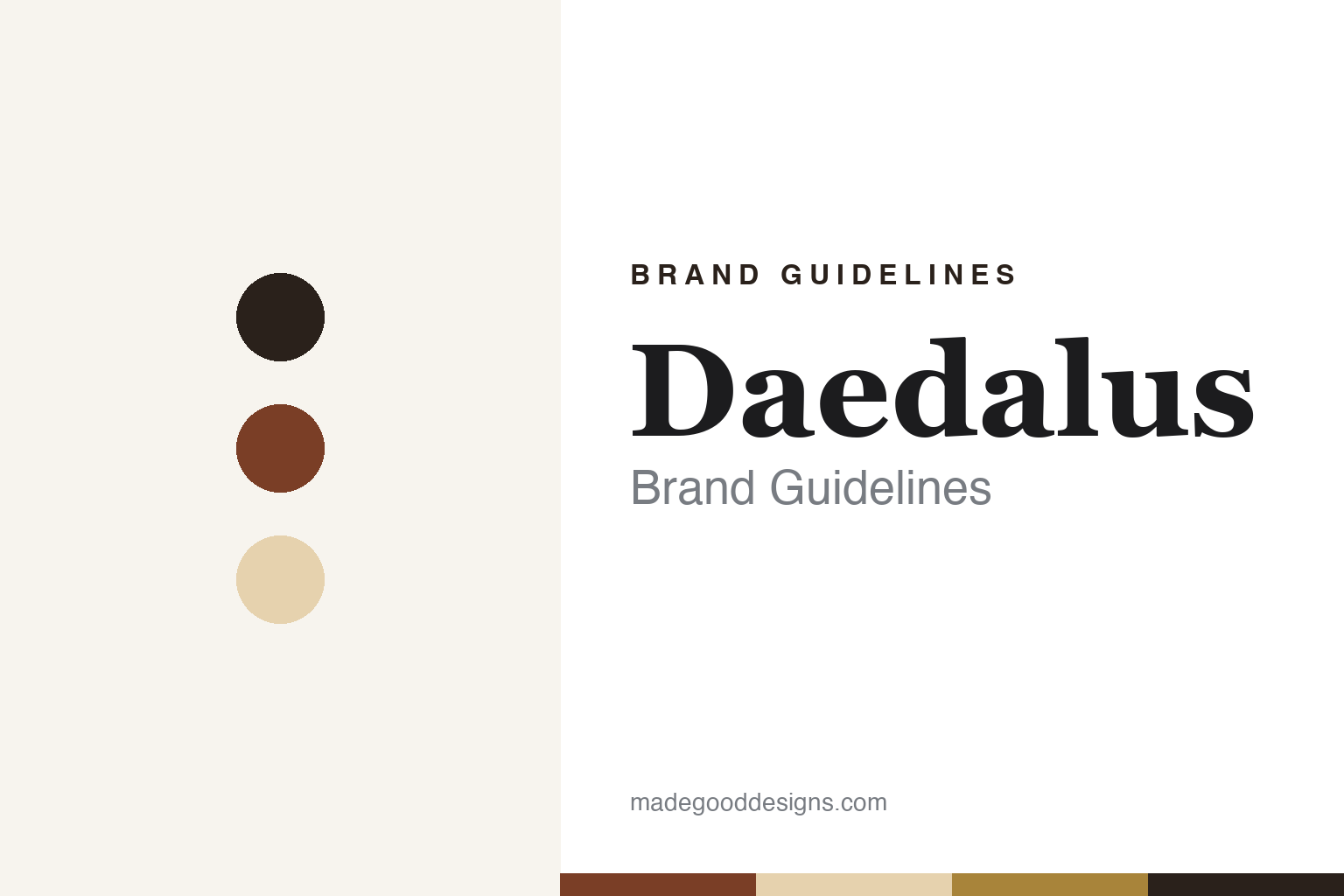
Vass Brand Guidelines
The hand-welted Budapest shoe.
Aa
Two constants: a tobacco palette and a craft-sans register. Abstract homage — not a Vass shoe, last or wordmark.
The hand-welted Budapest shoe
Vass is an independent Budapest house, founded by László Vass in 1978, long known for hand-welted shoes made in Hungary.
Vass is a lesson in the older welting method as the identity. From Budapest it is best known for hand-welted shoes — the traditional, pre-mechanical technique in which the welt is sewn by hand rather than by the Goodyear machine that later industrialised the same idea. Its answer to how a welted shoe is made reaches back before the machine: sew the welt by hand, the slow way, so the shoe is resoleable and made to a fit. A shoe built by the method the machine was invented to imitate.
Its identity is the hand-welted shoe, made in Budapest. Vass’s hand-welting, its Hungarian making and its bespoke-to-ready-made range are the work it is known for. A method, made a signature. A house that kept the hand-welt alive in Central Europe.
(Honest notes, so the story stays precise, and with care for a named living person. Vass is an independent Budapest shoemaking house, and its founder, László Vass, is a real living individual — we report only public business facts and say nothing about his current life. The enterprise dates to 1978, so we frame it as a late-twentieth-century house reviving an old Austro-Hungarian craft, not a centuries-old firm, even though the tradition it draws on is old. Its reputation rests on hand-welting — the older method that predates, and differs from, machine Goodyear welting, though both produce a resoleable welted shoe; because the company does not publish a per-line construction breakdown, we say it is long associated with hand-welting rather than claim every pair is hand-welted, and it offers ready-to-wear, made-to-order and bespoke, and uses shell cordovan. The “budapester” — the heavy, round-toed derby it is most linked to — is a general style, not a Vass trademark, and we say so. Its designs, lasts and marks are its IP, described but never reproduced, and there is no official brand hex — these tones are an unofficial interpretation. This is design commentary and does not promote any product.)
Colour
Vass lives in a tobacco palette. Click a swatch to copy the hex.
Vass’s identity is Hungarian, traditional and hand-made — a tobacco, an ink, a calf sand, an umber, and a chalk. The palette leans tobacco and calf sand: the register of aged, hand-worked leather and a Budapest bench. It signals craft and patience over machinery. The honest caveat: with no published brand hex, these values are an original, unofficial interpretation, not first-party colours.
The lesson is a tobacco palette signals a hand-welted, made-in-Budapest identity. Vass’s world is a resoleable, hand-sewn, Hungarian-made object. For designers, it is a reminder that a warm tobacco and a soft calf sand can carry a brand built on an older method — the brown of hand-finished leather and the sand of the last. Because these tones can fail as small text, keep type dark and let the colour live in the accents, palette and band. The takeaways: keep the method by hand; be precise about hand-welt versus Goodyear; do not claim a generic style as your mark; and treat any single hex as unofficial.
Typography
The register is a craft sans — plain, warm, hand-made.
Vass’s identity carries a plain, warm, hand-made spirit — a craft house, not a factory brand. A craft sans captures the mood: even, honest and human, the register of a hand-welting workshop. Set in a tobacco palette, the craft sans feels plain and warm — exactly the personality Vass carries. It is human rather than slick, mirroring a hand-welted shoe. (Vass’s real designs and marks are things we describe but do not reproduce, and the exact typeface is not ours to use.) Because it is not ours to use, the honest description is “a craft-sans spirit,” shown here in a stand-in. The type behaves like the maker: plain, warm and hand-made.
Aa
A craft-sans spirit — plain and warm. (Specimen set in Mulish, a craft-sans STAND-IN; NOT the Vass wordmark or any shoe design.)
How a welted shoe is made
Vass stands for the hand-welt, kept alive.
Vass is a lesson in making the older welting method the identity. A tobacco palette, a craft sans and a hand-welted shoe make one thing — a shoe whose welt is sewn by hand, the way the Goodyear machine later mechanised — the whole maker: Hungarian, traditional and hand-made. The hand-welt is the differentiator, and the older method is the meaning. The point is a genuinely manual technique kept alive in Budapest, the craft that machine welting was invented to reproduce faster.
Put to work, the identity is an older method as design. A maker building in this spirit would keep the hard, manual version of a craft alive, be precise about how it differs from the industrial one, and treat a named founder’s reputation with care rather than mythology. It would not dress a generic style up as a proprietary mark. A brand learning from it would see that preserving the older, harder method is a distinct identity — that “hand-welted, the way it was before the machine” means something the machine cannot claim — and that being precise, hand-welt is not Goodyear welt, the budapester is a style not our model, earns trust from the very people who know the difference. A brand learning from it would also handle a living founder’s name with restraint, keeping to public facts. The lesson Vass teaches is that an older method can hold an identity: the hand-welt gives it substance, and the Budapest making gives it meaning. The craft is the personality, and the hand-welted shoe is the proof.
For designers and brand-builders, Vass holds the hand-welt pole in this round about how a welted shoe is made: keep the older method, and describe it precisely. The lessons: keep it hand-made; distinguish hand-welt from Goodyear; never claim a generic style as a mark; and never reproduce a protected design. It is also a reminder to stay precise: Vass is an independent Budapest house, founded by László Vass in 1978, long known for hand-welted shoes made in Hungary — with the palette here an unofficial interpretation, and only public facts reported of its living founder. Vass made the hand-welt the identity — proof that the older method can be the difference.
Explore & save
Keep Vass’s identity on hand — save it to a board in the Made Good inspiration library.
Vass identity set
Pin the tobacco palette and the craft-sans register to your own board.