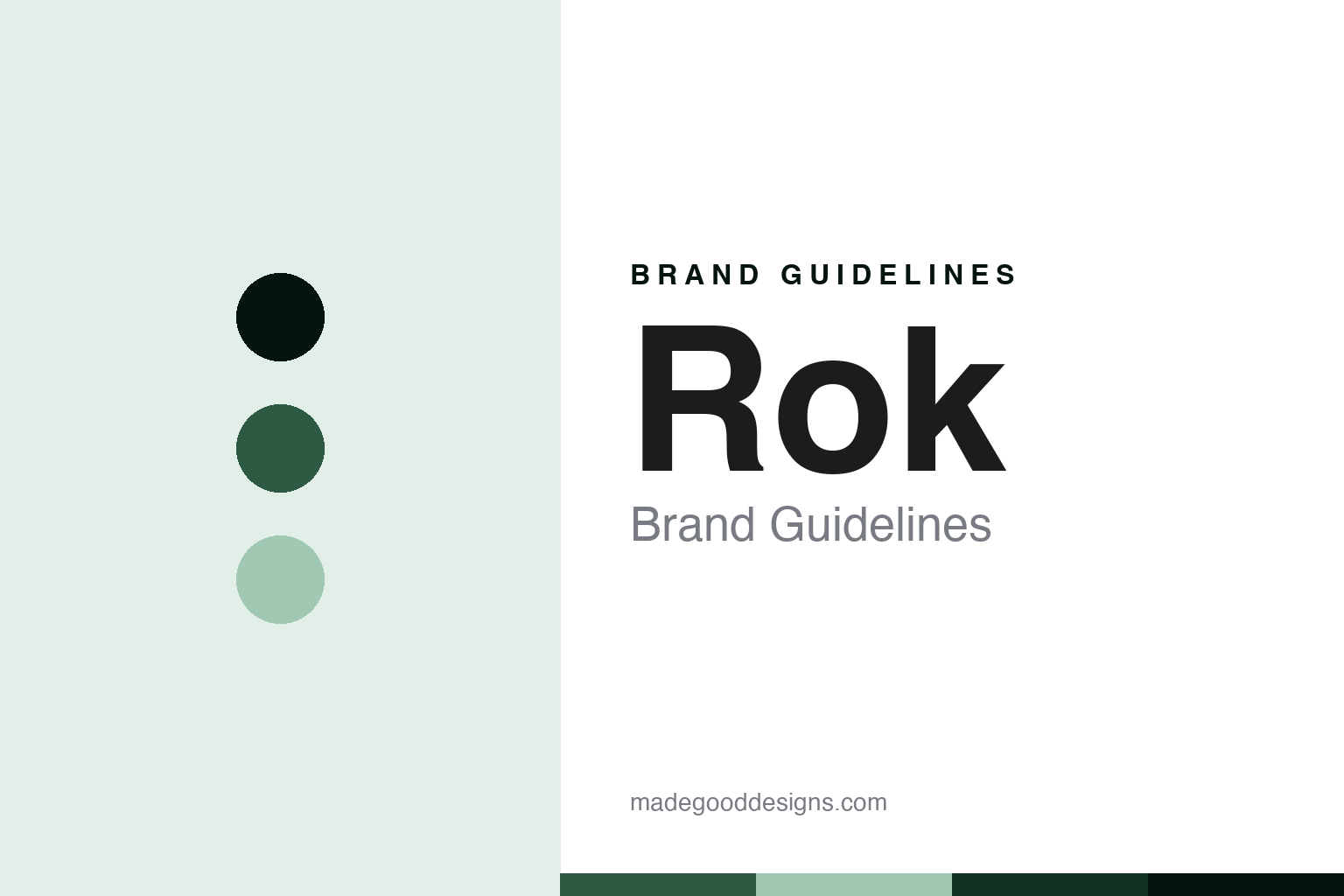
Rok Brand Guidelines
Espresso, human-powered.
Aa
Two constants: a forest palette and a manual-sans register. Abstract homage — not a Rok product or mark.
Espresso, human-powered
Rok is the British-designed maker of manual, no-electricity espresso gear like the EspressoGC, made overseas.
Rok is the round’s human-powered counterpoint — a British-designed brand whose espresso maker needs no electricity. Rok makes manual coffee gear, and it is known for the EspressoGC. Its answer to how a maker becomes a name is to take the motor out: build a lever-and-piston espresso maker you power by hand, made to last a lifetime, against the pod and the plug. Espresso, by hand.
Its identity is espresso, human-powered. Rok’s EspressoGC, its no-electricity design and its built-to-last spirit are the work it is known for. A maker, made overseas. Espresso, human-powered.
(Honest notes, so the story stays precise. Rok — at rok.coffee; note the old rokkitchentools.com address is lapsed, so we cite rok.coffee — makes manual, human-powered coffee gear: the EspressoGC, a twin-lever piston espresso maker that uses no electricity, the simpler Presso Smartshot, and the GrinderGC hand grinder. It describes itself as a designers’ spin-out running since 2002; the product’s history as the earlier “Presso,” designed by a British product designer before being renamed Rok, we present as reported. On where it is made — a theme of this round — Rok is a British-designed brand, but it does not state a country of manufacture, which is reported to be overseas, so we say British-designed rather than British-made. On ownership, it is reported independent. It leans hard on an anti-pod, built-to-last, no-replacement-cycle message. Its name and marks, and the maker’s twin-lever form, are IP, described but never reproduced, and there is no official brand hex; these tones are an unofficial interpretation. This is design commentary and does not promote any product.)
Colour
Rok lives in a forest palette. Click a swatch to copy the hex.
Rok’s identity is manual, made and enduring — a forest, an ink, a sage, a deep green, and a paper. The palette leans forest and sage: a grounded, sustainable-leaning register for a human-powered, built-to-last maker. It signals a manual espresso maker. The honest caveat: with no published brand hex, these values are an original, unofficial interpretation, not first-party colours.
The lesson is a forest palette signals a manual, enduring identity. Rok’s world is a manual, enduring object. For designers, it is a reminder that a deep forest and a soft sage can carry a coffee maker — the grounded tone of a tool made to last without a plug. Because these tones can fail as small text, keep type dark and let the colour live in the accents, palette and band. The takeaways: take out the motor; make it last; be honest about the make; and treat any single hex as unofficial.
Typography
The register is a manual sans — plain, sturdy, enduring.
Rok’s identity carries a plain, sturdy, enduring spirit — a human-powered maker, not a plug-in brand. A manual sans captures the mood: functional, honest and durable, the register of a tool you power by hand. Set in a forest palette, the manual sans feels plain and sturdy — exactly the personality Rok carries. It is human power rather than a logo, mirroring a lever pull. (Rok’s real wordmark, and the maker’s twin-lever form, are things we describe but do not reproduce, and the exact typeface is not ours to use.) Because it is not ours to use, the honest description is “a manual-sans spirit,” shown here in a stand-in. The type behaves like the maker: plain, sturdy and enduring.
Aa
A manual-sans spirit — sturdy and enduring. (Specimen set in Manrope, a manual-sans STAND-IN; NOT the Rok logo or maker.)
The brewing tools
Rok stands for espresso, human-powered — made overseas.
Rok is a lesson in how taking out the motor can be an identity. A forest palette, a manual sans and a lever pull make one thing — espresso, human-powered — the whole identity: manual, made and enduring. The no-electricity design is the differentiator, and the built-to-last, anti-pod spirit is the meaning. The point is a British-designed brand that makes espresso by hand, to last a lifetime, and is honest that the make is overseas.
Put to work, the identity is human power, told straight, as design. A maker in this spirit would take the motor out and build to last — the EspressoGC, by hand. A reader in this spirit would keep the make honest: Rok is British-designed, but it does not state a country of manufacture, so the make is overseas and a reader should not assume British making. Rok is the round’s human-powered counterpoint to all the precision electronics — the scale, the connected grinder — and it holds the where-made thread at the designed-here-made-overseas end with Acaia’s reported Taiwan make. The honest editorial moves are to cite the current address, to present the founder and the Presso rename as reported, and to say British-designed rather than British-made. The lesson Rok teaches is that taking out the motor can hold an identity: the human power gives it substance, and the built-to-last spirit keeps it credible. Espresso, human-powered is the personality, and the EspressoGC is the proof.
For designers and brand-builders, Rok holds the human-powered pole in the brewing tools: take out the motor — and build to last. The lessons: remove what others assume is essential; design against the replacement cycle; say designed-here when you cannot say made-here; cite a current address rather than a lapsed one; keep the sustainability claim tied to the build; and never reproduce a logo. It is also a reminder to stay precise: Rok is the British-designed maker of manual, no-electricity espresso gear like the EspressoGC, made overseas — with the palette here an unofficial interpretation. The human power carries the substance, and the built-to-last spirit carries the meaning; together they show that removing the motor — the very thing others assume an espresso maker must have — can be a position, not a limitation, and that designing against the replacement cycle is a claim worth making only when the build backs it up and the maker is honest that the design is British while the manufacture is not. Rok made espresso-human-powered the identity — proof that a maker, honestly told, can be the difference.
Explore & save
Keep Rok’s identity on hand — save it to a board in the Made Good inspiration library.
Rok identity set
Pin the forest palette and the manual-sans register to your own board.