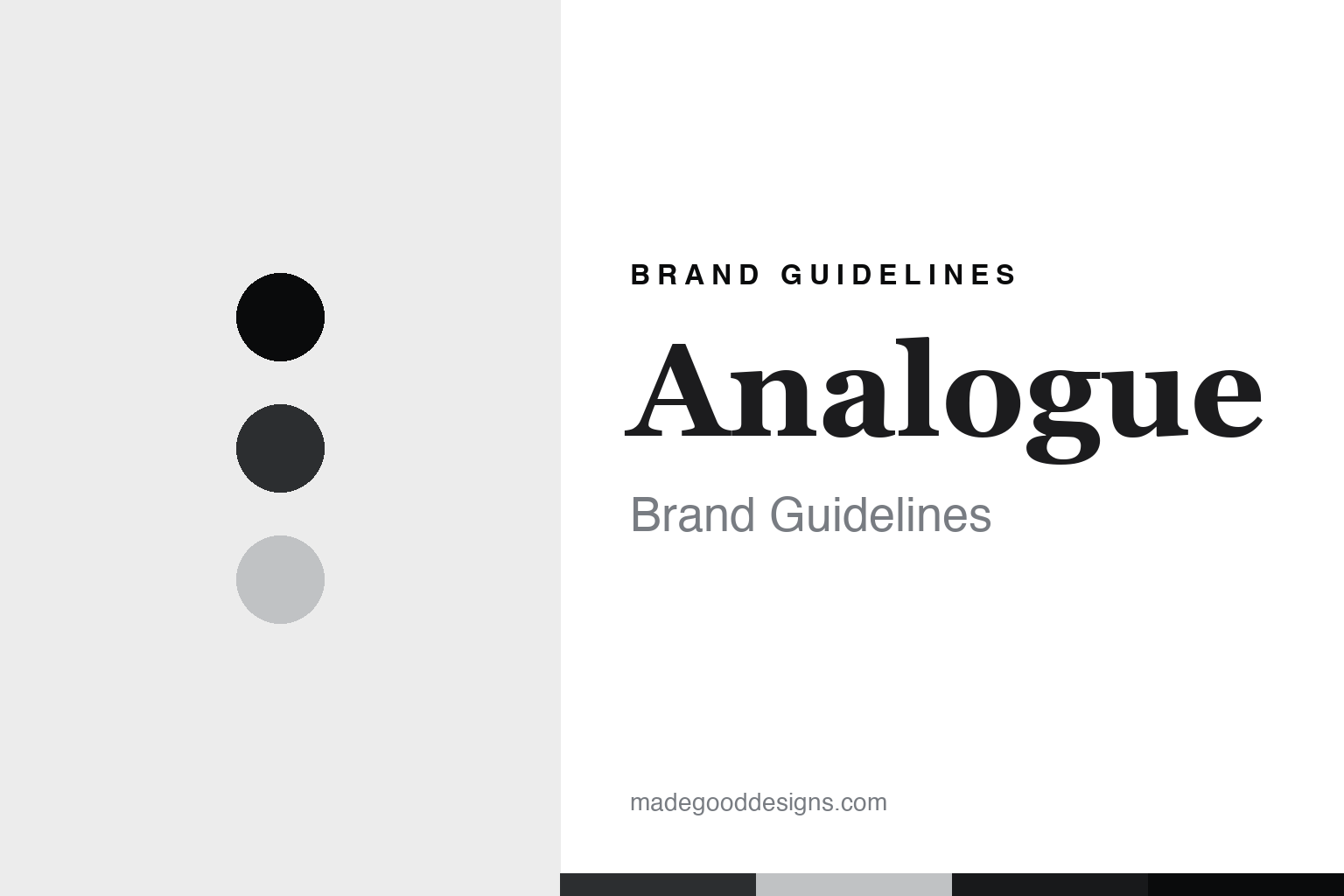
Analogue Brand Guidelines
The FPGA preservation house.
Aa
Two constants: a monochrome-ink palette and a preservation-serif register. Abstract homage — not an Analogue product or mark; no console, cartridge or logo is reproduced, and no third-party console design is depicted.
The FPGA preservation house
Analogue is the design-led maker of premium FPGA hardware that plays retro cartridges accurately, not by software emulation.
Analogue brings the handheld round its preservation node — a design-led house that rebuilds classic game hardware in modern silicon rather than emulating it in software. It was founded in 2011 by Christopher Taber, who still runs it, and it is an American-founded company with operations spanning the US and Hong Kong. Analogue makes and sells the hardware, and its answer to a round about where these machines are made and who owns them is honest: a founder-led company, designed in-house, manufactured in Asia.
Its identity is the FPGA preservation house. The FPGA hardware accuracy, the preservation mission and the minimalist design are the story here. A maker, preserving. The FPGA preservation house.
(Honest notes, so the location, the technology and the products are framed accurately. Analogue sells the hardware as its heroes — the Super Nt, the Mega Sg, the cartridge-playing Analogue Pocket and, most recently, the Analogue 3D — and we report its language as the brand’s own. On location, a point to get right: it is not cleanly “Seattle,” since sources place it across a Seattle, Washington presence and a Hong Kong base, so we frame it as American-founded with operations spanning Seattle and Hong Kong. On the technology, which is the whole pitch: Analogue uses FPGA chips, which reconfigure their logic to behave like the original console silicon, so it is hardware accuracy, not software emulation. On the products: the Pocket, from 2021, plays Game Boy family cartridges out of the box, and the Analogue 3D, which recreates the Nintendo 64 experience, shipped in 2025 and is no longer upcoming. On where it is made: designed in-house and manufactured in Asia, with limited public detail per product. On the trademark watch-point: its machines play original cartridges and work with classic systems, but the console names and designs are Nintendo’s and Sega’s intellectual property, so we describe compatibility functionally and never reproduce their logos or designs. Its designs, the Analogue name and its stylised FPGA logo are IP we describe but do not reproduce; there is no official brand hex; these tones are an unofficial interpretation.)
Colour
Analogue lives in a monochrome ink. Click a swatch to copy the hex.
Analogue’s identity is preservationist, exact and minimalist — a monochrome ink, an ink, a pale grey, a deep charcoal, and a paper. The palette leans monochrome ink and pale grey: a stark, black-and-white register that nods to the brand’s own minimalist industrial design rather than a loud logo colour. It signals the FPGA preservation house — exact, considered and quietly premium. The honest caveat: with no published brand hex, these values are an original, unofficial interpretation, not first-party colours.
The lesson is a monochrome ink signals a preservationist, exact identity. Analogue’s world is a beautifully made box that plays an old cartridge perfectly. For designers, it is a reminder that a stark monochrome ink and a soft pale grey can carry a hardware brand — a minimalist tone held as colour, not a product shot. Because these tones can fail as small text, keep type dark and let the colour live in the accents, palette and band. The takeaways: frame the location as US-and-Hong-Kong; date it to 2011; lead with FPGA, not emulation; note the Analogue 3D shipped in 2025; and treat classic-console names as third-party IP.
Typography
The register is a preservation serif — exact, considered, minimalist.
Analogue’s identity carries an exact, considered, minimalist spirit — a preservation house, not a mass-market maker. A preservation serif captures the mood: refined, precise and confident, the register of hardware built to get the old thing exactly right. Set in a monochrome-ink palette, the preservation serif feels exact and considered — exactly the personality Analogue carries. It behaves like a designed object rather than a loud logo, mirroring a logic gate and a cartridge slot. (Analogue’s real hardware and the FPGA logo are things we describe but do not reproduce, and the exact typeface is not ours to use.) Because it is not ours to use, the honest description is “a preservation-serif brand,” shown here in a stand-in. The type behaves like the brand: exact, considered and minimalist.
Aa
A preservation-serif brand — exact and minimalist. (Specimen set in Cormorant Garamond, a preservation-serif STAND-IN; NOT the Analogue logo or any console.)
The handheld
Analogue stands for the FPGA preservation house.
Analogue brings the round its preservation node. A monochrome-ink palette, a preservation serif and a 2011 founding make one thing — the FPGA preservation house — the whole identity: preservationist, exact and minimalist. The FPGA hardware accuracy is the pitch, and the minimalist design is the character. The point is a house that rebuilds classic hardware in modern silicon, in a round about where these machines are made and who owns them.
Put to work, the identity is the brand told straight, location framed and technology named. A maker in this spirit would frame the location as US-and-Hong-Kong, date it to 2011, and lead with FPGA rather than emulation. A reader in this spirit would keep the facts right: Analogue sells premium FPGA hardware as its heroes, led by the Pocket and the Analogue 3D; it was founded in 2011 by Christopher Taber; it is American-founded with US and Hong Kong operations; it uses FPGA for hardware accuracy, not software emulation; and the Analogue 3D shipped in 2025. Analogue sits sixth in the round, after Anbernic. The honest editorial moves are to frame the location carefully, to date it to 2011, to lead with FPGA, to note the 3D has shipped, and to treat classic-console names as third-party IP.
For designers and brand-builders, Analogue continues the handheld: let a technical philosophy and design be the identity — and keep location and classic-console IP honest. The lessons: build a whole identity on one technical stance, here FPGA accuracy over emulation; make industrial design a core selling point; describe a company’s real, split geography rather than the convenient version; keep another company’s console names and designs at arm’s length; and never reproduce a logo. It is also a reminder to stay precise: Analogue is the design-led maker of premium FPGA hardware that plays retro cartridges accurately, not by software emulation — with the palette here an unofficial interpretation. The hook is that stance: while others emulate old consoles in software, Analogue rebuilds them in reconfigurable silicon, sells the result as a minimalist design object, and stakes its whole brand on the difference between “close enough” and “exactly right.” Read that way, Analogue is less a gadget maker than a preservation house: exact, considered, minimalist. The lesson for a brand is that a clear philosophy and honest framing reinforce each other, and keeping others’ IP clean keeps the story earned. Analogue made the-FPGA-preservation-house the identity — proof that a stance can carry a round.
Explore & save
Keep Analogue’s identity on hand — save it to a board in the Made Good inspiration library.
Analogue identity set
Pin the monochrome-ink palette and the preservation-serif register to your own board.