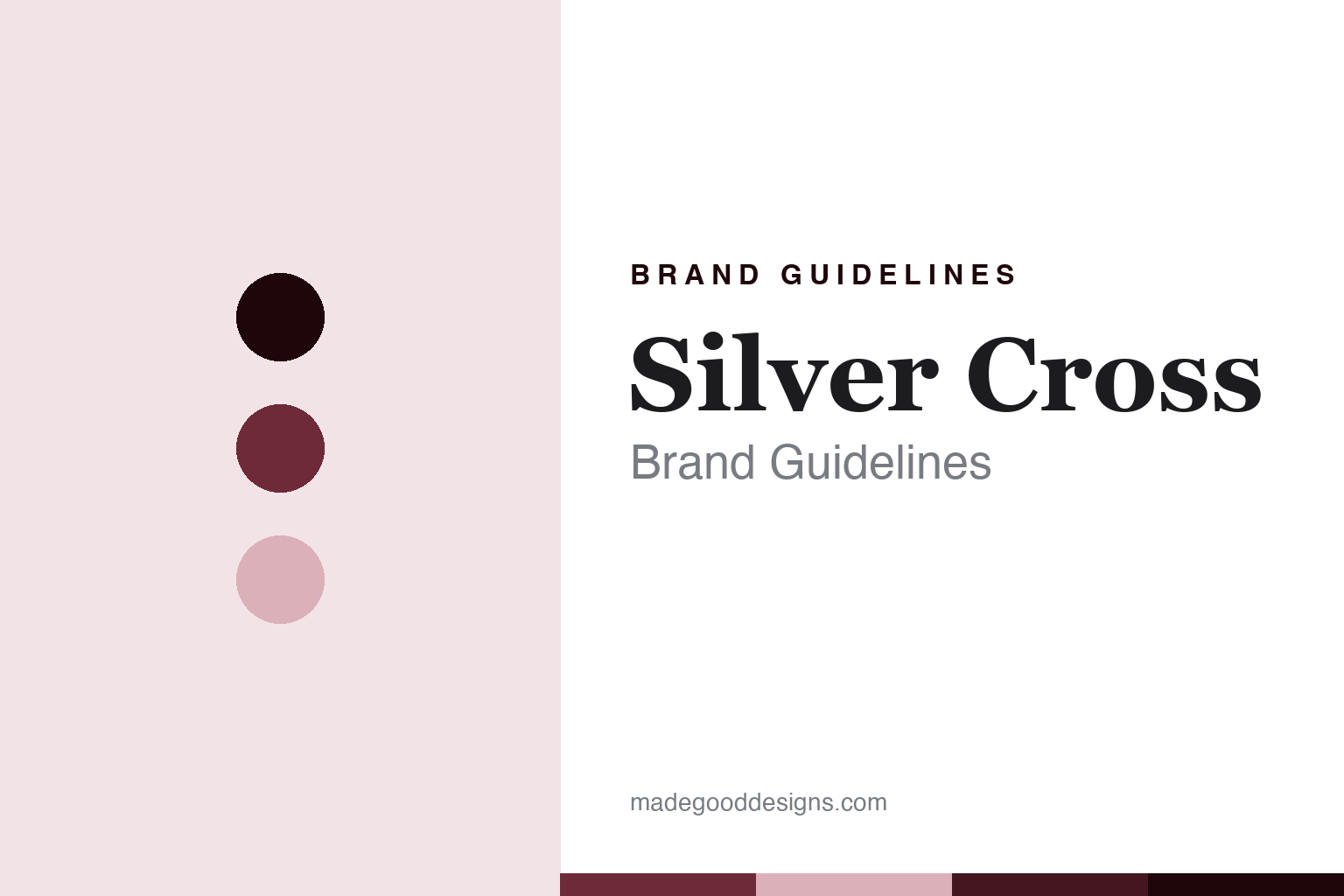
Silver Cross Brand Guidelines
The 1877 British pram, Chinese-owned.
Aa
Two constants: a heritage-burgundy palette and a heritage-serif register. Abstract homage — not a Silver Cross product or mark; no pram, wheel or logo is reproduced.
The 1877 British pram, Chinese-owned
Silver Cross is the 1877 Yorkshire coachbuilt-pram maker, twice bankrupt and now Chinese-owned, that still hand-builds prams in England.
Silver Cross closes the stroller round as its heritage node — the oldest name in the round, a Victorian British pram maker whose story is one of both remarkable continuity and discontinuous ownership. It was founded in 1877 in Leeds, Yorkshire, and it makes and sells prams and strollers. Its answer to a round about where strollers are made and who owns them is the most complicated here, and we tell it honestly: a British heritage brand, twice bankrupt, now Chinese-owned, still hand-building some prams in England.
Its identity is the 1877 British pram, Chinese-owned. The Victorian coachbuilt heritage, the discontinuous ownership and the surviving hand-built prams are the story here. A maker, enduring. The 1877 British pram, Chinese-owned.
(Honest notes, so the heritage, the ownership and the royal associations are all framed carefully, because each invites overstatement. Silver Cross sells the products as its heroes — the heritage coach-built Balmoral and Kensington prams, with their sprung suspension and hand-built carriages, and modern travel systems like the Reef, Wave and Dune — and we report its language as the brand’s own. On heritage: it was founded in 1877 by William Wilson, an inventor, on Silver Cross Street, and built its name on coachbuilt prams. On ownership, told straight: the original family company failed twice, entering receivership in 1999 and again in 2002, was rescued in 2002 by a British buyer, and was acquired in 2015 by Fosun International, a large Chinese conglomerate, so it is now Chinese-owned, and its “since 1877” line reflects brand continuity, not unbroken family ownership. On where it is made: the heritage Balmoral and Kensington prams are still hand-built in Yorkshire in small numbers, while the modern volume range is largely made in China, so we do not imply the whole range is British-made. On reputation: “the Rolls-Royce of prams” is an unofficial nickname from mid-century advertising, not an official title, and its royal connections are genuine heritage and documented use rather than a claim to a current Royal Warrant, which we do not assert. Its designs, the Silver Cross name and the Balmoral, Kensington, Reef, Wave and Dune names are IP we describe but do not reproduce; there is no official brand hex; these tones are an unofficial interpretation.)
Colour
Silver Cross lives in a heritage burgundy. Click a swatch to copy the hex.
Silver Cross’s identity is heritage, coachbuilt and enduring — a heritage burgundy, an ink, a pale rose, a deep maroon, and a paper. The palette leans heritage burgundy and pale rose: a deep, traditional register that nods to Victorian coachbuilding and a royal-associated past rather than a loud logo colour. It signals the 1877 British pram — heritage, hand-built and enduring. The honest caveat: with no published brand hex, these values are an original, unofficial interpretation, not first-party colours.
The lesson is a heritage burgundy signals a coachbuilt, enduring identity. Silver Cross’s world is a sprung, hand-built pram with a long British lineage. For designers, it is a reminder that a deep heritage burgundy and a soft pale rose can carry a maker brand — a traditional tone held as colour, not a product shot. Because these tones can fail as small text, keep type dark and let the colour live in the accents, palette and band. The takeaways: date it to 1877; tell the twice-bankrupt, now-Fosun-owned story straight; split manufacturing between Yorkshire and China; frame the “Rolls-Royce” line as an unofficial nickname; and treat the royal ties as heritage, not a current warrant.
Typography
The register is a heritage serif — coachbuilt, traditional, enduring.
Silver Cross’s identity carries a coachbuilt, traditional, enduring spirit — a Victorian heritage maker, not a startup. A heritage serif captures the mood: refined, warm and confident, the register of a name that has outlived more than a century of change. Set in a heritage-burgundy palette, the heritage serif feels coachbuilt and traditional — exactly the personality Silver Cross carries. It behaves like an established name rather than a loud logo, mirroring a spoked wheel and a suspension coil. (Silver Cross’s real prams and the Balmoral name are things we describe but do not reproduce, and the exact typeface is not ours to use.) Because it is not ours to use, the honest description is “a heritage-serif brand,” shown here in a stand-in. The type behaves like the brand: coachbuilt, traditional and enduring.
Aa
A heritage-serif brand — coachbuilt and traditional. (Specimen set in Cormorant Garamond, a heritage-serif STAND-IN; NOT the Silver Cross logo or any pram.)
The stroller
Silver Cross stands for the 1877 British pram, Chinese-owned.
Silver Cross closes the stroller round as its heritage node. A heritage-burgundy palette, a heritage serif and an 1877 founding make one thing — the 1877 British pram, Chinese-owned — the whole identity: heritage, coachbuilt and enduring. The Victorian coachbuilt heritage is the pitch, and the surviving hand-built prams are the proof. The point is the oldest name in the round, whose continuity and ownership must both be told honestly, in a round about where strollers are made and who owns them.
Put to work, the identity is the brand told straight, the ownership discontinuity acknowledged and the claims kept honest. A maker in this spirit would date it to 1877, tell the twice-bankrupt, now-Fosun-owned story straight, and split manufacturing between Yorkshire and China. A reader in this spirit would keep the facts right: Silver Cross sells the Balmoral and modern travel systems as its heroes; it was founded in 1877 in Leeds by William Wilson; the original company failed twice and the brand was acquired in 2015 by China’s Fosun; the heritage prams are still hand-built in Yorkshire while the modern range is largely made in China; and its royal ties are heritage and documented use, not a claimed current warrant. Silver Cross closes the round, after Doona. The honest editorial moves are to date it to 1877, to tell the ownership story straight, to split manufacturing honestly, to frame the “Rolls-Royce” line as an unofficial nickname, and to treat the royal connection as heritage.
For designers and brand-builders, Silver Cross closes the stroller: let long heritage be the identity — and tell a discontinuous ownership and a split manufacture honestly. The lessons: build on a genuinely long lineage; be honest that “since 1877” is brand continuity, not unbroken ownership; acknowledge bankruptcies and a foreign owner plainly; split a made-here-and-there story truthfully; frame nicknames and royal ties as heritage rather than official claims; and never reproduce a logo. It is also a reminder to stay precise: Silver Cross is the 1877 Yorkshire coachbuilt-pram maker, twice bankrupt and now Chinese-owned, that still hand-builds prams in England — with the palette here an unofficial interpretation. The hook is that survival: a Victorian pram maker that supplied royalty, went bankrupt twice, was bought and revived, and is now owned by a Chinese conglomerate — yet still hand-builds a few hundred coachbuilt prams a year in Yorkshire, its “since 1877” line true as a brand even as its ownership changed hands again and again. Read that way, Silver Cross is less an unbroken lineage than an enduring name: coachbuilt, traditional, enduring. The lesson for a brand is that heritage and honesty reinforce each other, and telling the discontinuity straight keeps the story earned. Silver Cross made the-1877-British-pram,-Chinese-owned the identity — proof that heritage can close a round.
Explore & save
Keep Silver Cross’s identity on hand — save it to a board in the Made Good inspiration library.
Silver Cross identity set
Pin the heritage-burgundy palette and the heritage-serif register to your own board.