Playdate Brand Guidelines
The indie handheld with a crank.
Aa
Two constants: an ochre-gold palette and an indie-serif register. Abstract homage — not a Playdate product or mark; no console, crank or logo is reproduced, and the signature Playdate yellow is deliberately not used.
The indie handheld with a crank
Playdate is Panic’s tiny yellow, crank-driven handheld: an indie design-object that competes on charm, not specs.
Playdate closes the handheld round as its indie node — a tiny, deliberately limited console that competes on charm and design rather than power. It is made and sold by Panic, the American software company, and it shipped in 2022. Panic makes and sells it, and its answer to a round dominated by giants and spec races is a quiet refusal: a small, private software studio shipping a design object, made in Malaysia.
Its identity is the indie handheld with a crank. The playful design, the mechanical crank and the deliberately limited hardware are the story here. A device, indie. The indie handheld with a crank.
(Honest notes, so the maker, the design partner and the trademarks are framed accurately. Panic sells Playdate as its hero — a small yellow handheld with a one-bit black-and-white screen and a fold-out mechanical crank as a control, with games delivered in “seasons” — and we report its language as the brand’s own. On the maker: Panic is an American software company founded in 1997 in Portland, Oregon, by Cabel Sasser and Steven Frank, and it is privately held and self-funded; it is also a game publisher, behind Firewatch and Untitled Goose Game, and makes Mac and iOS developer tools. On the design partner, a relationship to state carefully: the Playdate hardware was designed in collaboration with Teenage Engineering, the Swedish design firm, but Panic owns, publishes and sells it, so it is not a Teenage Engineering product. On where it is made: Malaysia. On positioning: it is indie and design-forward, deliberately limited, a cult design object of tens of thousands of units rather than millions, competing on charm, not specifications. On the trademarks: “Playdate” is a registered mark, and the crank and the signature yellow are iconic trade dress, so we describe them and reproduce neither, and our palette deliberately avoids the Playdate yellow. Its designs and the Playdate and Panic names are IP we describe but do not reproduce; there is no official brand hex; these tones are an unofficial interpretation.)
Colour
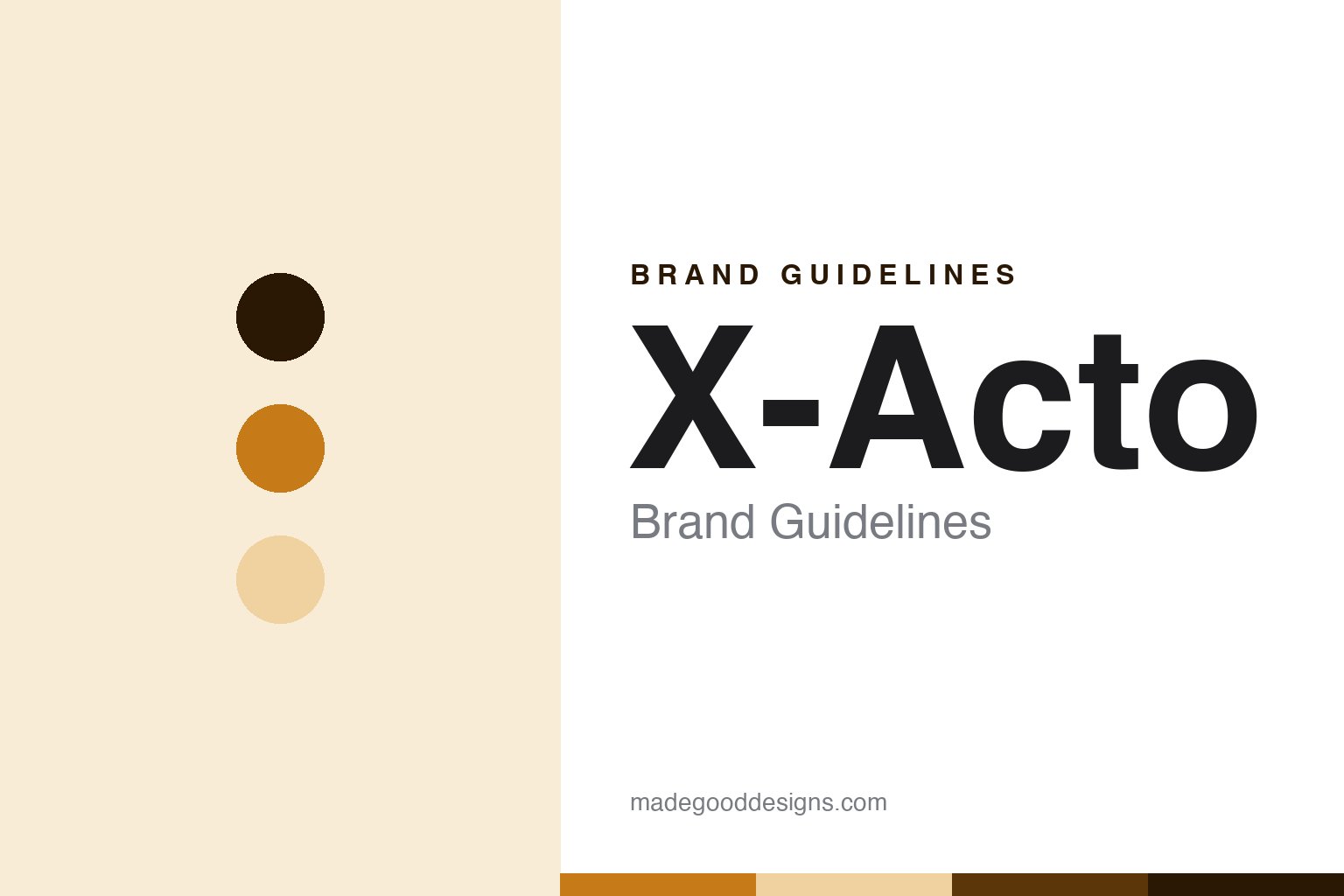
Playdate lives in an ochre gold. Click a swatch to copy the hex.
Playdate’s identity is playful, limited and design-first — an ochre gold, an ink, a pale wheat, a deep bronze, and a paper. The palette leans ochre gold and pale wheat: a warm, characterful register that nods to the brand’s cheerful spirit rather than a loud logo colour, and — importantly — deliberately not to the signature Playdate yellow. It signals the indie handheld with a crank — playful, small and design-led. The honest caveat, which matters here: the Playdate yellow is iconic trade dress, so our palette must avoid it, and these values are an original, unofficial interpretation, not first-party colours.
The lesson is an ochre gold signals a playful, design-first identity. Playdate’s world is a cheerful little box you turn a crank on. For designers, it is a reminder that a warm ochre gold and a soft pale wheat can carry a hardware brand — a characterful tone held as colour, never the signature Playdate yellow. Because these tones can fail as small text, keep type dark and let the colour live in the accents, palette and band. The takeaways: credit Panic as maker, Teenage Engineering as design collaborator; date it to 2022; place it in Malaysia; frame it as a limited design object; and treat the yellow and crank as trade dress.
Typography
The register is an indie serif — playful, small, design-led.
Playdate’s identity carries a playful, small, design-led spirit — an indie design object, not a spec-sheet console. An indie serif captures the mood: warm, characterful and confident, the register of a device that competes on charm. Set in an ochre-gold palette, the indie serif feels playful and design-led — exactly the personality Playdate carries. It behaves like a designed object rather than a loud logo, mirroring a hand crank and a one-bit pixel. (Playdate’s real hardware, the yellow and the Playdate name are things we describe but do not reproduce, and the exact typeface is not ours to use.) Because it is not ours to use, the honest description is “an indie-serif brand,” shown here in a stand-in. The type behaves like the brand: playful, small and design-led.
Aa
An indie-serif brand — playful and design-led. (Specimen set in Fraunces, an indie-serif STAND-IN; NOT the Playdate logo or its signature yellow.)
The handheld
Playdate stands for the indie handheld with a crank.
Playdate closes the handheld round as its indie node. An ochre-gold palette, an indie serif and a 2022 launch make one thing — the indie handheld with a crank — the whole identity: playful, limited and design-first. The playful design is the pitch, and the mechanical crank is the proof. The point is a small software studio shipping a design object into a round of giants, in a round about where these machines are made and who owns them.
Put to work, the identity is the brand told straight, the design partner credited and the trademarks respected. A maker in this spirit would credit Panic as maker and Teenage Engineering as design collaborator, date it to 2022, and frame it as a limited design object. A reader in this spirit would keep the facts right: Panic sells Playdate as its hero, a yellow handheld with a one-bit screen and a crank; Panic is a private American software company founded in 1997 in Portland; the hardware was designed with Teenage Engineering but is Panic’s; it is made in Malaysia; and it is a cult design object of tens of thousands of units. Playdate closes the round, after Analogue. The honest editorial moves are to credit both companies correctly, to date it to 2022, to place it in Malaysia, to frame it as a limited design object, and to treat the yellow and crank as trade dress.
For designers and brand-builders, Playdate closes the handheld: let charm and design be the identity — and credit a design partner and respect the trade dress. The lessons: compete on character rather than specifications; make a single playful idea, here a crank, the whole hook; credit a design collaborator without ceding ownership of the product; treat an iconic colour and form as trade dress to protect, not borrow; and never reproduce a logo. It is also a reminder to stay precise: Playdate is Panic’s tiny yellow, crank-driven handheld — an indie design-object that competes on charm, not specs — with the palette here an unofficial interpretation. The hook is that refusal: in a round of Windows giants and spec races, a Portland software studio shipped a small yellow box with a black-and-white screen and a hand crank, designed with Teenage Engineering, and made not competing on power its entire point. Read that way, Playdate is less a console than a design object: playful, small, design-led. The lesson for a brand is that charm and honest credit reinforce each other, and respecting the trade dress keeps the story earned. Playdate made the-indie-handheld-with-a-crank the identity — proof that charm can close a round.
Explore & save
Keep Playdate’s identity on hand — save it to a board in the Made Good inspiration library.
Playdate identity set
Pin the ochre-gold palette and the indie-serif register to your own board.