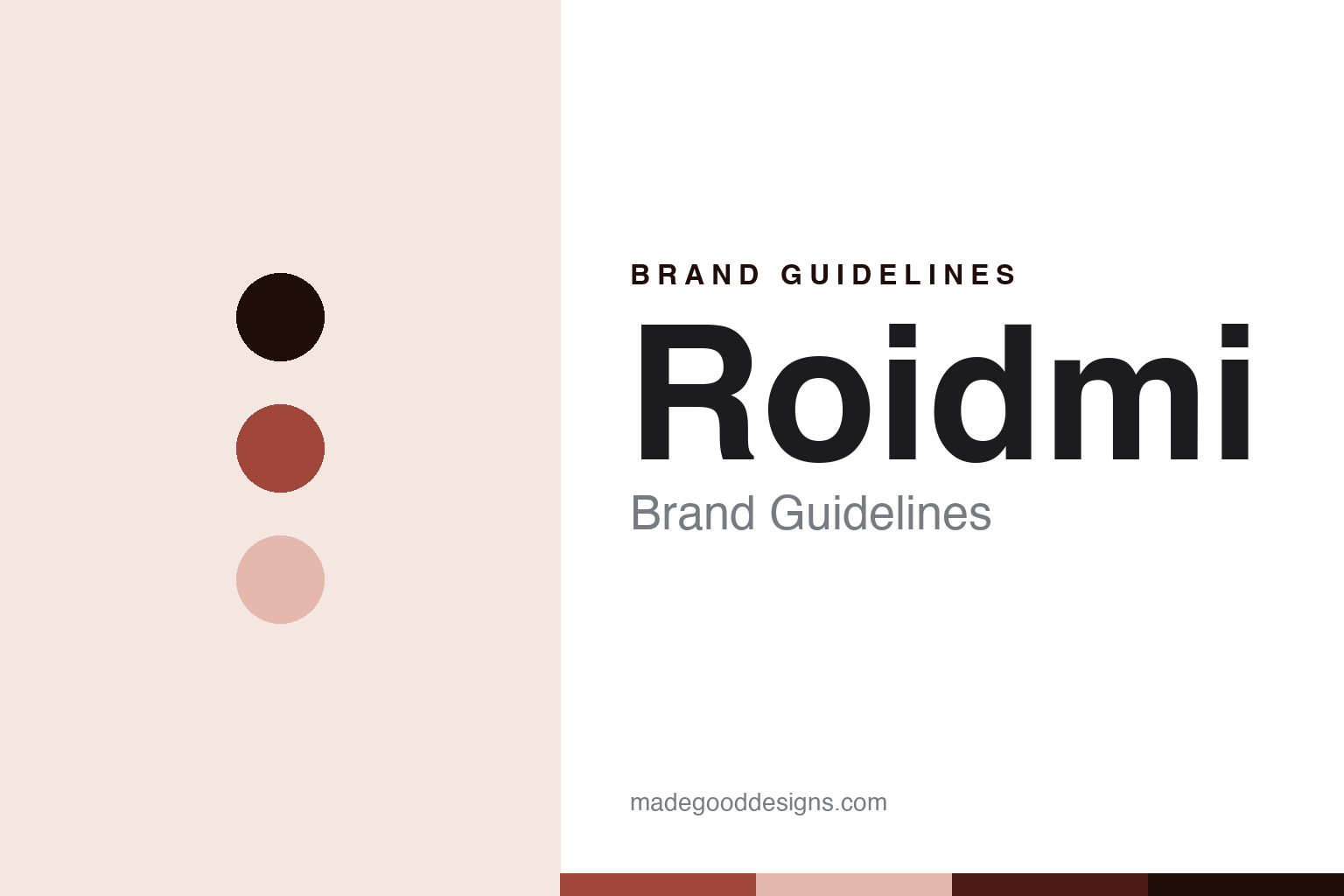
Roidmi Brand Guidelines
The wound-down ecosystem brand.
Aa
Two constants: a sunset-rust palette and an elegy-sans register. Abstract homage — not a Roidmi product or mark; no robot, dock or logo is reproduced.
The wound-down ecosystem brand
Roidmi is the Xiaomi-ecosystem Chinese brand of self-emptying cleaners that wound down operations in late 2024.
Roidmi closes the robot-vacuum round as its cautionary node — a Xiaomi-ecosystem brand that bet on premium self-emptying stations and, unlike some peers, did not make it. Its answer to a round about who owns the robot vacuum and where it is made is a closing one, told honestly: a Chinese brand tied to the Xiaomi ecosystem, made in China, that wound down operations in late 2024.
Its identity is the wound-down ecosystem brand. The Xiaomi-ecosystem ties, the premium self-emptying bet and the honest wind-down are the story here. A robot, ecosystem, and now stopped. The wound-down ecosystem brand.
(Honest notes, so the ownership, the history and the shutdown are framed accurately and without implying it still trades normally. Roidmi made cleaning devices, and we describe them largely in the past tense. On the ownership nuance, the point most often got wrong: Roidmi was a Xiaomi-ecosystem, ecological-chain company that Xiaomi and Lei Jun’s Shunwei Capital invested in, and it sold through Xiaomi’s channels — but it was invested in, not a Xiaomi subsidiary, and the relationship later fractured, with Xiaomi’s IoT arm reported to have sued Roidmi in 2023 in a stock-transfer dispute; it is also not the same company as Dreame. On founding: 2015, by Wang Zhiqiang, starting in car accessories, then cordless stick vacuums via a Xiaomi crowdfunding launch in 2018, then robot vacuums like the EVA and Eve Plus. On a pivotal factor: its machines were manufactured by KingClean, whose chairman was an early investor, and his withdrawal of manufacturing support around 2021 is widely cited as a root of the collapse. On the end, the honest part: Roidmi effectively ceased operations around December 2024 in a short wind-down, ending maintenance and after-sales, and by 2025 its apps and site were failing and many devices no longer worked; it did not formally file for bankruptcy, but it is not trading normally. On where it was made: China, in Wuxi. Its designs and the Roidmi name are IP we describe but do not reproduce, and no brand hex is verified; these tones are an unofficial interpretation.)
Colour
Roidmi lives in a sunset rust. Click a swatch to copy the hex.
Roidmi’s identity is ambitious, ecosystem-tied and wound-down — a sunset rust, an ink, a pale clay, a deep maroon, and a paper. The palette leans sunset rust and pale clay: a warm, retrospective register that suits an ambitious brand now wound down rather than a loud logo colour. It signals the wound-down ecosystem brand — ambitious, ecosystem-tied and wound-down. The honest caveat: with no verified brand hex, these values are an original, unofficial interpretation, not first-party colours.
The lesson is a sunset rust signals an ambitious, wound-down identity. Roidmi’s world was a premium self-emptying cleaner that arrived through the Xiaomi ecosystem and then stopped. For designers, it is a reminder that a warm sunset rust and a soft pale clay can carry a retrospective — a respectful tone held as colour, not a product shot. Because these tones can fail as small text, keep type dark and let the colour live in the accents, palette and band. The takeaways: mark it wound down in 2024; frame Xiaomi as ecosystem investor, not owner; note the 2023 dispute and the KingClean withdrawal; distinguish it from Dreame; and place manufacturing in Wuxi.
Typography
The register is an elegy sans — ambitious, ecosystem-tied, wound-down.
Roidmi’s identity carries an ambitious, ecosystem-tied, wound-down spirit — a brand remembered for its bet, not one still selling. An elegy sans captures the mood: plain, clear and honest, the register of a wind-down told straight. Set in a sunset-rust palette, the elegy sans feels ambitious and wound-down — exactly how Roidmi is remembered. It behaves like a described artefact rather than a loud logo, mirroring a floor-map grid and a dust-flow ripple. (Roidmi’s real products and the name are things we describe but do not reproduce, and the exact typeface is not ours to use.) Because it is not ours to use, the honest description is “an elegy-sans brand,” shown here in a stand-in. The type behaves like the memory: ambitious, ecosystem-tied and wound-down.
Aa
An elegy-sans brand — ambitious and wound-down. (Specimen set in Archivo, an elegy-sans STAND-IN; NOT the Roidmi logo or livery.)
The robot vacuum
Roidmi stands for the wound-down ecosystem brand.
Roidmi closes the robot-vacuum round as its cautionary node. A sunset-rust palette, an elegy sans and a wound-down status make one thing — the wound-down ecosystem brand — the whole identity: ambitious, ecosystem-tied and wound-down. The Xiaomi-ecosystem ties are the frame, and the honest wind-down is the ending. The point is a brand that bet on premium stations, arrived through an ecosystem, and stopped, in a round about who owns the robot vacuum and where it is made.
Put to work, the identity is the brand told straight, the ownership clarified and the end told honestly. A brand history in this spirit would mark it wound down in 2024, frame Xiaomi as an ecosystem investor rather than owner, and distinguish it from Dreame. A reader in this spirit would keep the facts right: Roidmi made cordless vacuums and the EVA and Eve Plus robots; it was a Xiaomi-ecosystem company invested in, not owned, by Xiaomi, and later in dispute with it; it was founded in 2015 by Wang Zhiqiang; its maker KingClean withdrew support around 2021; and it wound down around December 2024. Roidmi closes the round, after Proscenic. The honest editorial moves are to mark it wound down, to frame Xiaomi as an ecosystem investor, to note the 2023 dispute and the KingClean withdrawal, to distinguish it from Dreame, and to place manufacturing in Wuxi.
For designers and brand-builders, Roidmi closes the robot vacuum: tell an ecosystem relationship precisely — and record a wind-down honestly. The lessons: being invested in by a giant is not being owned by it, and the difference matters, especially when the relationship later sours; a manufacturing partner’s support can be as load-bearing as capital, so losing it can sink a brand; a history must say plainly when a brand has wound down rather than imply it still trades; and a brand can stop without a formal bankruptcy. It is also a reminder to stay precise: Roidmi is the Xiaomi-ecosystem Chinese brand of self-emptying cleaners that wound down operations in late 2024 — with the palette here an unofficial interpretation and no verified hex. The hook is that contrast: where the round’s other Chinese brands are backed by public parents or independent capital, Roidmi rode the Xiaomi ecosystem into premium self-emptying stations, then lost its manufacturing support and fell into dispute with Xiaomi, winding down in late 2024 — invested in, never owned, and now stopped. It closes a round that runs from a mainstream sub-brand to an independent pioneer to a discontinued American name and, here, to a wound-down one. Read that way, Roidmi is less a rival than a wound-down ecosystem brand: ambitious, ecosystem-tied, wound-down. The lesson for a brand is that a precise ownership account and an honest ending reinforce each other, and framing Xiaomi as an investor keeps the story earned. Roidmi made the-wound-down-ecosystem-brand the identity — proof that even a closing brand can carry a round, honestly told.
Explore & save
Keep Roidmi’s identity on hand — save it to a board in the Made Good inspiration library.
Roidmi identity set
Pin the sunset-rust palette and the elegy-sans register to your own board.