Food Logo Design: Tips and Examples
Food logo design has a tougher brief than most logo work: the mark has to build appetite, survive a curved coffee cup and a thirty-foot sign at the same time, and avoid the small pile of clichés every food brand reaches for. A great food logo is appetizing without being literal, distinctive without being busy, and legible at a 16px favicon. This guide covers how to get all three, with concrete tips and the conventions worth knowing.
A logo is one piece of a larger system. For how it fits with palette, type, menu, and signage, start with our restaurant branding guide, then use this article for the mark itself.
What a Food Logo Has to Do
Before sketching, be clear on the job. A food logo has to do four things at once: signal the category and tone (fast casual vs. fine dining vs. neighborhood bakery), trigger a little appetite or warmth, scale from favicon to building, and reproduce in one color for stamps, foil, and embroidery. If a concept fails any of those four, it is a poster, not a logo. Hold every direction up against this list.
Appetite Appeal Without the Clichés
Appetite appeal is the food-specific superpower — and the food-specific trap. You want a mark that feels warm, fresh, or indulgent, but the obvious routes are exhausted. A fork-and-knife crossed, a literal chef’s hat, a steam swirl over a cup, a cartoon tomato, a generic leaf for “fresh” — these read as stock, not signature. Get the feeling through color temperature, type personality, and craft instead of through a literal food icon. When you do use a food element, abstract it or make it specific to your dish, not the whole category.
- Lean on warmth over literalism: a warm palette and friendly type say “appetizing” more reliably than a clip-art burger.
- Be specific, not generic: if you are a wood-fired place, a flame or ember beats a generic plate.
- Avoid the tired set: crossed utensils, chef hats, steam swirls, and generic leaves are seen everywhere.
- Mind the negative space: the best food marks often hide a clever, ownable detail rather than shouting the category.
Scalability: The Non-Negotiable
Food brands live across the widest size range of almost any business — a 16px app icon, a 25mm rubber stamp, a coffee cup, a menu header, a window decal, a building sign. A logo that only works big is useless. Build a small family: a full lockup, a standalone wordmark, and a compact mark or monogram for the smallest placements. Test every direction at favicon size early, not at the end. Always design in vector in Adobe Illustrator so the artwork stays crisp from stamp to signage; never build a logo as a flat raster image.
Typography in Food Logos
Type often does more work than any icon in a food logo, and for many of the best marks the wordmark is the logo. The typeface choice sets the tone instantly:
| Type style | Feeling it sends | Common in |
|---|---|---|
| Warm humanist sans | Friendly, modern, approachable | Cafes, fast casual |
| Script / hand-lettered | Soft, homemade, personal | Bakeries, dessert shops |
| Bold condensed display | Loud, energetic, value | Food trucks, burger joints |
| Vintage / blackletter | Established, grown-up, heritage | Bars, pubs, breweries |
| Refined serif | Elegant, premium, considered | Fine dining |
Whatever you choose, make sure the license covers logo and commercial use, and that the body counterpart stays legible on menus. For pairing the display face with a workhorse, see our font pairing guide.
Color and the Appetite Connection
Color carries a lot of the appetite signal. Warm reds, oranges, and yellows are energetic and stimulating, which is why fast food reaches for them; earthy browns and greens read as natural and crafted; deep tones and gold read as premium. Pick a temperature that matches your positioning rather than copying the category leader. Keep the logo to one or two colors so the one-color version is a true subset, and specify a Pantone reference so your cups, signage, and packaging match across vendors.
Food Logo Styles by Category
The same principles dial differently per concept. A cafe logo prioritizes a tiny one-color stamp mark; a bakery logo leans soft and script; a food truck logo has to read at distance on a moving vehicle; a bar logo leans vintage or neon. Our category guides cover each:
- Cafe branding — marks built to live on cups and stamps.
- Bakery branding — soft, script-led, inviting logos.
- Bar and pub branding — bold vintage and neon-ready marks.
Tools and Process
Build the logo in Adobe Illustrator for clean vectors; use Adobe Photoshop only for mockups and presentation, never for the artwork itself. Canva can produce a serviceable starter logo for a brand-new operation on a shoestring, but graduate to vector before you order signage or packaging, because Canva exports rarely give you the clean editable vector and Pantone control a sign maker needs. For the full sketch-to-final workflow, see our logo design process guide.
Examples of Approaches That Work
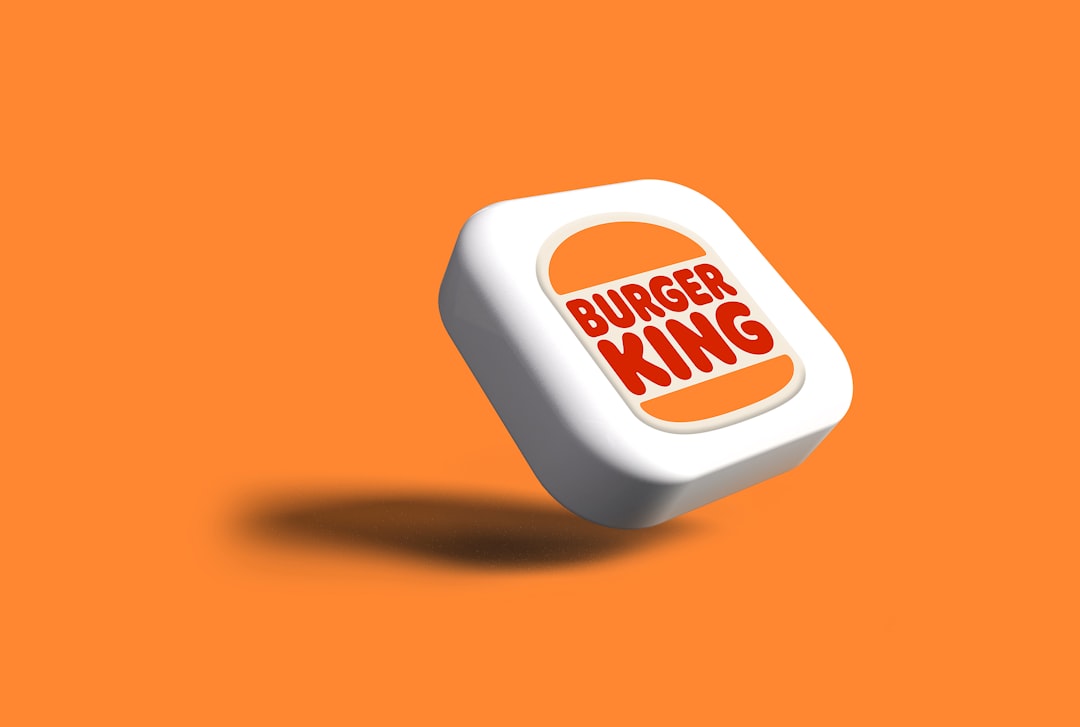
The strongest food logos tend to fall into a few repeatable patterns, and studying them is more useful than copying a single mark. A confident wordmark-only logo, where a well-chosen typeface and careful spacing carry the whole identity, is the most flexible and the hardest to get wrong at small sizes — it scales perfectly because there is no fragile icon to lose. A monogram or badge built from the initials reads as established and reproduces beautifully on stamps, cups, and etched glass. An abstract or specific mark — an ember for a wood-fired kitchen, a single stylized bean for a roaster — earns appetite without resorting to the stock-icon set. And a combination lockup gives you the best of both: a wordmark for the sign and a standalone mark for the favicon and the cup.
Notice what these share: restraint, one clear idea, and a tone matched to the concept rather than borrowed from the category leader down the street. The mistake to learn from is the opposite — a logo that crams a food icon, a tagline, a founding date, and a decorative border into one busy mark that turns to mud the moment it is shrunk to a 16px favicon or foil-stamped on a kraft box.
A Quick Pre-Launch Checklist
- Does it read at 16px and on a curved cup?
- Is there a clean one-color version?
- Is the artwork true vector, not raster?
- Does it avoid the cliché icon set?
- Does the tone match your positioning, not the competitor’s?
- Are the fonts properly licensed for logo use?
Frequently Asked Questions
What makes a good food logo?
Appetite appeal without cliché, plus true scalability. It should signal your category and tone, feel warm or fresh through color and type rather than a literal food icon, scale cleanly from favicon to signage, and reproduce in one color. Built in vector, it works on every surface a food brand touches.
What colors are best for a food logo?
Match color to positioning. Warm reds, oranges, and yellows feel energetic and appetizing; earthy browns and greens read as natural and crafted; deep tones with gold feel premium. Keep the logo to one or two colors so the one-color version works, and specify a Pantone for cross-vendor matching.
Should a food logo include an image of food?
Not necessarily, and usually not a literal one. Generic food icons — crossed utensils, a cartoon tomato, a steam swirl — read as stock. If you use a food element, make it specific to your dish and abstract it. Often a strong wordmark with the right type and color carries appetite better.
Can I make my food logo in Canva?
You can start there for a brand-new, budget-tight operation, but move to vector in Illustrator before ordering signage or packaging. Canva exports rarely give the clean editable vector files and Pantone control that sign makers and printers need, and scalability problems show up fast on large or single-color jobs.
What’s the most common food logo mistake?
Designing only for the menu or website and forgetting the extremes. Logos that ignore the 16px favicon, the curved cup, and the one-color stamp fall apart in production. Test small and single-color early, and reach for clichéd category icons last, not first.