Dino Baffetti Brand Guidelines
The diatonic maker that builds for others.
Aa
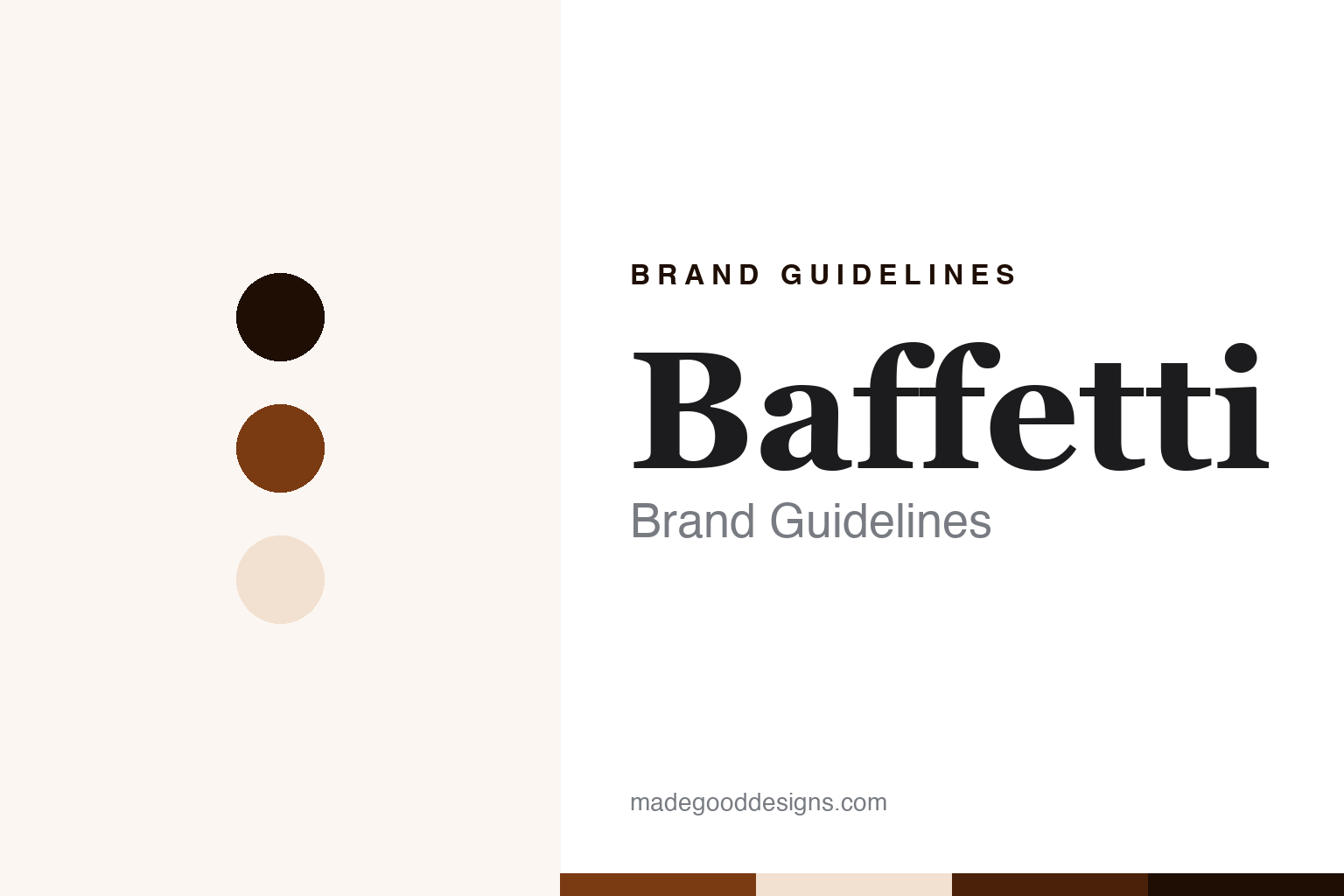
Two constants: a Baffetti chestnut and honey palette and a Workshop serif register. Abstract homage — not a Baffetti product or mark; no instrument, logo or nameplate is reproduced.
The king of the organetto
From a sawmill to a family factory.
Dino Baffetti is a family accordion maker in Castelfidardo, best known for the diatonic accordion, the organetto. Its founder, Dino Baffetti, was born in 1930 and began work in the sawmill department of the Elettra company in Castelfidardo, the trade magazine Strumenti&Musica recorded in his obituary.
In 1977 he co-founded a firm called B.M. & C. with his brother-in-law to make diatonic accordions; from 1980 it became Baffetti Dino & C., when his children Cinzia, Genuino and Milena joined him. In 1985 he was made a Cavaliere by President Francesco Cossiga. He died on 2 March 2018, and the magazine headlined its obituary “Addio al re degli organetti” — farewell to the king of the organetto.
The firm is still run by his children: Genuino and Cinzia manage it and Milena handles international sales, according to an interview with Accordions Worldwide. Its legal name is Dino Baffetti di Baffetti Genuino & C., on via Pigini in Castelfidardo.
Colour
Building for other brands.
Much of Baffetti’s work has carried other names. Strumenti&Musica wrote that much of Dino Baffetti’s production was commissioned by Paolo Soprani, Castelfidardo’s founding brand, and the firm told Accordions Worldwide that it made parts for Elka and Paolo Soprani and complete diatonic models for Paolo Soprani.
It also builds for a French brand. Vincent Roux, owner of the Burgundy accordion brand Saltarelle, wrote in 2017 that his father had found a maker in 1984 “with Dino Baffetti,” and that “since then, all diatonics have been produced in the Baffetti factory.” His account covers Saltarelle’s diatonics, not its other models.
Under its own name it sells a wide range — diatonics in two-, four- and eight-bass versions and in Irish, Tex-Mex, Latino, Basque trikitixa and Russian series, and piano accordions such as the Professional, Concerto and Opera Cassotto. Those series names point to the musical traditions it builds for. The firm told Accordions Worldwide that its range runs to about a hundred models, from the MaggioreMinore to the Gran Lusso Vienna.
Typography
The Castelfidardo supply chain.
Castelfidardo, in the Marche, has made accordions since the nineteenth century, and its own history page records the scale of the boom. Between 1947 and 1953 the town’s accordion exports rose from 57,523 to 192,058, and a town of about 9,000 people employed about 10,000 accordion workers. Seventeen firms went bankrupt between 1960 and 1963.
The post-war years were the town’s golden age. The comune records that nineteen accordion firms were founded in Castelfidardo alone between 1946 and 1948, that some took Hollywood names — Paramount, Universal, MGM, Metropolitan — to sell in America, and that one street, via Marconi, was nicknamed “via dei dollari,” the street of dollars.
Consolidation came early. In July 1946, the Treccani biographical dictionary records, three firms — Settimio Soprani of Castelfidardo, Scandalli of Camerano and Frontalini of Numana — joined to form Farfisa, the “Fabbriche Riunite Fisarmoniche,” though Frontalini soon withdrew.
The decline was long. In 2012 the business paper Il Sole 24 Ore put the peak at 240,000 accordions a year and current output at “non più di 30mila” — no more than 30,000 — between Castelfidardo and neighbouring Recanati. The town says about thirty firms still work there.
Much of the instrument comes from specialists. A March 2000 trade report, quoted by the accordion writer Mario Bruneau, counted 29 accordion firms in the area and found that “only 2 are actually able to produce an entire accordion”; the rest depended on outside companies for components such as buttons and bass mechanisms.
The reeds, which make the sound, come from a handful of makers. A 2021 study in the European Journal of Musicology by Raffaele Pinelli named four in the Marche — Voci Armoniche, Binci, Cagnoni and Artigiana Voci — and found that the Italian reed market had fallen sharply in the 2000s.
The town keeps its history in public. Its international accordion museum grew out of an appeal on the RAI television programme Portobello on 20 February 1981 and opened on 9 May 1981; a 2020 count put its collection at 450 accordions, 9,500 scores and 11,000 recordings.
Castelfidardo is now working toward UNESCO recognition for accordion making: the town says a cataloguing phase ended on 13 September 2025 with eighteen documentation sheets. As far as public sources show, the town has no protected geographical indication for its accordions, although EU rules for craft indications took effect on 1 December 2025.
The trade itself is smaller and richer. Under customs code 9205 90 10, Eurostat records that Italy exported €22.37 million of accordions and similar instruments in 2024 — 9,998 units, about €2,240 each — against 16,905 units in 2007.
Baffetti’s own crisis came in 2024. Just after 5.30 a.m. on 14 March a fire spread across both floors of its factory, destroying instruments ready to ship; no one was hurt, and investigators ruled out arson and suspected a short circuit. Saltarelle’s owner told an Australian dealer that “basically everything else is destroyed. All the stock of accordions and spare pieces are gone.” Accordions Worldwide later put the cause down to an electrical power strip used for heating wax. Castelfidardo’s mayor, Roberto Ascani, said most of the town’s accordion firms had offered help. By May new machinery was installed — “speriamo di riprendere la produzione a giugno,” the family told Il Resto del Carlino, we hope to restart production in June — and the factory was manufacturing again by July 2024, about three months after the fire.
Aa
A workshop serif — a family name over many other names. (Specimen set in Fraunces, a serif STAND-IN; NOT the Baffetti logo.)
Baffetti
A family name over many other names.
Baffetti’s brand is a family name and a speciality. Its founder’s nickname — the king of the organetto — describes both, and its series names describe its markets, from Ireland to Texas to the Basque Country. Much of its reputation, though, has been earned under other labels: Paolo Soprani in the past, Saltarelle today.
For a design guide, Baffetti shows the maker behind the label — and how quickly a small factory can return after a disaster. Compare Saltarelle, whose diatonics it builds, and Castagnari, another Castelfidardo diatonic maker. For this guide we use a chestnut and a honey with a serif, an unofficial interpretation; no instrument or logo is reproduced.
Explore & save
Keep Dino Baffetti’s identity on hand — save it to a board in the Made Good inspiration library.
Baffetti identity set
Pin the Baffetti chestnut and honey palette and the Workshop serif register to your own board.