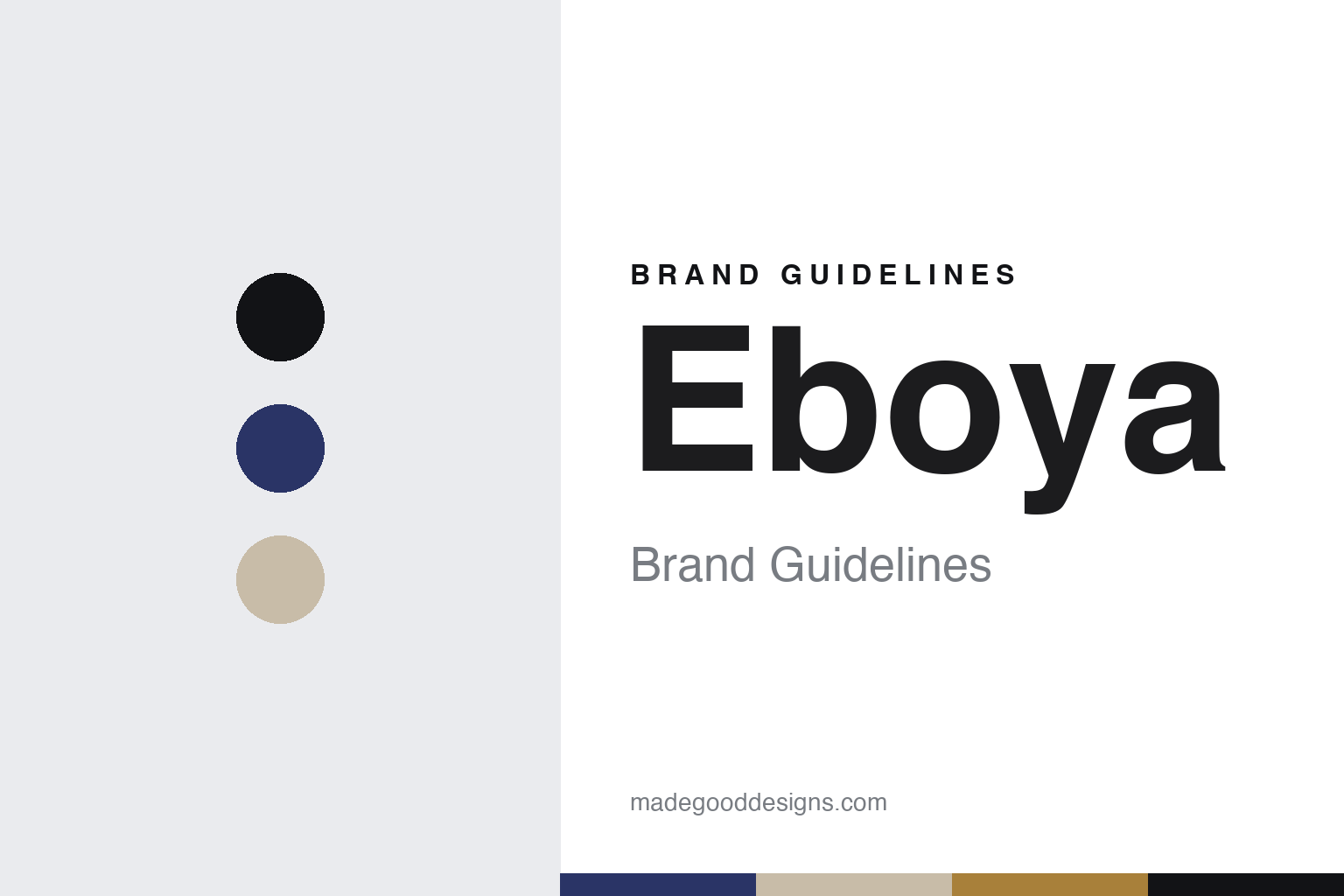
Eboya Brand Guidelines
The Tokyo ebonite.
Aa
Two constants: an ai-indigo palette and a minimal sans register. Abstract homage — not an Eboya pen or wordmark.
The Tokyo ebonite
Eboya hand-turns pens from Nikko ebonite — Japan’s finest hard rubber — in Tokyo.
Eboya is a lesson in a material at its source as the identity. The pen brand of Japan’s premier ebonite maker, it hand-turns fountain pens in Tokyo from Nikko ebonite — hard rubber widely regarded as the world’s finest, the same stock that supplies Japan’s great pen houses. A pen, turned from the best ebonite there is.
Its identity is the Tokyo ebonite. Eboya’s hand-turned, made-in-Japan ebonite pens, cut on traditional lathes, are the work it is known for. A material, made a signature. An ebonite maker that makes its own pens.
(Honest notes, so the story stays precise. Eboya is the fountain-pen brand of Nikko Ebonite, Japan’s foremost ebonite manufacturer, founded in Tokyo in 1952; the Eboya pen brand launched around 2009 and is family-run, based in the old-town Arakawa district of Tokyo. We do not name a founder the sources do not confirm. The pens are genuinely made in Japan, hand-turned on rokuro lathes from Nikko’s own ebonite — the material and the making are both domestic. One honest caveat: the nibs are third-party units, fitted in fourteen-karat Bock gold, so the craft here is the ebonite body and its turning, not the nib. Its designs are its IP, described but never reproduced, and there is no official brand hex — these tones are an unofficial interpretation. This is design commentary and does not promote any product.)
Colour
Eboya lives in an ai-indigo palette. Click a swatch to copy the hex.
Eboya’s identity is refined, quiet and Japanese — an ai indigo, an ink, an ecru, an amber, and a chalk. The palette leans ai indigo and ecru: the register of a refined Japanese craft in deep indigo and natural tones. It signals craft and restraint over show. The honest caveat: with no published brand hex, these values are an original, unofficial interpretation, not first-party colours.
The lesson is an ai-indigo palette signals a refined, quiet identity. Eboya’s world is a hand-turned, made-in-Tokyo, ebonite object. For designers, it is a reminder that a deep indigo and a natural ecru can carry a brand built on a material — the indigo of a Japanese dye and the ecru of turned ebonite. Because these tones can fail as small text, keep type dark and let the colour live in the accents, palette and band. The takeaways: use the best material; turn it by hand; keep it in Tokyo; and treat any single hex as unofficial.
Typography
The register is a minimal sans — clean, quiet, precise.
Eboya’s identity carries a clean, quiet, precise spirit — a refined object, not a loud one. A minimal sans captures the mood: even, spare and calm, the register of a hand-turned Japanese ebonite pen. Set in an ai-indigo palette, the minimal sans feels clean and quiet — exactly the personality Eboya carries. It is precise rather than showy, mirroring a pen turned slowly from fine material. (Eboya’s real designs and wordmark are things we describe but do not reproduce, and the exact typeface is not ours to use.) Because it is not ours to use, the honest description is “a minimal-sans spirit,” shown here in a stand-in. The type behaves like the maker: clean, quiet and precise.
Aa
A minimal-sans spirit — clean and quiet. (Specimen set in Jost, a minimal-sans STAND-IN; NOT the Eboya wordmark or any pen design.)
A material at its source as identity
Eboya stands for the Tokyo ebonite.
Eboya is a lesson in making a material at its source the identity. An ai-indigo palette, a minimal sans and hand-turned pens make one material the whole maker — refined, quiet and Japanese. The material is the differentiator. The differentiator is a genuine advantage — being the ebonite maker itself, hand-turning pens in Tokyo from the same fine hard rubber it supplies to others.
Put to work, the identity is a material at its source as design. A maker building in this spirit would work from a material it knows best, keep the turning by hand in its own city, and let the ebonite speak, so the customer buys into a material and a craft rather than a logo. It would treat being the source as the point, so that the pen begins where the material does. It would be honest that the nib is bought in. The lesson Eboya teaches is that a material at its source can build a brand: the ebonite gives it substance, and the Tokyo making gives it authenticity. The material is the personality, and the source is the proof.
For designers and brand-builders, Eboya offers a clear takeaway: build from the material you know best. The lessons: use the finest material; turn it by hand; keep it in Tokyo; and be clear about the nib. It is also a reminder to stay precise: Eboya is the pen brand of Nikko Ebonite, founded in Tokyo in 1952, hand-turning pens from its own ebonite since around 2009 — with the palette here an unofficial interpretation. Eboya made the Tokyo ebonite the maker — proof that a material at its source can be the difference.
Explore & save
Keep Eboya’s identity on hand — save it to a board in the Made Good inspiration library.
Eboya identity set
Pin the ai-indigo palette and the minimal-sans register to your own board.