Laban Brand Guidelines
The Taiwanese resin.
Aa
Two constants: a lustre-teal palette and a contemporary sans register. Abstract homage — not a Laban pen or wordmark.
The Taiwanese resin
Laban makes lustrous marbled-resin fountain pens in Taiwan, at accessible prices.
Laban is a lesson in a material and a value as the identity. A Taiwanese maker, it turns fountain pens from lustrous, marbled and pearlescent resin — bold, colourful bodies at accessible prices, made in Taiwan. A pen, made of glowing resin.
Its identity is the Taiwanese resin. Laban’s marbled-resin, made-in-Taiwan fountain pens, in rounded, glossy shapes, are the work it is known for. A material, made a signature. A maker that turned components into a brand.
(Honest notes, so the story stays precise. Laban was founded in 1981 by John Hu and his brother Charles, in Houtong in New Taipei, and began as an OEM and component maker before launching its own Laban brand in 1993 — the filigree “Skeleton” series put it on the map — so we frame it as “founded 1981, own brand from 1993.” It is a family-held Taiwanese company, and its pens are genuinely made in Taiwan. One honest caveat: the nibs are third-party — German JoWo steel on standard models, with gold nibs on higher-end pens — so the identity is the resin body and Taiwanese making, not in-house nibs. It should not be confused with unrelated uses of the word “laban.” Its designs are its IP, described but never reproduced, and there is no official brand hex — these tones are an unofficial interpretation. This is design commentary and does not promote any product.)
Colour
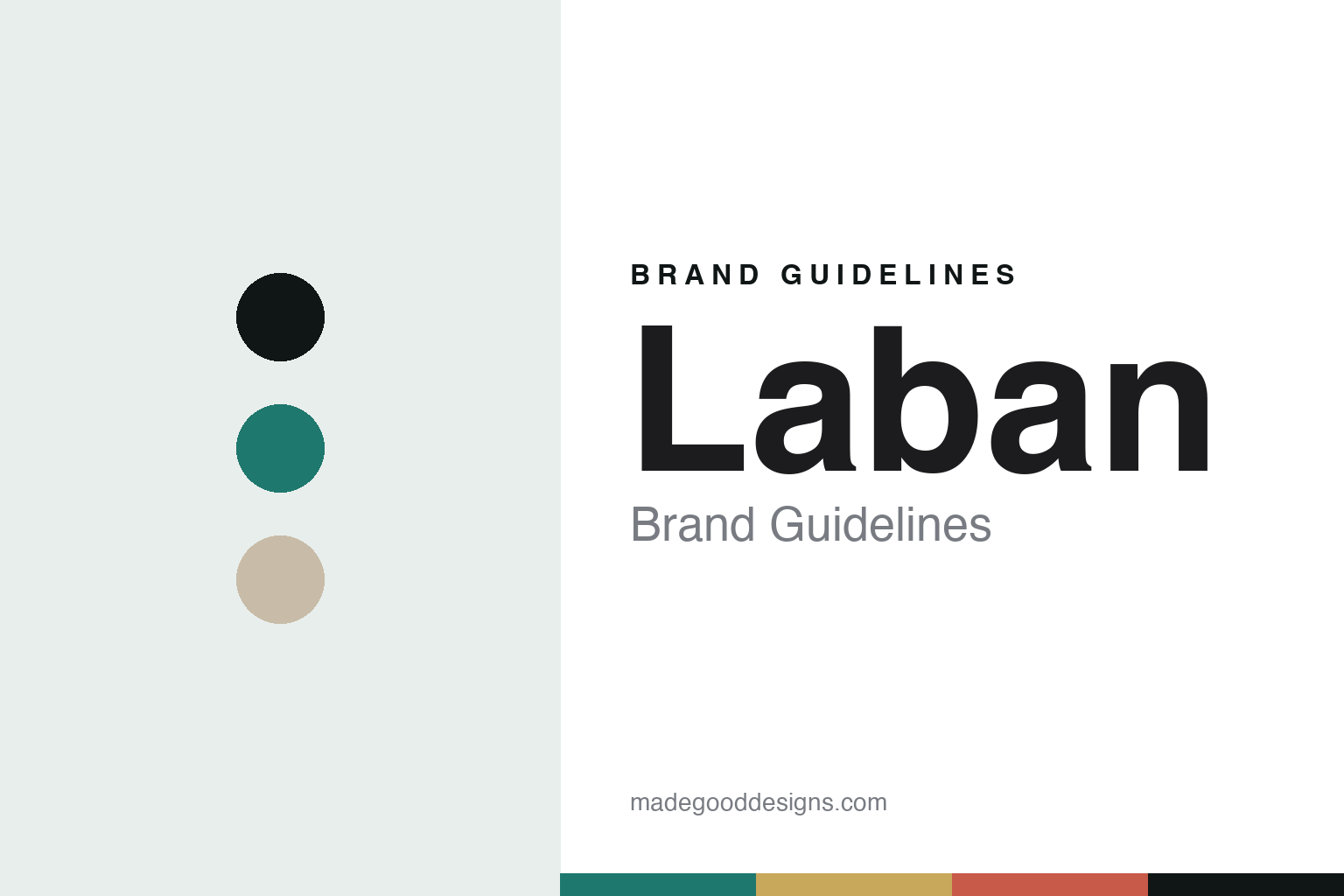
Laban lives in a lustre-teal palette. Click a swatch to copy the hex.
Laban’s identity is lustrous, colourful and approachable — a lustre teal, an ink, a pearl, a coral, and a chalk. The palette leans lustre teal and coral: the register of a glowing, marbled resin. It signals colour and accessibility over restraint. The honest caveat: with no published brand hex, these values are an original, unofficial interpretation, not first-party colours.
The lesson is a lustre-teal palette signals a lustrous, colourful identity. Laban’s world is a resin, made-in-Taiwan, glossy object. For designers, it is a reminder that a jewel teal and a warm coral can carry a brand built on a material — the teal of a marbled resin and the coral of a pearlescent swirl. Because these tones can fail as small text, keep type dark and let the colour live in the accents, palette and band. The takeaways: make it glow; keep it in Taiwan; keep it accessible; and treat any single hex as unofficial.
Typography
The register is a contemporary sans — clean, warm, accessible.
Laban’s identity carries a clean, warm, accessible spirit — a friendly object, not an exclusive one. A contemporary sans captures the mood: rounded, even and modern, the register of a colourful resin pen. Set in a lustre-teal palette, the contemporary sans feels clean and warm — exactly the personality Laban carries. It is accessible rather than austere, mirroring a glossy, affordable pen. (Laban’s real designs and wordmark are things we describe but do not reproduce, and the exact typeface is not ours to use.) Because it is not ours to use, the honest description is “a contemporary-sans spirit,” shown here in a stand-in. The type behaves like the maker: clean, warm and accessible.
Aa
A contemporary-sans spirit — clean and warm. (Specimen set in Manrope, a contemporary-sans STAND-IN; NOT the Laban wordmark or any pen design.)
A material and a value as identity
Laban stands for the Taiwanese resin.
Laban is a lesson in making a material and a value the identity. A lustre-teal palette, a contemporary sans and marbled-resin pens make one material and an accessible price the whole maker — lustrous, colourful and approachable. The pairing is the differentiator. The differentiator is a genuine offer — bold, glowing resin pens made in Taiwan at prices that welcome newcomers, from a maker that grew from components into a brand.
Put to work, the identity is a material and a value as design. A maker building in this spirit would choose a material that photographs and feels rich, keep the making at home, and price it to invite people in, so the customer buys into colour and craft without a luxury barrier. It would treat resin as an asset, not a compromise. It would be honest about its OEM roots and its bought-in nibs. The lesson Laban teaches is that a material and a value can build a brand: the resin gives it appeal, and the Taiwanese making gives it substance. The pairing is the personality, and the making is the proof.
For designers and brand-builders, Laban offers a clear takeaway: pair a rich material with an honest price. The lessons: make it glow; keep it in Taiwan; welcome newcomers; and be clear about the nib. It is also a reminder to stay precise: Laban is a family-held Taiwanese maker founded in 1981, with its own brand since 1993, turning marbled-resin pens in Taiwan — with the palette here an unofficial interpretation. Laban made the Taiwanese resin the maker — proof that a material and a value can be the difference.
Explore & save
Keep Laban’s identity on hand — save it to a board in the Made Good inspiration library.
Laban identity set
Pin the lustre-teal palette and the contemporary-sans register to your own board.