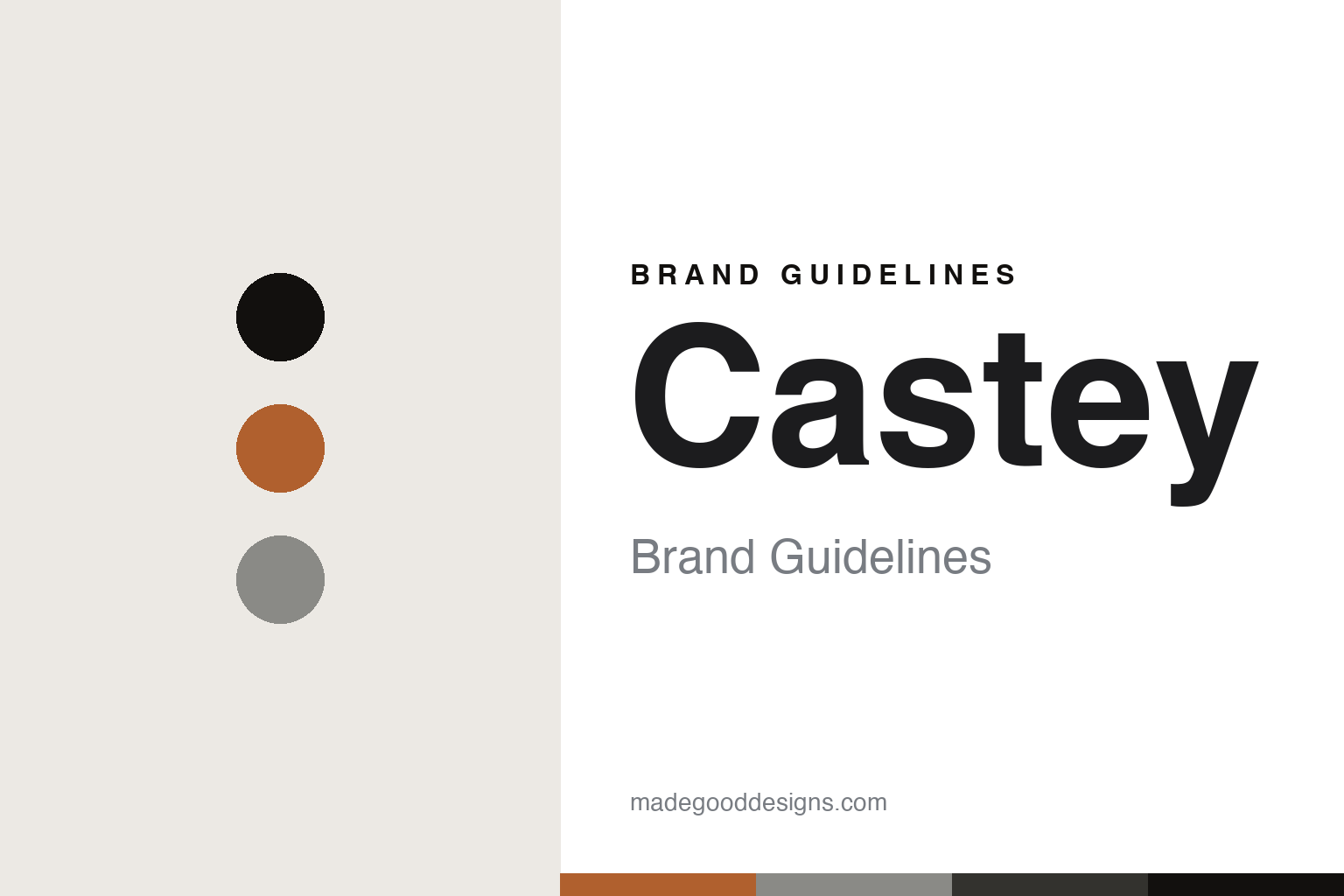
Castey Brand Guidelines
Cast in Catalonia.
Aa
Two constants: a foundry-orange palette and a foundry-sans register. Abstract homage — not a Castey pan, surface or wordmark.
Cast in Catalonia
Castey is a Catalan maker whose cast-aluminium cookware is cast in a family foundry in Spain.
Castey is a lesson in a real foundry behind the pan as the identity. A Catalan cookware maker, it casts its aluminium pans in the family’s own Spanish art foundry — an operation with deep casting roots — rather than sourcing them abroad. Its answer to how a durable pan is made is a caster’s one: pour cast aluminium in a genuine foundry, and finish it as cookware in Spain. A pan cast where they cast bronze.
Its identity is the heirloom pan, cast in Catalonia. Castey’s cast aluminium, its family foundry and its Spanish making are the work it is known for. A foundry, made a signature. A cookware brand born from a casting house.
(Honest notes, so the story stays precise. Castey is the cookware brand of a Catalan family art foundry, the Barberí foundry, historically known for bell-casting and bronze work; the cookware brand itself was founded in 1996 to scale the foundry’s casting into cookware and distribute it worldwide. So we credit the deep foundry heritage while being clear the cookware brand dates to 1996, not centuries — the old date belongs to the foundry, not the pans. Its cast-aluminium cookware is genuinely made in Spain, cast in the family foundry, with a PFOA-free nonstick and removable handles. We anchor the made-in-Spain claim to the cast-aluminium range and say Catalonia rather than pin a single town. Its designs and wordmark are its IP, described but never reproduced, and there is no official brand hex — these tones are an unofficial interpretation. This is design commentary and does not promote any product.)
Colour
Castey lives in a foundry-orange palette. Click a swatch to copy the hex.
Castey’s identity is molten, Catalan and made — a foundry orange, an ink, a cast aluminium, a char, and a chalk. The palette leans foundry orange and aluminium: the register of molten metal and a cast-grey pan. It signals casting and place over gloss. The honest caveat: with no published brand hex, these values are an original, unofficial interpretation, not first-party colours.
The lesson is a foundry-orange palette signals a cast-in-Spain identity. Castey’s world is a cast-aluminium, family-foundry, made-in-Catalonia object. For designers, it is a reminder that a molten orange and a cast-aluminium grey can carry a brand built on a real foundry — the orange of poured metal and the grey of a cast pan. Because these tones can fail as small text, keep type dark and let the colour live in the accents, palette and band. The takeaways: cast it yourself; keep the foundry at home; separate the foundry’s age from the brand’s; and treat any single hex as unofficial.
Typography
The register is a foundry sans — clean, grounded, industrial.
Castey’s identity carries a clean, grounded, industrial spirit — a cast object, not a delicate one. A foundry sans captures the mood: even, solid and workmanlike, the register of a casting house. Set in a foundry-orange palette, the foundry sans feels clean and grounded — exactly the personality Castey carries. It is industrial rather than fussy, mirroring a cast-aluminium pan. (Castey’s real designs and wordmark are things we describe but do not reproduce, and the exact typeface is not ours to use.) Because it is not ours to use, the honest description is “a foundry-sans spirit,” shown here in a stand-in. The type behaves like the maker: clean, grounded and industrial.
Aa
A foundry-sans spirit — clean and grounded. (Specimen set in Sora, a foundry-sans STAND-IN; NOT the Castey wordmark or any pan design.)
The heirloom-metal pan
Castey stands for casting its own pans in Spain.
Castey is a lesson in making a real foundry the identity. A foundry-orange palette, a foundry sans and a cast-aluminium pan make one thing — cookware cast in the family’s own Spanish foundry — the whole maker: molten, Catalan and made. The in-house casting is the differentiator. The differentiator is owning the process at the source: a cookware brand that grew out of a genuine art foundry and casts its own pans, rather than ordering them from someone else abroad.
Put to work, the identity is in-house casting as design. A maker building in this spirit would own the hardest step — the casting — keep it at home, and be honest that a deep foundry heritage is older than the cookware brand it now feeds. It would treat the foundry as proof of real capability. A brand learning from it would see that controlling the actual making, in a place with genuine metallurgical roots, is a durable identity, and that separating the foundry’s centuries from the brand’s decades keeps the story honest. A brand learning from it would notice that when the hardest, most capital-heavy step of production is already yours, you can promise things a badge-engineer cannot — consistency, repair, a pan cast the same way every time — and that this control is worth more than a cheaper outsourced margin. It would treat the foundry not as a marketing backdrop but as the real reason the cookware exists, and let the pour itself be the story. A pan that begins as molten metal in your own furnace carries a provenance a purchase order never will. It would say plainly its cast-aluminium pans are made in Spain. The lesson Castey teaches is that in-house casting can build a brand: the foundry gives it substance, and the honest history gives it credibility. The casting is the personality, and the cast pan is the proof.
For designers and brand-builders, Castey holds the in-house-casting pole in this round about the heirloom-metal pan: own the casting, keep it at home, and be honest about the heritage. The lessons: cast it yourself; keep the foundry home; separate foundry-age from brand-age; and never reproduce a protected design. It is also a reminder to stay precise: Castey is the cookware brand of a Catalan family foundry, its cast-aluminium pans cast in Spain, with the brand dating to 1996 — with the palette here an unofficial interpretation. Castey made the foundry the maker — proof that owning the casting can be the difference.
Explore & save
Keep Castey’s identity on hand — save it to a board in the Made Good inspiration library.
Castey identity set
Pin the foundry-orange palette and the foundry-sans register to your own board.