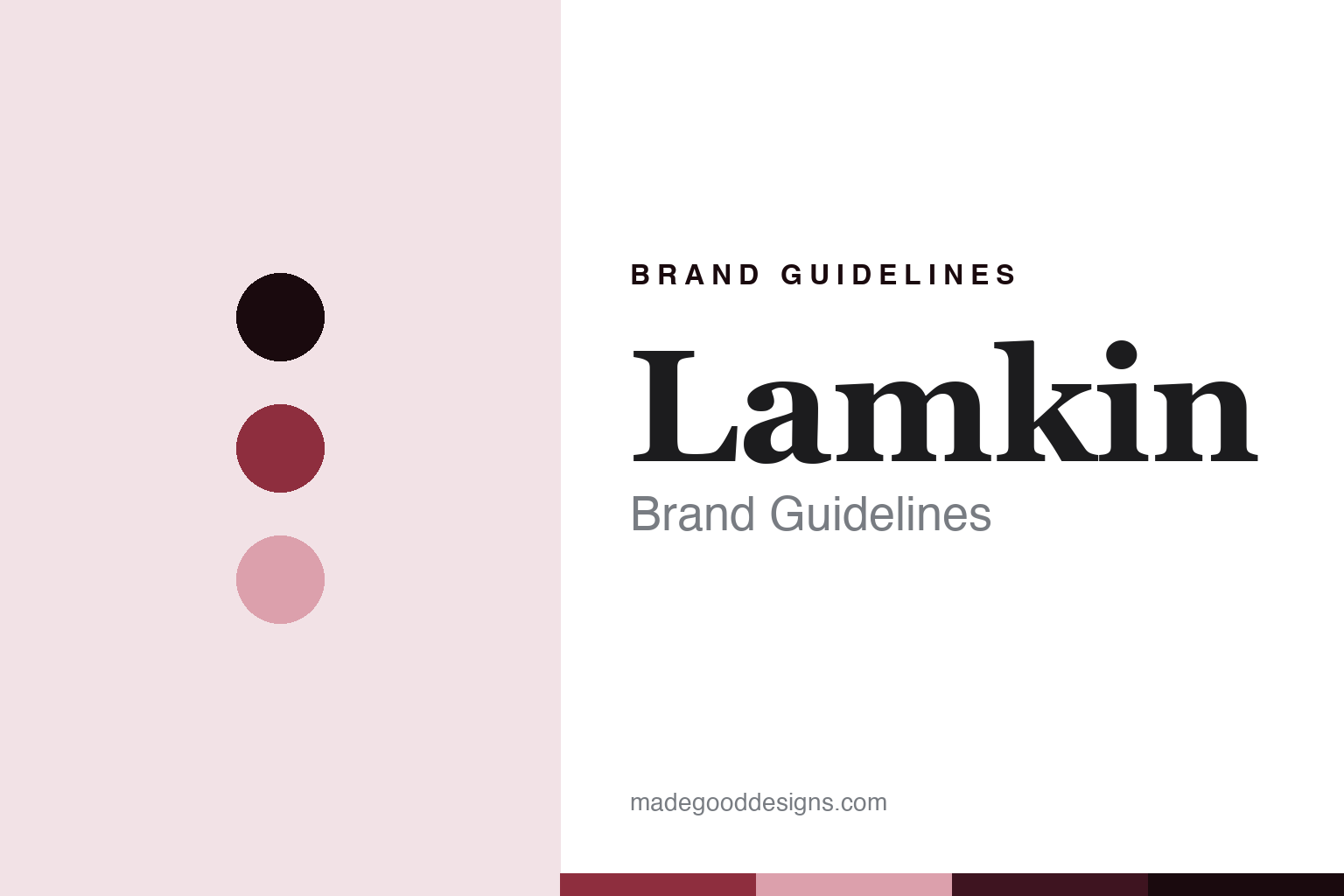
Lamkin Brand Guidelines
The 1925 grip house, sold at last.
Aa
Two constants: a heritage-wine palette and a heritage-grip-serif register. Abstract homage — not a Lamkin product or mark.
The 1925 grip house, sold at last
Lamkin is the 1925 Chicago grip house — family-run for three generations, sold to SuperStroke in 2024.
Lamkin opens the round as the heritage grip — a Chicago house from 1925 that made golf grips for almost a century as an independent family firm, until it was sold. Lamkin makes golf grips, and its answer to a round about the hidden component makers is a long family story with a recent ending: a 1925 founding, three generations, and a 2024 sale. A grip, with a century behind it.
Its identity is the 1925 grip house, sold at last. Lamkin’s family heritage, its reported North-American making and its new SuperStroke ownership are the story here. A grip, from Chicago. The 1925 grip house, sold at last.
(Honest notes, so the story stays precise. Lamkin — at lamkingrips.com — makes golf grips, with the Crossline, launched in 1995, plus Sonar, UTx, ST and Wrap-Tech lines, and it was, historically, the first maker of leather golf grips. It was founded in 1925 by Elver B. Lamkin in Chicago, and was family-run across three generations, with Bob Lamkin, the founder’s grandson, as president and chief executive from 2001; it marked its centenary in 2025. On ownership — the key correction — Lamkin is no longer independent or family-owned: it was acquired by SuperStroke in May 2024, ending about ninety-nine years of Lamkin family ownership, and SuperStroke is itself backed by DAOL Private Equity, a Korean firm, so we frame the family ownership in the past tense. On where the grips are made, the picture is reported rather than documented — historically its own North-American operations in San Diego and Tijuana, Mexico, with some Asian production — so we do not claim a clean made-in-USA. Its marks — Lamkin, Crossline — are IP we describe but do not reproduce, and there is no official brand hex; these tones are an unofficial interpretation. This is design commentary and does not promote any product.)
Colour
Lamkin lives in a heritage wine. Click a swatch to copy the hex.
Lamkin’s identity is heritage, family and lately sold — a heritage wine, an ink, a rose, a deep wine, and a paper. The palette leans heritage wine and rose: a warm, old-world register that nods to a century-old family house rather than a loud modern brand. It signals a heritage grip maker with a recent new owner. The honest caveat: with no published brand hex, these values are an original, unofficial interpretation, not first-party colours.
The lesson is a heritage wine signals an old, family identity. Lamkin’s world is a heritage, lately-sold object. For designers, it is a reminder that a warm wine and a soft rose can carry a component brand — the tone of a century-old house. Because these tones can fail as small text, keep type dark and let the colour live in the accents, palette and band. The takeaways: value a real heritage; tell a family story straight; be honest when it has been sold; and treat any single hex as unofficial.
Typography
The register is a heritage-grip serif — classic, warm, made.
Lamkin’s identity carries a classic, warm, made spirit — a century-old family house, not a fashion. A heritage-grip serif captures the mood: traditional, considered and a little nostalgic, the register of a grip maker that ran as a family for three generations. Set in a heritage-wine palette, the heritage-grip serif feels classic and warm — exactly the personality Lamkin carries. It is heritage rather than a logo, mirroring a rubber grip. (Lamkin’s real wordmark, and Crossline, are things we describe but do not reproduce, and the exact typeface is not ours to use.) Because it is not ours to use, the honest description is “a heritage-grip-serif spirit,” shown here in a stand-in. The type behaves like the brand: classic, warm and made.
Aa
A heritage-grip-serif spirit — classic and warm. (Specimen set in Cormorant Garamond, a heritage-serif STAND-IN; NOT the Lamkin logo.)
The shaft & grip makers
Lamkin stands for the 1925 grip house, sold at last.
Lamkin opens the round as the heritage grip. A heritage-wine palette, a heritage-grip serif and a century-old grip make one thing — the 1925 grip house, sold at last — the whole identity: heritage, family and lately sold. The 1925 founding is the differentiator, and the 2024 sale is the meaning. The point is a grip house that ran as a family for almost a hundred years and then, with no fourth generation to take it, sold to a rival.
Put to work, the identity is a family story told straight, as design. A maker in this spirit would honour a real heritage, tell the family story plainly, and be honest that it has been sold. A reader in this spirit would keep the facts right: it was founded in 1925 by Elver B. Lamkin in Chicago; it was family-run for three generations, with Bob Lamkin chief executive from 2001; it marked its centenary in 2025; and it was acquired by SuperStroke, itself DAOL Private Equity-backed, in May 2024. Lamkin opens the round’s owner thread at the private-equity end — and, in a neat cross-tie, its new parent SuperStroke makes the oversized putter grips, so the two are now one family, and both of the biggest grip names, Lamkin and Golf Pride, are now owned by larger companies. The honest editorial moves are to date the founding to 1925, to frame the family ownership in the past tense, to state the SuperStroke and DAOL chain, and to keep the living family to public facts. The lesson Lamkin teaches is that a heritage can be real and still change hands: the family ran it for a century, and the honest version admits the century ended in a sale.
For designers and brand-builders, Lamkin opens the shaft & grip makers: honour a heritage — and be honest when it is sold. The lessons: value a genuine family story; tell it in the past tense once it ends; name the new owner plainly; keep a living family to public facts; and never reproduce a logo. It is also a reminder to stay precise: Lamkin is the 1925 Chicago grip house, family-run for three generations, sold to SuperStroke in 2024 — with the palette here an unofficial interpretation. Read that way, Lamkin is less a grip than a family story: a century of Chicago grip-making that ended, honestly, in a sale to a rival. The lesson for a brand is that a real heritage keeps its worth even after a sale, and telling the sale straight keeps the heritage credible. Lamkin made the-1925-grip-house-sold-at-last the identity — proof that a family name can be a brand, even once the family has gone.
Explore & save
Keep Lamkin’s identity on hand — save it to a board in the Made Good inspiration library.
Lamkin identity set
Pin the heritage-wine palette and the heritage-grip-serif register to your own board.