Vital Farms Brand Guidelines
An Austin egg brand, a packing plant in the Ozarks and a carton drawn like a chalkboard.
Aa
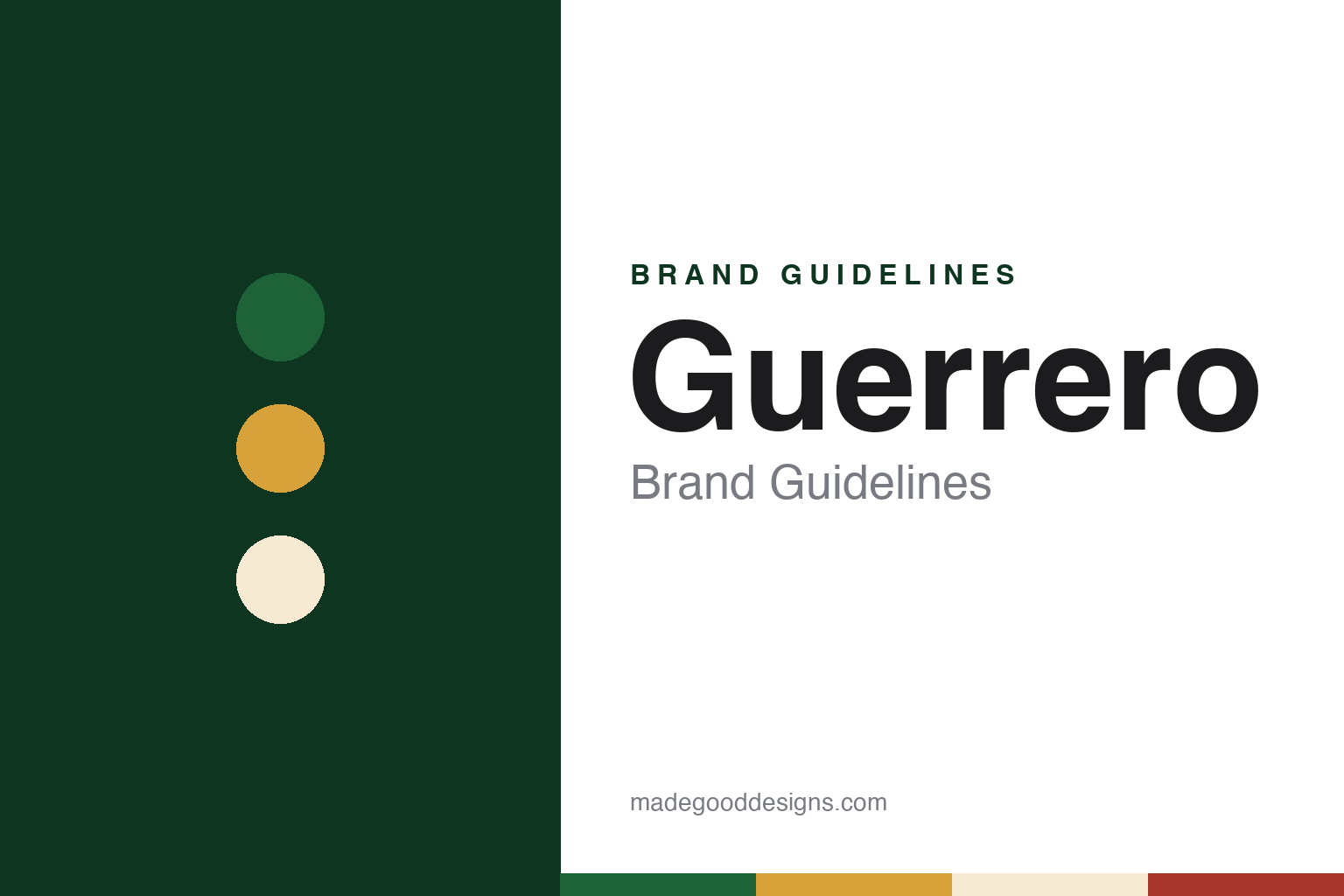
Two constants: a pasture green, yolk yellow and shell cream palette and a hand-lettered chalk register. Abstract homage — not a Vital Farms product or mark; no carton, illustration or logo is reproduced.
A farm in Austin and a plant in the Ozarks
Two founders in Texas, a network of growers and a packing plant called Egg Central Station.
Vital Farms is an American egg brand based in Austin, Texas, whose shares trade on the Nasdaq under the ticker VITL. Food Dive reported in November 2025 that the business was founded in 2007 by Matt O’Hayer and Catherine Stewart on a plot of land in Austin. Their aim, as the publication put it, was to show that eggs could be produced at a commercial scale using humanely treated animals. An earlier Food Dive report, published in August 2020, described the beginning as a small flock of hens on land in Austin. The company’s own press boilerplate, in a release of May 2026, says Vital Farms “started on a single farm in Austin, Texas, in 2007.”
The business that grew from that farm relies on other farmers. Food Tank, in an August 2018 report by Lisa Elaine Held, visited two of them, the brothers Amos and Kenneth Kropf of Everton, Missouri, who open their barn doors each morning so that their hens can go out onto pasture. When a truck collects the Kropfs’ eggs, the article said, it takes them to a processing plant the company calls “Egg Central Station”, where they are washed, dried, sorted by weight and packed under the Vital Farms name. The same piece quoted Dan Brooks, then the company’s brand communications director, on how shoppers read the words printed on egg cartons and on why, in his view, people want to know where their food comes from.
Egg Central Station stands in Springfield, Missouri. The Springfield Business Journal reported in November 2025 that Vital Farms opened the plant in 2017 and had enlarged it by 2022. In an interview with the paper, president and chief executive Russell Diez-Canseco described the route an egg takes. It travels from a family farm, many of them in Missouri, to a cold-storage building run by the Erlen Group’s Cold Zone, then to Egg Central Station to be washed, inspected and packed, and finally back to Cold Zone for storage and distribution to retailers. “Just about all those eggs get packed in Springfield,” he told the paper.
The eggs reach shoppers under the company’s own label. Food Dive’s November 2025 report, drawing on an interview with chief financial officer Thilo Wrede, said Vital Farms does not sell its eggs to wholesalers; instead it distributes them to retailers in its own branding and packaging. The same article said the company had entered the butter category in 2015, and that it was planning a second egg washing and packing facility for 2027. It named Happy Egg and Pete & Gerry’s as the pasture-raised brands Vital Farms regards as its competitors.
Colour
A public benefit corporation on the Nasdaq, heirloom blue eggs and a step back from butter.
Vital Farms has no parent food group; it is owned by its shareholders. Food Dive reported on 3 August 2020 that trading in the company’s shares had begun on the Nasdaq on the previous Friday, 31 July 2020, under the ticker VITL. Speaking to the publication about an hour after trading opened, Diez-Canseco said going public was central to what he called the company’s commitment to “conscious capitalism”. Becoming a public company, he said, gave Vital Farms access to capital for growth “while also giving us the freedom to keep doing and being the change we want to see in the food system.”
The same report described Vital Farms as a public benefit corporation, which Food Dive explained as a company whose commitment to the wider community is written into its charter. The company still describes itself that way; its press release of May 2026 calls it a Delaware public benefit corporation. In the 2020 interview Diez-Canseco said such commitments were ways of showing that the company stands behind its mission.
The product range has widened beyond the standard dozen. Food Business News reported on 6 April 2022 that Vital Farms had introduced True Blues, heirloom eggs with blue shells laid by heirloom breeds that include Azur hens. The eggs went on sale at selected Whole Foods Market stores in southern California, southern Nevada and Arizona, and in the Northeast. Heather Mace, then director of brand management, told the paper the company hoped the “festive pastel blue eggs” would bring some novelty to a kitchen staple, whether hard-boiled for Easter or used on a weekday morning.
Later that year came a line with a carefully chosen name. Food Dive reported on 26 August 2022 that Vital Farms had launched Restorative eggs, working with the consulting company Understanding Ag to move a group of supplying farms to soil-focused practices. The company said it had picked the word Restorative rather than Regenerative because few third-party certification options existed for egg farmers who follow regenerative practices without using mobile coops. According to the same report, the cartons for the line were home-compostable and partly made with fibres from ryegrass, a cover crop.
Not every category stayed. In a press release of 12 May 2026, published by Perishable News, Vital Farms said it had decided to wind down its butter business by the end of fiscal 2026. Diez-Canseco said in the release that the decision followed a review and was driven by greater complexity in the company’s international supply chain and more volatile economics, and that leaving butter would let Vital Farms concentrate on its egg categories. The release continued to describe the business as one that started on a single farm in Austin.
Typography
Design and documentation.
Eggs and fluid milk are among the plainest things in a grocery basket, and that plainness shapes how their packaging works. An egg carton has to protect a fragile product, stack in a chilled case and still tell a shopper at a glance what kind of eggs sit inside, so its lid, its colour and the words printed on it do most of the brand’s work. A milk jug or carton has a similar job: it has to be recognised quickly on a crowded shelf, often by a cap colour or a band of type, before anyone reads the small print.
Because the products inside can look alike from one name to the next, the brands in this group lean on labels, logos, carton shapes and advertising to set themselves apart. Some of the names belong to farmer-owned cooperatives, some to family companies and some to much larger food groups, and the name on the front does not always say which.
Each guide separates what independent sources record from what the company says about itself — its founding story, its owners over time, where its eggs or milk are packed and how its packaging has changed — and marks plainly what rests only on the company’s own word.
Aa
A loose, hand-lettered sans — the chalkboard-menu register of a farm-stand egg carton. (Specimen set in Patrick Hand, a handwritten STAND-IN; NOT the Vital Farms logo.)
A carton that talks back
Chalkboard graphics, a hen with a paper wing, a newsletter in every box and a code that leads to the farm.
The Vital Farms carton has been redesigned in recent years. Packaging World reported in August 2021, in an article by Anne Marie Mohan, that the company had moved its pasture-raised dozen into a new carton developed with the Denmark-based packaging maker Hartmann. Before the change, the article said, Vital Farms used Hartmann’s stock Hybrid package, which pairs a moulded-fibre base with a paperboard lid. Hartmann told the magazine that work on a customised version began in August 2019. The result kept the recycled moulded-pulp base and switched the lid to recycled paperboard.
The redesign also changed how much room the brand had to speak. According to Packaging World, the new lid has a longer front flap, giving more billboard space on the shelf, and it is decorated with hand-crafted, chalkboard-style graphics printed by offset in four colours. One detail is playful: a tab from the carton base pokes through an opening in the lid where a hen is illustrated, giving the bird a three-dimensional wing. Heather Fitzpatrick, then a senior brand manager, told the magazine that one of the hardest parts of the project was working with the darker fibres of the recycled board while making sure the brand colours were not compromised.
Inside the carton there is something to read. Packaging World said that since 2010 the company has slipped a tiny newsletter, The Vital Times, into its cartons during packing. Each issue carries short stories, tips and hen cartoons, along with a “Bird of the Month”; the magazine quoted an issue that featured a hen called Mellow Macy. Fitzpatrick said the company saw the newsletter as a way to tell shoppers about how its hens are kept and to “spark some joy” before they cook their eggs, and that some fans collect every issue.
The carton also points outward, to the farms. Packaging World reported that in January 2020 Vital Farms launched a Transparency Initiative, printing on every carton a code that shoppers can enter on the company’s website to watch 360-degree video of the farm where the eggs in that carton were laid. Becca Simmonds, then associate brand manager and the project’s traceability lead, described it to the magazine as a way for people to see the hens on pasture.
The voice on the box is part of the same identity. The Food Tank report of 2018 found the company’s brand communications director, Dan Brooks, talking to visitors on a Missouri farm about the meaning of terms such as cage-free and pasture-raised, and the Springfield Business Journal quoted Diez-Canseco in 2025 describing a brand that wants to be transparent about how it operates.
For a design guide, Vital Farms shows how an egg carton can carry a whole personality, with hand-drawn chalk lettering, a hen with a paper wing, a folded newsletter and a code that leads back to a particular farm. Compare it with Pete & Gerry’s, a pasture-raised rival named in the trade press, and Eggland’s Best, another American egg brand. For this guide we use pasture green, yolk yellow, shell cream and heirloom blue with a hand-lettered sans, an unofficial interpretation; no product or logo is reproduced.
Explore & save
Keep Vital Farms’s identity on hand — save it to a board in the Made Good inspiration library.
Vital Farms identity set
Pin the Vital Farms pasture green, yolk yellow and shell cream palette and the hand-lettered chalk register to your own board.