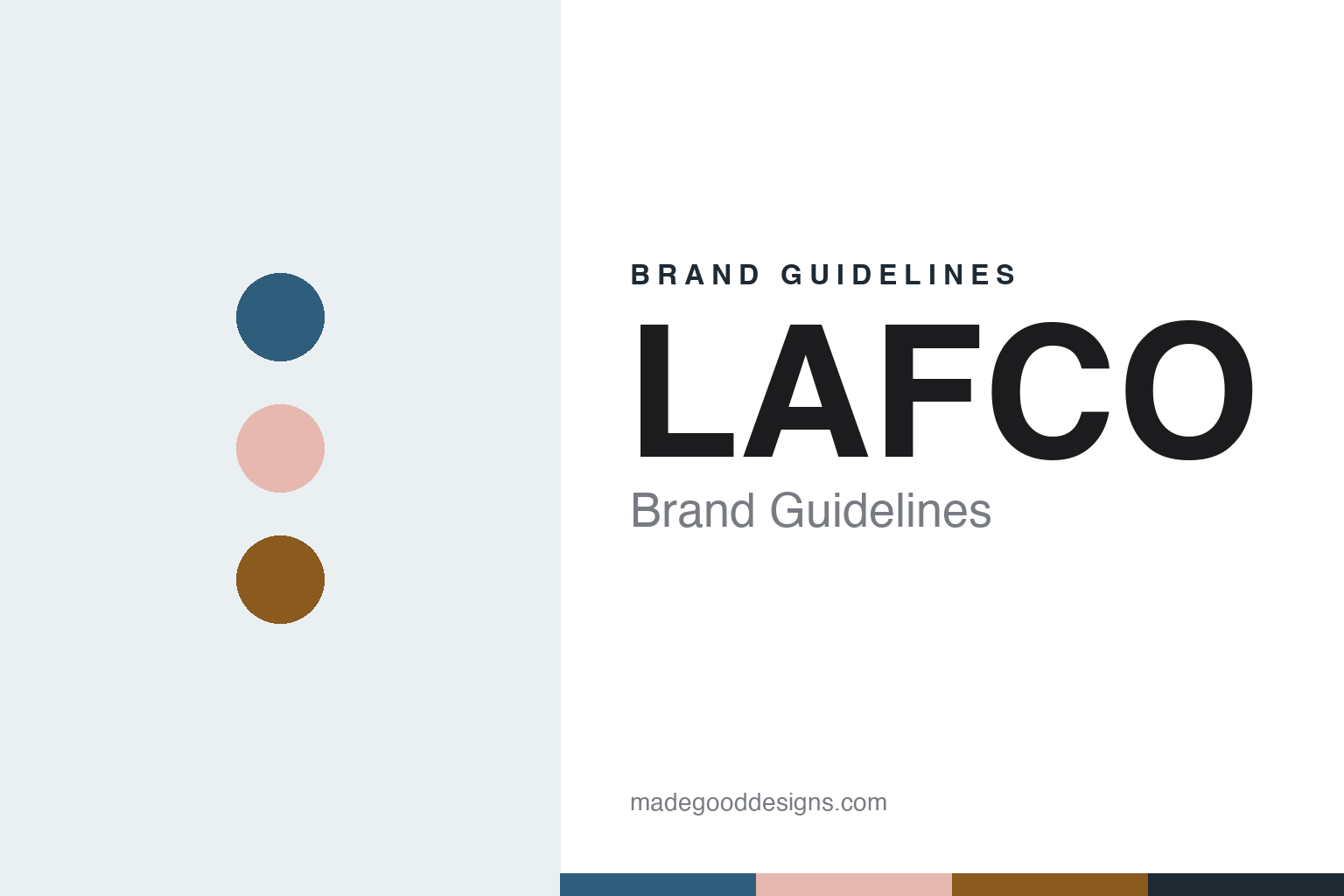
LAFCO Brand Guidelines
The New York fragrance house that left its name off the glass.
Aa
Two constants: a coloured-glass palette of marine blue, blush and amber and an apothecary serif register. Abstract homage — not a LAFCO product or mark; no vessel, label or logo is reproduced.
Luxury Articles & Fragrance
An importer of European apothecary brands.
LAFCO is an acronym. The company’s name stands for Luxury Articles & Fragrance Co., and it was founded in New York City in 1992 by Jon Bresler, according to a November 2025 press release issued with the e-commerce firm Listrak, which names Bresler as LAFCO’s founder and president. The wholesaler Ivystone, in a 2022 profile, gives the same year and the same expansion of the name.
Bresler did not start out in fragrance. In a 2023 interview with Cool Hunting, he described a path that led him from law into natural skincare: a Swiss pharmaceutical company he had freelanced for took him to Zurich, and when he came back to the United States he decided to start a company importing natural skincare products from Europe. Bluemercury, the beauty retailer, dates that year in Switzerland to 1989, and Ivystone says Bresler first ran the business from his apartment.
For its first years LAFCO was an importer and distributor rather than a maker. A 2020 profile in the magazine Man in Town, written in the company’s own voice, says Bresler launched European brands in the United States, among them Santa Maria Novella, the Florentine pharmacy, Claus Porto and Korres. According to Cool Hunting, he came across a defunct printing works and old soap wrappers at a historic Portuguese soap maker and turned them into a line called Claus Porto in 1993.
Cool Hunting also reports that in 2002 the owners of Le Sirenuse, the hotel in Positano, contacted Bresler to find a distributor for a fragrance marking the hotel’s fiftieth anniversary.
Colour
Room by room, in coloured glass.
Sources differ on when LAFCO began making its own products. Man in Town, in 2020, says Bresler launched his own home-fragrance line, LAFCO New York, in 2010. In the 2023 Cool Hunting interview Bresler himself says that “from 2007 to 2015” the company created LAFCO collections built around home décor and colour; we give both dates. The same interview says that in 2015 LAFCO made it the company’s focus, moving from a portfolio of brands to a single one.
The organising idea is the room. The House and Home candle collection, as retailers describe it, gives each scent a room in a home and is designed to suit the ambiance and decor of that room; one retailer’s listing describes the candles as poured into a “colored, hand-blown vessel.” Man in Town puts the concept in the company’s words as creating “a full ambiance with the elements of mood, scent, and color.” The product names carry the idea: one retailer lists a candle as Feu de Bois (Ski House), pairing a scent with a place, and offers the same pairing in several formats, from classic, signature, three-wick and votive candles to diffusers and soaps.
Ivystone’s 2022 profile adds that Bresler wanted customers to be able to layer scents and build their own combinations, and so favoured developed aromas over heavy ones.
The glass is the brand’s most visible feature. Cool Hunting reports that Bresler decided to forgo visible branding on his candles, leaving the hand-blown glass and the scent to carry the product; Ivystone adds that the unlabelled vessels can be reused as glassware or storage. For the Absolute Collection, the 2023 interview says, the glass comes from a factory in the Czech Republic that has existed since 1712, an old Bohemian glassmaker. LAFCO says in its 2020 profile that its candles are “hand-poured here in the USA,” and that its hand-care products are made in Italy and Portugal; we give those as the company’s own claims.
Ivystone says the brand’s designs draw on traditional European apothecaries and old artisanal packaging.
Typography
The candle as an object.
The seven brands in this group all make scented candles and home fragrance: Yankee Candle, NEOM, Homesick, Paddywax, Voluspa, NEST New York and LAFCO. Candle brands in general sit at many different points in the trade, from founder-led companies that still pour under their original name to labels that now belong to much larger consumer-goods groups, and a single brand can be sold everywhere from a supermarket aisle to a department-store counter.
A candle brand’s identity is usually carried less by the wax than by the vessel, the label and the name given to each scent, because the company behind the name may have changed hands, moved its production or grown far beyond the room where it started. A glass jar, a tin or a coloured tumbler often does the work a logo does elsewhere, and the names of the fragrances — places, seasons, memories — become part of the identity in their own right.
That makes the questions behind each name worth asking plainly: who started it, who owns it now, and where its candles are actually poured and its vessels made. Each guide separates what independent sources record from what the company says about itself — its founding story, its owners over time, where its products are made and how its packaging has changed — and marks plainly what rests only on the company’s own word.
Aa
An apothecary serif — the register of a brand that grew out of importing European pharmacies. (Specimen set in Cormorant Garamond, a serif STAND-IN; NOT the LAFCO logo.)
LAFCO
Colour as the label.
With the name kept off the glass, colour does much of the identifying work, and LAFCO’s collaborations show it. For the beauty retailer Bluemercury, the company says in Bluemercury’s founder profile, a fragrance created for Bluemercury’s spas was shown in hand-blown vessels in the retailer’s signature azure, and grew into a full home-fragrance and body-care collection. For its 30th anniversary in 2022, Ivystone reported, LAFCO released a new signature scent, Paradiso Fig, inspired by the figs and bread of Italy.
The most recent example is a hotel. In November 2024, according to the 2025 Listrak release, LAFCO launched a Pink Paradise candle with The Colony Hotel in Palm Beach, in a “vibrant pink hand blown glass vessel” with packaging designed to reflect the hotel’s look; the release says the first edition sold out, and in November 2025 the line returned with a three-wick candle and a diffuser. The same release still names Jon Bresler as LAFCO’s founder and president.
For a design guide, LAFCO shows how a vessel’s colour and glass can stand in for a label. Compare NEST New York, another New York home-fragrance name, and Voluspa. For this guide we use marine blue, blush and amber with a serif, an unofficial interpretation; no product or logo is reproduced.
Explore & save
Keep LAFCO’s identity on hand — save it to a board in the Made Good inspiration library.
LAFCO identity set
Pin the LAFCO marine blue, blush and amber palette and the apothecary serif register to your own board.


