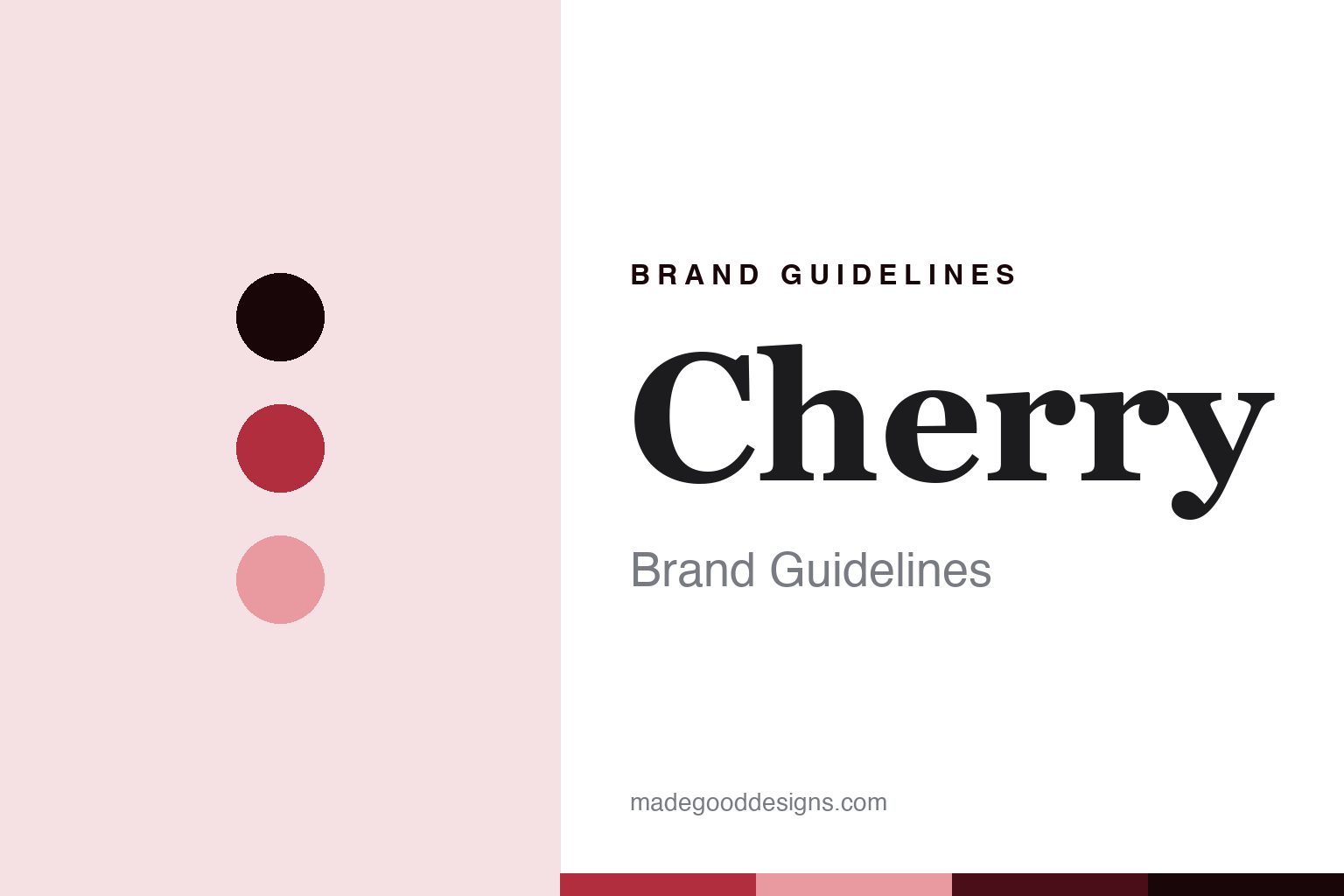
Cherry Brand Guidelines
The reference switch, MX.
Aa
Two constants: a reference-red palette and a reference-serif register. Abstract homage — not a Cherry product or mark.
The reference switch, MX
Cherry is the maker of the Cherry MX switch — the industry-standard cross-stem that everything else copies.
Cherry brings the round its reference — the maker whose Cherry MX switch, with its distinctive cross-shaped stem, became the industry standard that every other mechanical switch is measured against and built to fit. Cherry makes the MX switch, and its answer to a round about the switch and cap makers is the origin point: the switch whose stem shape and colour code the whole hobby inherited. A switch, that set the standard.
Its identity is the reference switch, MX. Cherry’s MX switch, its German engineering heritage and its industry-standard cross-stem are the story here. A switch, the reference. The reference switch, MX.
(Honest notes, so the story stays precise. Cherry — the keyboard-and-switch maker behind Cherry MX — makes mechanical keyboard switches, most importantly the MX line, whose cross-shaped “+” stem is the de-facto industry standard: the colour-coded Cherry MX Red, Brown, Blue and the rest defined the vocabulary, and “Cherry-MX-compatible” is how the rest of the market describes its own stems. The company was founded in 1953 by Walter Cherry in Highland Park, Illinois, and later became German, headquartered today in Auerbach in der Oberpfalz, Bavaria, with the MX switch arriving around the mid-1980s, so we date it circa 1983 to 1985. Two things must be said plainly, and this is where the round’s themes bite. On where it is made, Cherry is no longer simply “made in Germany”: around 2025 it moved switch-mechanism production to partners in China and Slovakia, keeping development, logistics and service in Auerbach, so we frame Cherry as German-engineered heritage rather than German-made today. On ownership, Cherry SE remains an independent, publicly listed company — Frankfurt ticker C3RY — but it came through serious financial trouble in 2022 to 2024, with profit warnings and a collapsed share price, and has been restructuring and recapitalising, including a 2026 rights issue, so we say troubled, restructured and recovering — not bankrupt, acquired or delisted. Its marks — Cherry, Cherry MX — are IP we describe but do not reproduce, and there is no official brand hex; these tones are an unofficial interpretation. This is design commentary and does not promote any product.)
Colour
Cherry lives in a reference red. Click a swatch to copy the hex.
Cherry’s identity is foundational, German-engineered and recovering — a reference red, an ink, a blush, a deep red, and a paper. The palette leans reference red and blush: a confident, engineered register that nods to a heritage German maker and a switch that set the standard rather than a loud palette. It signals the origin point of the hobby. The honest caveat: with no published brand hex, these values are an original, unofficial interpretation, not first-party colours — and no colour code here should be read as Cherry’s own switch-colour system.
The lesson is a reference red signals a foundational, engineered identity. Cherry’s world is a foundational, engineered object. For designers, it is a reminder that a confident red and a soft blush can carry a component brand — the tone of a standard-setter. Because these tones can fail as small text, keep type dark and let the colour live in the accents, palette and band. The takeaways: set a standard others must fit; carry an engineering heritage honestly; be candid about a hard patch; and treat any single hex as unofficial.
Typography
The register is a reference serif — foundational, engineered, classic.
Cherry’s identity carries a foundational, engineered, classic spirit — a heritage maker, not a fashion. A reference serif captures the mood: authoritative, precise and a little classic, the register of the switch that set the standard. Set in a reference-red palette, the reference serif feels foundational and engineered — exactly the personality Cherry carries. It is a standard rather than a logo, mirroring switch-housing plastic and machined metal. (Cherry’s real wordmark is a thing we describe but do not reproduce, and the exact typeface is not ours to use.) Because it is not ours to use, the honest description is “a reference-serif spirit,” shown here in a stand-in. The type behaves like the switch: foundational, engineered and classic.
Aa
A reference-serif spirit — foundational and engineered. (Specimen set in Cormorant Garamond, a reference-serif STAND-IN; NOT the Cherry logo.)
The switch & cap makers
Cherry stands for the reference switch, MX.
Cherry brings the round its reference. A reference-red palette, a reference serif and a standard-setting switch make one thing — the reference switch, MX — the whole identity: foundational, German-engineered and recovering. The MX cross-stem is the differentiator, and the standard it set is the meaning. The point is the maker whose switch every other mechanical switch is built to fit, and whose colour-coded MX line gave the whole hobby its vocabulary.
Put to work, the identity is a foundational standard told straight, as design. A maker in this spirit would set a standard others must fit, carry its engineering heritage honestly, and be candid about a hard patch. A reader in this spirit would keep the facts right: Cherry was founded in 1953 by Walter Cherry in Illinois and became German, headquartered in Auerbach, Bavaria, with the MX switch arriving around 1983 to 1985; it is no longer simply made in Germany, having moved switch-mechanism production to China and Slovakia around 2025 while keeping engineering in Auerbach; and Cherry SE is a listed company (C3RY) that was financially troubled in 2022 to 2024 and is now restructured and recovering, not bankrupt or acquired. Cherry anchors the round’s technology thread as the reference — Gateron’s switches are MX-compatible, and Ducky builds keyboards on Cherry MX — and its where-made thread sits at the offshore end with Gateron, a pointed contrast to Topre, GMK, HHKB and Signature Plastics making at home. A neat cross-tie: GMK moulds its keycaps on Cherry’s own acquired doubleshot moulds, though GMK is a separate company. The honest editorial moves are to date MX to circa 1983 to 1985, to say German-engineered not German-made today, to state the listed-but-recovering ownership plainly, and to keep GMK distinct from Cherry. The lesson Cherry teaches is that setting a standard can be a whole identity, and honesty about the offshored making and the financial recovery keeps the heritage credible.
For designers and brand-builders, Cherry continues the switch & cap makers: set the standard — and tell the hard parts straight. The lessons: build the reference others must fit; hold an engineering heritage even as manufacturing moves; be candid about a downturn rather than hide it; separate your brand from those who use your tooling; and never reproduce a logo. It is also a reminder to stay precise: Cherry is the maker of the Cherry MX switch, the industry-standard cross-stem, German-engineered but no longer simply German-made, and a listed company recovering from a hard patch — with the palette here an unofficial interpretation. Read that way, Cherry is less a switch than a standard: the cross-stem the whole hobby is built to fit. The lesson for a brand is that a standard and an honest account of its manufacturing and finances reinforce each other, and candour keeps the heritage earned. Cherry made the-reference-switch-MX the identity — proof that setting the standard can define a maker.
Explore & save
Keep Cherry’s identity on hand — save it to a board in the Made Good inspiration library.
Cherry identity set
Pin the reference-red palette and the reference-serif register to your own board.