Sublime Brand Guidelines
Sirdar’s natural-fibre yarn label, launched in 2006.
Aa
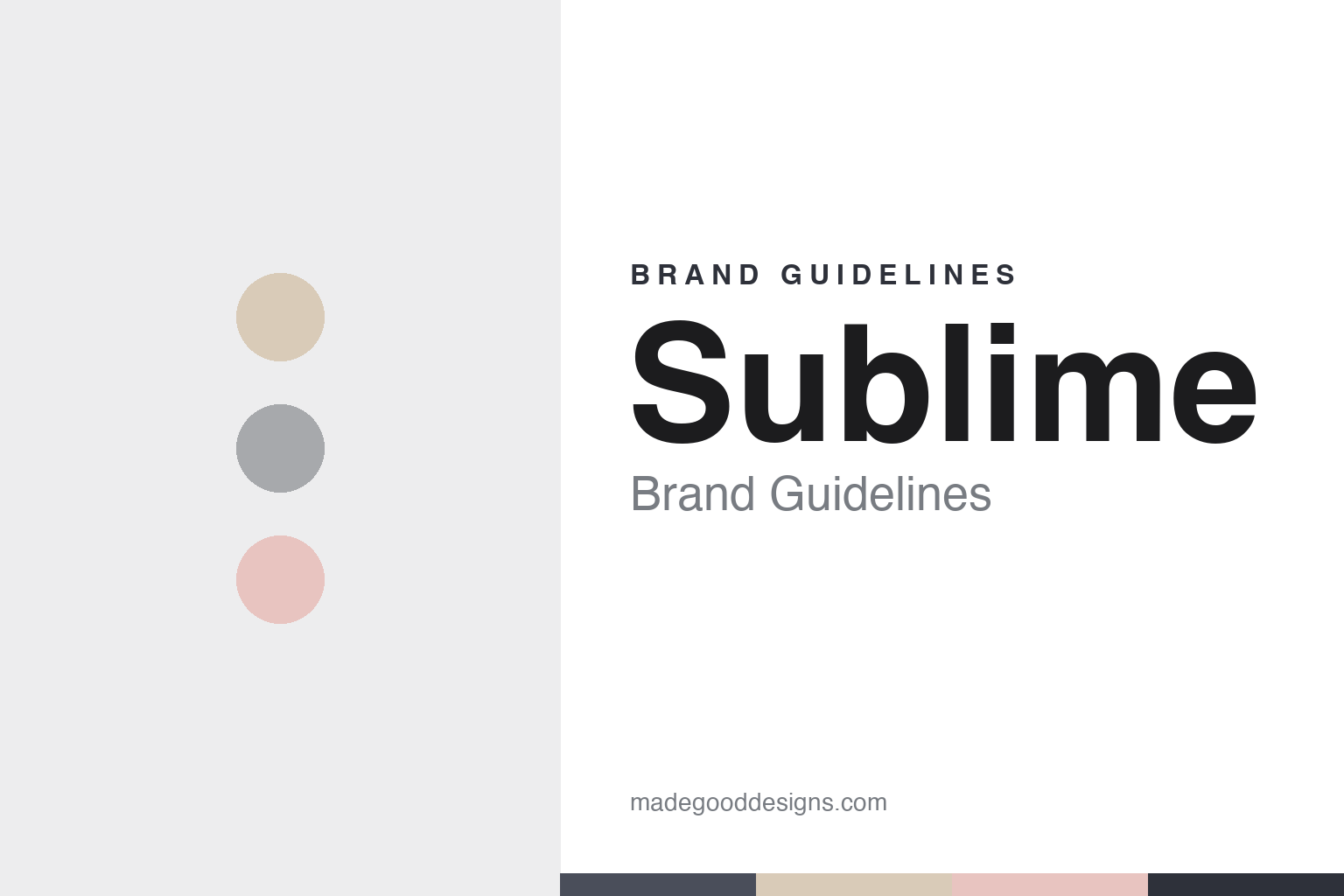
Two constants: an oatmeal, dove grey and blush palette and a soft serif register. Abstract homage — not a Sublime or Sirdar product or mark; no ball band, logo or pattern is reproduced.
Launched in 2006
A natural-fibre label from a Wakefield spinner.
Sublime is a hand-knitting yarn brand created by Sirdar, the yarn company based in Wakefield, West Yorkshire. Its own website, in the versions archived by the Internet Archive between 2014 and 2020, said the brand was “launched in 2006” and called it “part of Sirdar Spinning Ltd, a company with over 130 years experience in hand knitting yarns and designs.” The archive also holds placeholder pages for the sublimeyarns.com address from 2007 and 2008, before the fuller site appears.
The 130-year figure is Sirdar’s own history rather than Sublime’s. Sirdar says it began in 1880, when the brothers Tom and Henry Harrap set up a spinning business in Wakefield, and the Sirdar name was being used for hand-knitting yarns by the 1930s. Sirdar already sold everyday family yarns and the Snuggly baby range; Sublime was pitched as a separate, luxury label, with its own name, its own pattern books and leaflets, and its own website.
The website’s pitch was built on three promises, repeated as a slogan: “The most exquisite, natural yarns. The most beautiful, soft colours. The most inspirational designs.” It said Sublime had been “hailed as the new face of hand knitting” and was “now established as a global brand.” Those are the company’s words, and we found no independent account of the launch to set beside them.
The brand’s design work was presented as fashion-led. The company said its design team researched “future fashion trends and colours in Italy” before each season’s collections, and described the designs as hand knits “with a twist” — new stitch combinations and unusual garment shapes — for knitters who wanted natural fibres. Baby knitting was a large part of the offer: the site called the baby collections “simply divine” and pitched them as gifts for newborns.
Colour
Merino, silk and cashmere — spun by others.
Sublime’s range was defined by fibre rather than by novelty. Its “Luxurious Quality” page, archived in 2015, named extra fine merino wool, silk and cashmere as the core materials, and identified three classic yarns: baby cashmere merino silk dk, extra fine merino wool dk and a baby cashmere merino 4 ply. The yarns were mostly easy care and machine washable on a delicate wool cycle, the company said, and the baby yarns were spun to be as soft as possible next to a baby’s skin.
The same page is plain about where the yarn came from. “Sublime yarns are made for us by some of the world’s best spinners,” it said, adding that the company checked that the fibres were of the highest quality, the yarn consistent and the colours right. In other words, Sirdar presented itself as the brand owner and quality controller, not as the mill that spun Sublime. The site did not say which spinners were used or in which countries, and we have not found a source that does, so we do not name a country of manufacture.
The range changed over time. In 2014 the website listed yarns including an Egyptian cotton dk, an extra fine merino lace and two tweeds, one in aran weight. By early 2020 it had added printed versions of the baby yarn, a superfine alpaca dk, an extra fine merino worsted and a run of newer named yarns, among them Evie and Isla. It also had a page for international wholesalers by then, consistent with its claim to be a global brand.
Colour was a selling point in its own right. The company described refined neutrals and classic shades alongside “understated, softly blended mixtures” and fashion colours that were either “sophisticated and subtle” or “bold and eye catching.” Pattern support came through printed books and single leaflets, sorted on the website by baby, child and adult sizes and by garment type.
Typography
Craft yarn and its owners.
The seven brands in this group all make yarn for hand knitting and crochet, but they sit at opposite ends of the trade. Patons, Bernat, Caron and Lily Sugar’n Cream are the kind of names found on the shelves of big craft chains, while Sublime, Louisa Harding and Woolfolk present themselves as designer and premium labels, built around a name, a house style or a single fibre.
Craft-store yarn is a volume business, and its best-known names have often passed between larger groups. A brand can change owner, factory and even country of manufacture while the name on the ball band stays the same, so the label a knitter recognises says little about who makes the yarn today. Designer labels work the other way round: the name of a person, a fibre or a house style is the product, and the yarn is often spun by mills the brand does not own and may not name.
Each guide separates what independent sources record from what the company says about itself — who founded it, who owns it now and where its yarn is made — and marks plainly what rests only on the company’s own word.
Aa
A soft serif — the register of a pattern book. (Specimen set in Cormorant Garamond, a serif STAND-IN; NOT the Sublime logo.)
Sublime today
A label inside a French-owned group.
Sublime’s owner changed hands while the brand was still being sold. Companies House lists The DMC Group Holdings Ltd — the British holding company of the French embroidery-thread maker DMC — as the controlling shareholder of Sirdar Group Ltd from April 2017. DMC’s modern-slavery statement for 2025, dated March 2026, says the group owns Sirdar Group, including Sirdar Holdings and the Rowan brand. That puts Sublime in the same group as Rowan, the Holmfirth yarn brand DMC bought in 2020.
The separate website did not last. The Internet Archive shows sublimeyarns.com redirecting by 2021, and in October 2026 the address forwarded to sirdar.com. A version of the Sirdar site reached through that redirect listed “Sirdar Sublime” as one of five brands, beside Sirdar, Sirdar Snuggly, Hayfield and Hayfield Bonus, with the line “Luxurious natural fibres and sophisticated designs for discerning knitters.” When we checked sirdar.com in October 2026, Sublime did not appear in the brand menu or in the site’s search results, and the brand address we tried returned an error page; that is the limit of what we can say about its current status, and we do not describe it as discontinued.
The name needs care online. “Sublime” is also a band, a code editor, a note-taking app and the record label Sublime Frequencies, none of them connected with the yarn, so searches for the brand are easily crowded out. Knitters looking for older Sublime patterns will mostly find them through retailers and pattern databases rather than through a dedicated site.
For a design guide, Sublime shows how a large spinner can build a premium label on a tone of voice — soft colours, natural fibres and a promise of luxury — while buying its yarn from other mills. Compare Sirdar, the company that created it, and Debbie Bliss, another British natural-fibre yarn name now owned by a larger group. For this guide we use oatmeal, dove grey and blush with a serif, an unofficial interpretation; no product or logo is reproduced.
Explore & save
Keep Sublime’s identity on hand — save it to a board in the Made Good inspiration library.
Sublime identity set
Pin the Sublime oatmeal, dove grey and blush palette and the soft serif register to your own board.